

New national guidelines now name the racial myths that have delayed care for Black women, while a Connecticut research program works to bring more of them into the science.
By EEW Magazine Online Health & Wellness Editors
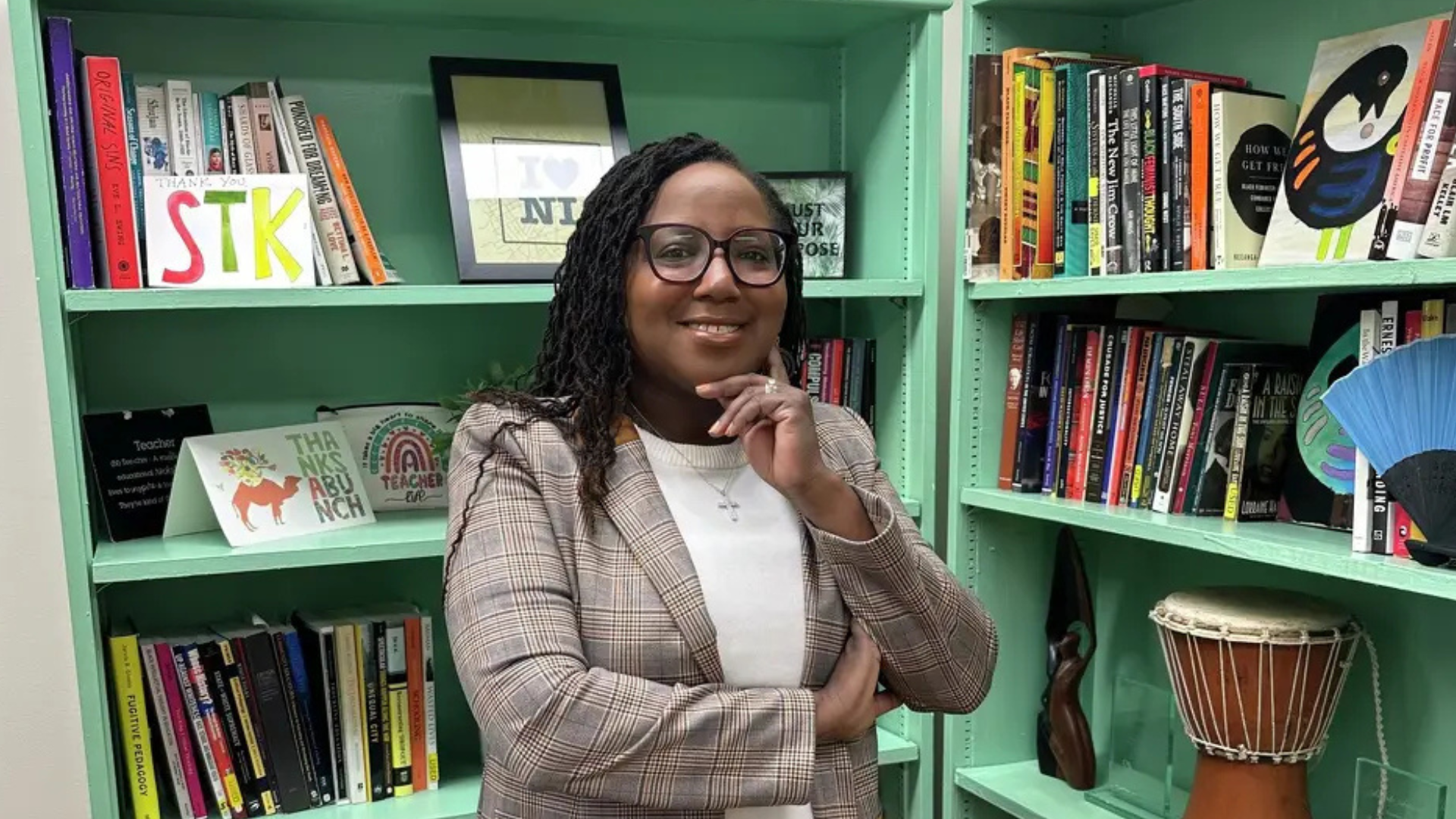
Shakita Thomas Kpetay, an assistant professor at Connecticut College, was diagnosed with endometriosis in 2020 after more than a decade of pain. (Photo courtesy of Shakita Thomas Kpetay/CT Insider)
Shakita Thomas Kpetay was 11 years old when the pain started. For more than a decade it sent her to emergency rooms again and again, and her pain kept being dismissed as ordinary period cramps. When doctors finally diagnosed endometriosis in 2020, the disease had reached stage four, its most advanced classification, according to a Nov. 1 report by CT Insider on the barriers Black women in Connecticut face in getting care.
Thomas Kpetay, an assistant professor of education and Africana studies at Connecticut College, has since co-written a book with Tamien Elder, Remembered and Living Text: Black Women Living with Endometriosis, published in February. It combines memoir with a call to action that treats Black women as authorities on their own bodies.
Shantana Hazel’s symptoms also began in childhood. She was 25 before she received a diagnosis, CT Insider reported. In the years before that, she went again and again to doctors’ offices and emergency departments, where she said she met dismissal, medical racism and inadequate pain relief. One provider suggested that Black women should be better able to tolerate pain. When she later obtained her medical records, she found she had been labeled as drug-seeking despite a documented chronic illness.
Shantana Hazel, founder of Sister Girl Foundation Inc. in Bridgeport, Conn., has undergone 16 surgeries for endometriosis. (Photo courtesy of Sister Girl Foundation)
Hazel, of Bridgeport, has since undergone 16 surgeries for the disease, according to the Endometriosis Foundation of America. In 2010 she founded Sister Girl Foundation Inc., which helps women navigate medical appointments, understand treatment options and speak up for their own care. She is also the author of 28 Ways on How to Advocate for Your Healthcare. She describes the work in spiritual terms. “God knew that this is a task I can take it on,” she told the foundation. In a News 12 interview, she spoke of “the pain of being ignored or dismissed.”
The belief Hazel ran into now appears by name in national medical guidance. In February, the American College of Obstetricians and Gynecologists published a guideline with its first comprehensive recommendations for diagnosing endometriosis. It acknowledges that racial bias creates barriers to care. According to an OB-GYN’s analysis in Essence, the guideline identifies two perceptions that can lead clinicians to dismiss pelvic pain: that endometriosis is a disease of white women, and that Black women feel pain differently or tolerate more of it.
Endometriosis occurs when tissue similar to the uterine lining grows outside the uterus, causing inflammation, scar tissue and, for many women, debilitating pain. The World Health Organization estimates that it affects about 10% of women and girls of reproductive age, roughly 190 million people worldwide. Symptoms can include severe menstrual cramps, chronic pelvic pain, pain during sex or bowel movements, fatigue, heavy bleeding and infertility. There is no cure.
Diagnosis has long been the bottleneck. ACOG says patients wait an average of four to 11 years from their first symptoms to a diagnosis, partly because confirmation traditionally required laparoscopic surgery. Under the new guideline, clinicians can make a presumptive diagnosis based on a patient’s history, symptoms and physical exam. Imaging can help when appropriate. Treatment can then begin without waiting for surgery. Surgery remains an option, and a normal exam or ultrasound does not rule the disease out.
For Black women, the wait can stretch longer. A 2019 meta-analysis found that Black women were about half as likely as white women to be diagnosed with endometriosis. The ACOG guideline cautions that this gap does not necessarily mean Black women develop the disease less often.
ACOG’s new guideline names racial myths that can lead clinicians to dismiss Black women’s pelvic pain. (EEW Magazine Online)
Black women describe the same patterns Thomas Kpetay and Hazel lived through. In 2024, Massachusetts Health Quality Partners and the Endometriosis Association brought Black women with endometriosis together with providers, researchers and health plan representatives.
Participants reported having their symptoms dismissed by providers who held racial stereotypes. One recalled being told that endometriosis is a “White women’s disease.” The resulting research roadmap, released in February 2025 and funded by the Patient-Centered Outcomes Research Institute, sets research priorities drawn from those women’s experiences.
In Connecticut, researchers are working on the problem from the laboratory side. In 2023 the state became the first in the nation to mandate a statewide endometriosis biorepository, after lawmakers passed the measure unanimously. The program, EndoRISE, is co-led by UConn Health and The Jackson Laboratory, which houses the biorepository in Farmington. On Oct. 30, JAX researchers published findings in Nature Communications, based on EndoRISE samples, that map how nerve and immune cells interact in endometriosis lesions to fuel pain and inflammation.
“Endometriosis affects millions of people, yet we still don’t fully understand what drives it,” Elise Courtois, director of single-cell biology at JAX and co-director of EndoRISE, said in a JAX feature in March.
The women whose samples fill the repository do not yet reflect the women the disease affects. A 2026 paper describing the program reported that 76.8% of enrolled participants identified as white and 8% as Black, in a state where Black residents make up about 13% of the population. Those figures describe who enrolled and offer no estimate of how often Black women develop the disease.
Early collection relied on patients who were having surgery, which can leave out women who never reach an operating room. According to CT Insider, the program is expanding to Hartford-area hospitals, translating its enrollment materials and exploring ways to collect samples without surgery.
Under the new guidance, menstrual pain that disrupts work, school or daily life warrants evaluation. A written record of when the pain occurs, how long it lasts, how severe it is and what it keeps a woman from doing gives a clinician something concrete to work with. Patients can ask directly whether endometriosis should be considered, whether treatment can begin on a presumptive diagnosis and whether a referral to a gynecologist experienced with the disease makes sense.
A second opinion is reasonable when pain stays unexplained or concerns keep getting brushed aside. Sudden, severe pelvic pain or unusually heavy bleeding calls for urgent care.
Thomas Kpetay and Hazel each spent more than a decade looking for an answer that, under the new guidance, can begin with a careful history and an exam. Both have turned those years into work aimed at shortening the search for other women. The real test of the guideline and of Connecticut’s research will be whether the next 11-year-old who says she is hurting is believed the first time.
Reporting note: The accounts of Shakita Thomas Kpetay and Shantana Hazel come from CT Insider’s Nov. 1, 2026, reporting, with additional details from Connecticut College, the Endometriosis Foundation of America and News 12. EEW Magazine Online did not independently interview the women named in this article.