

Burning nerve pain can arrive days before any rash, and on brown skin the blisters may never turn red. Recognizing the early signs gives women their best chance at fast treatment.
By EEW Magazine Online Editors
Viola Davis is sharing her shingles experience through GSK’s “Shingles, actually” awareness campaign. (Photo courtesy of GSK)
Viola Davis woke up one morning more than a decade ago with flu-like symptoms and an excruciating rash that started on her stomach and wrapped around to her back. The Oscar-winning actress was a new mother, having recently adopted her daughter, Genesis, and her career was soaring after "The Help." She assumed a poisonous spider had bitten her.
Years later, the rash returned as a few blisters on her upper back. Both times, it was shingles, an illness she knew almost nothing about. The pain made walking, lying down and getting out of bed difficult. "I mean, I would put it at a nine out of 10," Davis recalled.
She kept going anyway. Davis told NewBeauty that she worked days as long as 18 hours on set, kept rising before dawn to exercise and never sought help. "I felt it was my job to muster through," she said.
“Shingles, actually,” an awareness campaign from GSK, the pharmaceutical company that makes the shingles vaccine Shingrix. She spoke about the illness publicly for the first time at a campaign event in New York on Oct. 7, nine days after walking the runway at Paris Fashion Week. Her experience raises a question every woman should be able to answer: Would you recognize shingles if it happened to you?

Viola Davis walks the runway at the Le Défilé L’Oréal Paris “Express Your Worth” show during Paris Fashion Week on Sept. 28, 2026, in Paris. Nine days later, she spoke publicly about her shingles for the first time. (Photo by Laurent Hou/Hans Lucas/AFP via Getty Images)
About one in three people in the United States will develop shingles in their lifetime, according to the CDC. The risk climbs with age and with a weakened immune system.
Shingles, known medically as herpes zoster, comes from the varicella-zoster virus, the same virus that causes chickenpox. After a person recovers from chickenpox, the virus stays in the body, dormant in nerve tissue for years or even decades. Later in life, it can reactivate and travel along a nerve to the skin, producing the painful rash.
That means a woman who had chickenpox at 7 could develop shingles at 57, half a century after her last symptom.
The risk rises after 50 as the immune system's ability to keep the virus in check declines. Women with weakened immune systems face added risk, including some women living with cancer, HIV or autoimmune conditions and those taking medications that suppress immune function.
Stress may play a role, though research on that link is mixed. A healthy diet, regular exercise and good stress management support overall health, and none of them guarantees protection from the virus waking up.
Davis learned that firsthand. She considered herself fit and disciplined, and she still developed shingles twice.
Shingles often causes symptoms before anything appears on the skin. Pain, itching or tingling can develop in one area several days before the rash, according to the CDC. Some people describe an "electrical sensation" on the skin, the American Academy of Dermatology notes. Others run a fever or experience headaches, chills or an upset stomach.
When the rash arrives, it usually forms a stripe or band on one side of the torso, though it can also appear on one side of the face. It follows the path of a single nerve and usually does not cross the body's midline. The blisters typically scab over in seven to 10 days, and the rash clears within two to four weeks, according to the CDC.
Early shingles can resemble an insect bite or a skin irritation, so women often wait, especially when only a few blisters show. Davis made that same assumption. The intensity of the pain is often the clue that something more serious is happening.
For Black women, recognizing the rash may mean looking past the bright red patches pictured in most medical articles. On darker skin tones, shingles bumps may look grayish, pink, dark brown or purplish, according to the AAD. On brown or black skin, the inflamed area beneath the blisters may turn purplish or show little noticeable discoloration at all.
A woman comparing her skin to photos online may dismiss her own symptoms because they look nothing like the pictures. Regardless of skin tone, a painful cluster of blisters on one side of the body, especially with burning or tingling, deserves prompt medical attention.
The CDC recommends two doses of the Shingrix vaccine for adults 50 and older and for adults 19 and older with weakened immune systems. (GSK/Illustration by EEW Magazine Online)
Shingles is treatable, and timing makes a difference. Doctors commonly prescribe antiviral medications such as valacyclovir, acyclovir or famciclovir, which can shorten the illness and ease its severity. The CDC says these medicines work best when started as soon as possible after the rash appears, and the AAD advises getting treatment preferably within two to three days.
Speed counts because shingles can leave lasting damage. About 10% to 18% of people who get shingles develop postherpetic neuralgia, nerve pain that lingers in the area of the rash after the skin heals. It can last for months or years, disrupting sleep, clothing choices and daily life, and the risk increases with age.
Women who suspect shingles should contact a healthcare professional right away rather than wait to see whether the rash fades. A rash on the face, especially near the eye, requires immediate medical attention. Shingles in the eye can cause vision loss. Women with weakened immune systems or widespread symptoms also need urgent evaluation.
Prescription antivirals are the main treatment, and simple care at home can make recovery more bearable. The AAD suggests applying a clean, cool, damp washcloth for five to 10 minutes several times a day, soaking in a cool oatmeal bath and wearing loose clothing made of cotton or linen. A healthcare professional may also recommend over-the-counter pain relief or prescription medication for severe nerve pain.
Women should avoid scratching or opening the blisters, which raises the risk of infection. Rest helps, too. Pushing through a demanding schedule in intense pain, as Davis did, makes a hard illness harder.
Shingles itself cannot pass from one person to another. A person with active blisters can, however, spread the varicella-zoster virus to someone who has never had chickenpox or the chickenpox vaccine, and that person could develop chickenpox.
The CDC advises covering the rash, avoiding touching or scratching it and washing hands often. Until the rash scabs over, people with shingles should stay away from pregnant women who have never had chickenpox or the vaccine, premature or low birth weight infants and people with weakened immune systems.
Vaccination offers strong protection. The CDC recommends two doses of Shingrix, given two to six months apart, for adults 50 and older. Adults 19 and older whose immune systems are weakened by disease or therapy should also be vaccinated. In adults 50 and older with healthy immune systems, the vaccine is more than 90% effective at preventing shingles and postherpetic neuralgia, according to the CDC.
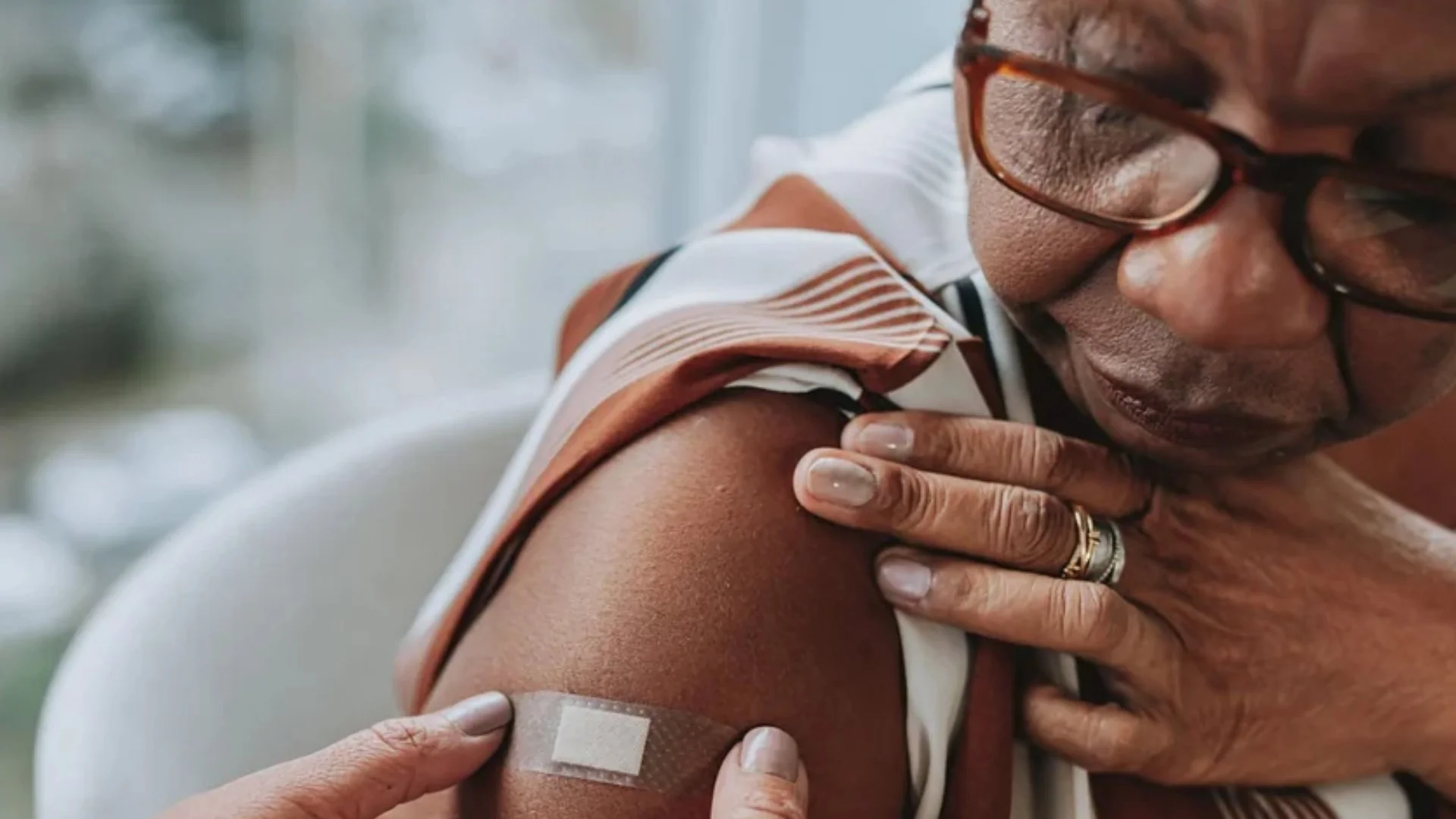
Common Shingrix side effects, such as a sore arm, tiredness and headache, usually last two to three days, according to the CDC. (Getty Images)
Women who have already had shingles can still benefit from the vaccine, since the illness can return. The CDC advises waiting until the rash has gone away before getting vaccinated.
Common side effects include a sore arm, tiredness, muscle pain, headache, shivering, fever and upset stomach. Most are mild to moderate and last two to three days, according to the CDC's vaccine safety guidance.
People with Medicare Part D pay nothing for the shingles vaccine, according to Medicare. Women with other insurance can ask their provider or pharmacist about coverage and costs.
For Davis, shingles exposed more than a medical vulnerability. She told theGrio that Black women often feel pressure to be strong and invincible because they fear no one will support them. She has described the illness as her first glimpse of how deeply she had been taught, as a woman, to put her own needs last.
Her experience reaches well beyond shingles. Women who care for children, spouses, aging parents, congregations and communities can grow so used to tending everyone else's needs that their own symptoms get attention only when they become unbearable. With an illness that rewards fast action, that habit can be costly.
Davis now sees a doctor whenever something feels wrong, including for her mental health. She calls going to the doctor "the most radical thing that you can do."
Shingles is common, and its consequences are not always minor. Knowing what it feels like, recognizing how it may appear on your skin and getting treatment early can help protect your health for years to come.
Davis learned it the hard way, and her lesson applies to every woman: There is nothing weak about seeking medical care before the pain becomes impossible to ignore.