

A federal panel has voted to steer women 30 to 65 toward HPV testing, which many can do with a swab of their own, as insurers prepare to cover it at no cost in 2027.
By EEW Magazine Online Editors
For many women, the exam itself is the hardest part of cervical cancer screening. New federal guidance favors an HPV test that many women can collect on their own. (Getty Images/Catherine McQueen)
For many women, the hardest part of cervical cancer screening is the exam itself. The stirrups, the cold speculum and the minutes of discomfort lead some to avoid the appointment. Yet routine screening is the reason cervical cancer deaths in the United States have fallen so sharply over the past five decades. A shift now underway in federal health guidance could change what that appointment looks like.
For some women, it could also change whether they need to lie on the exam table at all.
The U.S. Preventive Services Task Force, the influential panel whose recommendations shape what doctors advise and what insurers cover, voted behind closed doors last week. The panel chose to steer women ages 30 to 65 toward a test for human papillomavirus, or HPV, in place of the Pap smear, NBC News reported, citing a person familiar with the vote. Women in that age group could also choose to collect their own sample.
HPV, a common virus, causes virtually all cervical cancers. Under the task force's current guidance, issued in 2018, women 30 to 65 can choose any of three options: a Pap test every three years, an HPV test every five years, or both tests together every five years. The new vote would make the HPV test the preferred choice.
The new recommendation is not final, and it is unclear when the task force will publish it. A task force spokesperson did not respond to NBC's request for comment. Under the Affordable Care Act, most private insurers must cover services the panel recommends at no cost to patients. The Supreme Court ruled last year that Health Secretary Robert F. Kennedy Jr. has authority has authority over the panel, and NBC reported that it is unclear whether he must sign off on the change.
A self-collection HPV test lets a woman swab herself in place of a speculum exam. Depending on the test, collection can take place in a doctor's office, a lab or at home. (Becton, Dickinson and Company via AP)
Another federal agency has already made the shift. In January, the Health Resources and Services Administration, part of the Department of Health and Human Services, updated its women's guidelines. The guidelines make HPV testing the preferred method for average-risk women 30 to 65 and add self-collection as an option. Most private health plans must cover those services, including self-collected tests, at no cost starting in 2027.
The American College of Obstetricians and Gynecologists endorsed the updated guidance in April. The American Cancer Society, which issues its own guideline, also favors HPV testing but recommends that screening begin at 25.
The two tests look for different things. A Pap test examines cells from the cervix for abnormal changes that could one day turn into cancer. An HPV test looks for the high-risk strains of the virus that cause those changes, which lets clinicians identify women who need closer monitoring before the cells begin to change.
Most HPV infections clear on their own. The ones that linger can damage cervical cells over years.
A Canadian trial of more than 19,000 women was published in the Journal of the American Medical Association in 2018. It found that HPV testing detected precancerous changes earlier and more accurately than the Pap test. Four years in, women screened with HPV testing were less than half as likely to be found with advanced precancer, because the HPV test had caught more of it at the first visit.
A positive HPV result does not mean cancer. It can lead to follow-up testing such as a colposcopy or biopsy, which most private plans must cover starting in 2027. (Getty Images/Mascot)
HRSA recommends the HPV test every five years. A combined HPV and Pap test remains an option, and a Pap test alone every three years is now a fallback for when HPV testing isn't available. Women 21 to 29 should still get a Pap test every three years.
Self-collection may be the change women notice most. In place of a speculum exam, a patient uses an approved device to swab the vagina herself. It can be done in a doctor's office, a lab or, with some tests, at home. The Food and Drug Administration approved self-collection in health care settings in 2024 and approved the first at-home kit, which patients mail to a lab, in May 2025.
The option could help women who struggle to get time off for appointments, find pelvic exams painful or lack reliable transportation. Dr. Robert Smith of the American Cancer Society told NBC News that a self-collected swab is generally more comfortable than a speculum exam.
Self-collection has limits. Which tests a woman can use depends on FDA approval, her medical history and whether her provider can arrange follow-up care. ACOG and the American Cancer Society advise women who self-collect to repeat the test every three years instead of five.
A positive HPV result does not mean a woman has cancer. Depending on the strain detected and her screening history, the next step may be a Pap test, a colposcopy, which gives the doctor a magnified view of the cervix, or a biopsy.
The swab is a screening tool for women without symptoms. Unusual bleeding, pelvic pain and other symptoms call for an exam by a clinician.
For Black women, the stakes are higher. Cervical cancer death rates are 53% higher among Black women than white women, according to the American Cancer Society's 2025 report on cancer in Black Americans. The society estimated that 2,180 Black women would be diagnosed with the disease last year and that 610 would die from it.
Black and white women report getting screened at similar rates, the report found, yet Black women are less likely to be diagnosed while the cancer is still localized, 35% compared with 43%. The researchers point to differences in the quality of screening and in how quickly abnormal results are followed up. Black women are also less likely to receive recommended surgery and radiation. Being uninsured or underinsured accounted for about half of the disparity among women diagnosed at an advanced stage.
The HRSA guidelines address that step directly. Starting in 2027, most private plans must also cover the follow-up testing needed to complete screening, such as a colposcopy or biopsy, without deductibles, copays or coinsurance.
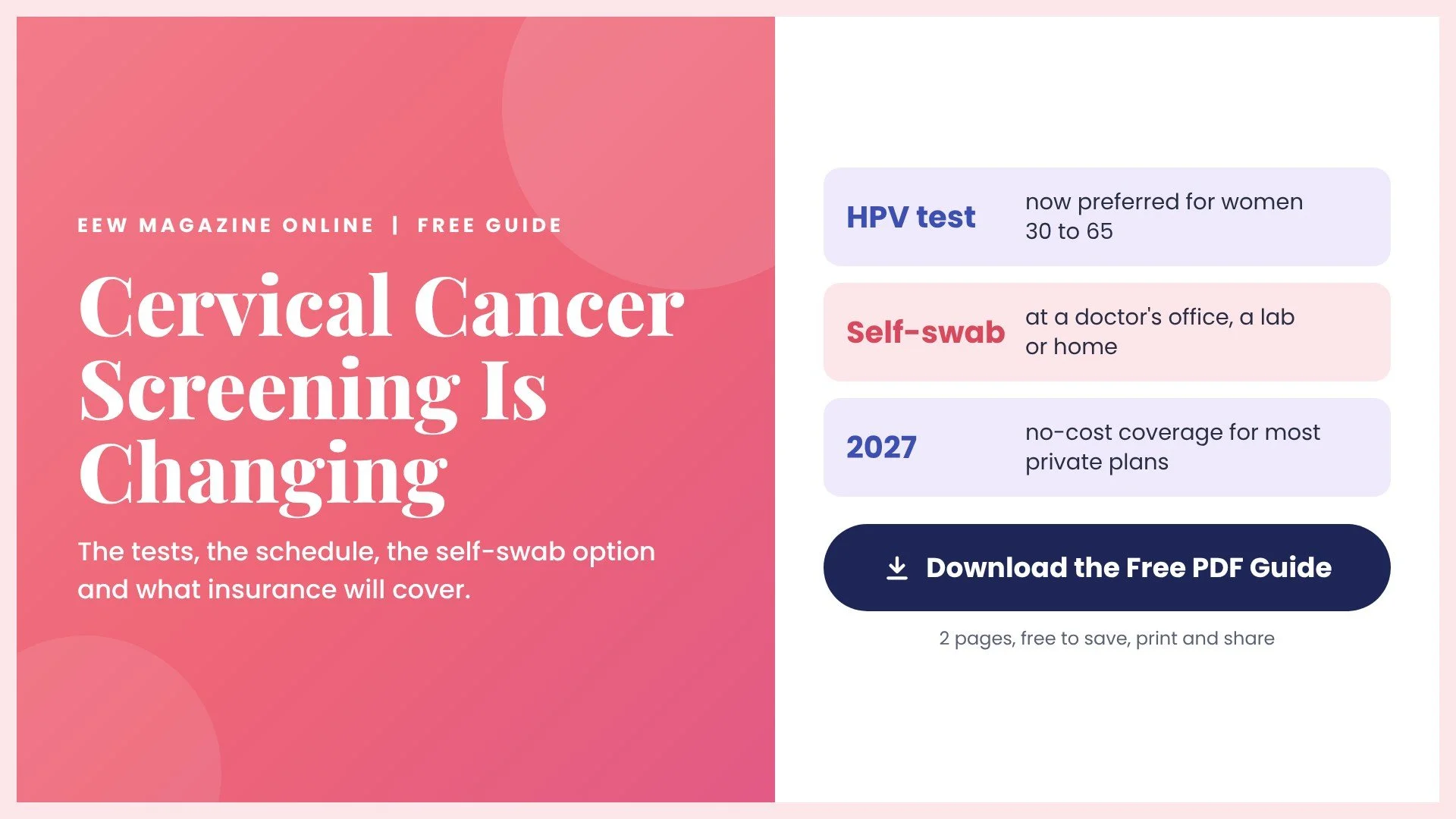
The rules apply to most non-grandfathered private plans. Coverage for specific at-home kits and labs can vary, so women should check with their insurer. Women who are uninsured or underinsured may qualify for free or low-cost screening through a CDC program for women with low incomes, which works through participating state and local programs.
The routine schedule does not fit every woman. Those with a history of cervical precancer or cancer, HIV or a weakened immune system follow different recommendations. Women who received the HPV vaccine still need screening.
A health care provider can help a woman choose the test that fits her history. Her provider can also tell her whether self-collection is offered nearby and what comes next if a result is abnormal.