

Most of us reach a loved one's bedside without anyone having told us what the last days look like. On Oprah's podcast, novelist Sarah Perry and a hospice nurse fill in the picture.
By EEW Magazine Online Editors

Oprah Winfrey talks with novelist Sarah Perry about her memoir, “Death of an Ordinary Man,” on “The Oprah Podcast.” (The Oprah Podcast/YouTube)
Sarah Perry was 43 when she learned how little she knew about dying. In the autumn of 2022, she and her husband, Robert, nursed his father through the nine days between a cancer diagnosis and his death at home in Norwich, England. As David Perry stopped eating, then stopped drinking, and his breathing changed, each sign frightened her. Nobody had told her what the last days look like.
The British novelist, best known for "The Essex Serpent," described those days to Oprah Winfrey on the Thanksgiving morning episode of "The Oprah Podcast," titled "What No One Tells Us About the Process of Dying."
Winfrey's best friend spent that holiday in mourning. Virgil Miller, Gayle King's son-in-law and the husband of Winfrey's goddaughter, Kirby Bumpus, died of cancer over Thanksgiving at 45, EEW Magazine Online reported. Though the conversation does not mention Miller, the timely discussion arrived in the same week a family Winfrey loves began to grieve.
Perry's memoir, "Death of an Ordinary Man," published in the United States in October by Mariner Books, tells the story of those nine days. David Perry was 77, a retired chemist, a widower and a faithful member of his Baptist church. Robert was his only child.
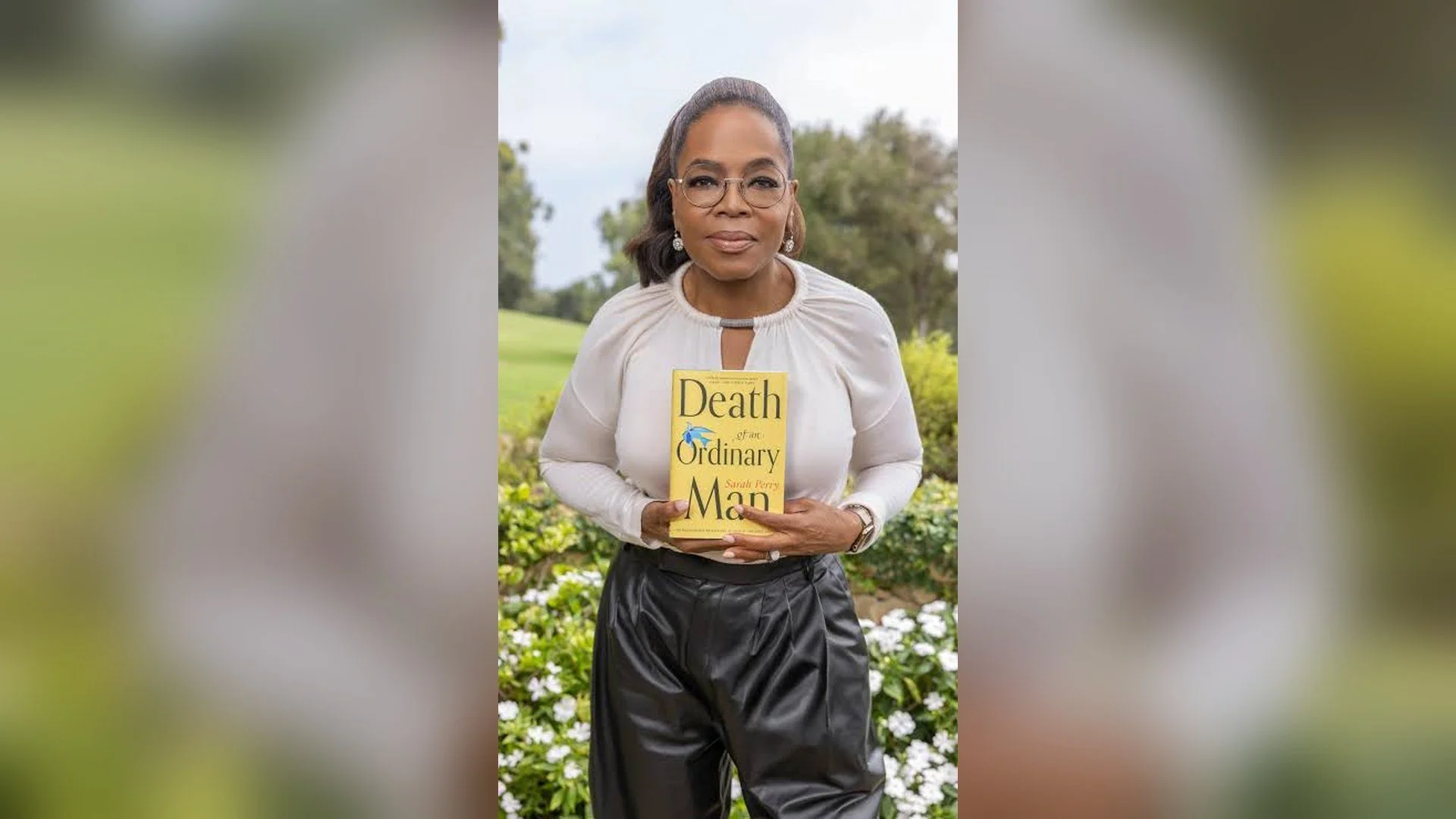
Winfrey holds a copy of Perry’s memoir, published in the United States in October. (Oprah Winfrey/Instagram)
Perry told Winfrey that through most of history a woman her age would have seen death and known what it looks like, down to the sounds of the breathing at the end. People talk freely about labor pains and morning sickness, she said, and almost never about the other end of life.
Perry, who was raised in a Strict Baptist family in Essex, offered one reason for the silence. Churchgoing once gave people shared words for death. Families could speak of crossing over Jordan, of going home, of resting in the Lord, and there were hymns for the passage. As fewer people learn that vocabulary, she said, fewer have a way to begin the conversation. Hospitals have also moved dying out of the house, so most people have not watched it happen.
In many Black congregations, that vocabulary survives in the hymns, prayers and preaching of homegoing services. Black families are also less likely to use hospice. In 2024, 55.8% of white Medicare patients who died were enrolled in hospice, compared with 40.5% of Black patients, according to the National Alliance for Care at Home.
Many families reach the bedside with little preparation. AARP and the National Alliance for Caregiving count 63 million family caregivers in the United States, nearly 1 in 4 adults, and only about 1 in 5 has received formal training in medical or nursing tasks.
The hardest moment for Perry came when David could no longer manage his own body. She froze. Then, she told Winfrey, she felt something like a hand on her shoulder, the hand of a woman who had done this work before, with generations of women lined up behind her. Their message was brief: "You can do this. You can."
From then on the work stopped feeling impossible. Her husband, who shared every task, has teased her about that passage, and she agreed that men give care too. She wrote what she felt.

Hospice nurse Julie McFadden joins Perry and Winfrey by video to describe what families can expect in the last hours of life. (The Oprah Podcast/YouTube)
Julie McFadden, the hospice nurse known to a large online audience as Hospice Nurse Julie, joined by video and said that passage brought her to tears. She then described what families are rarely told. Dying usually follows a process and looks little like the movies, with their long farewell speeches. The body shuts off hunger and thirst on its own. Skin color, breathing and the shape of the face change. Death itself is generally not painful, McFadden said, though the diseases that cause it can be, which is why medical care is needed.
The National Institute on Aging advises families to tell the doctor or nurse when pain is not under control. The Institute notes that shortness of breath, common near the end, can be treated. A family that understands the signs can stay present through hours that would otherwise frighten them.
Winfrey added a story of her own. When her father had cancer, doctors estimated he had six months, and a hospice nurse told her not to leave. He died about three weeks later. McFadden said hospice workers see the signs every day and owe families the truth about them.
Small things comforted David as he was transitioning. His family sang him hymns, and then Robert, insisting his father loved rock 'n' roll too, turned on Little Richard. Perry read aloud from "Three Men in a Boat," his favorite comic novel, and heard a laugh rise from a man who could barely respond. Her own father moistened David's lips with wet cotton. A family that rarely hugged learned to hold him tightly when he grew agitated.
Asked what makes ordinary people able to do this, Perry said she comes from a religious background and still falls back on Scripture. She reached for the psalmist's line that God made man a little lower than the angels (Psalm 8:5). The capacity to pick up a fallen child or tend the dying, she said, is built into every person.
David died around 3 a.m. Perry told Winfrey the house felt fuller to her afterward. A night caregiver who had known David for 48 hours stood at the bed and told him he was loved. David had a strong faith, she said, and she thought of him as having crossed over Jordan.
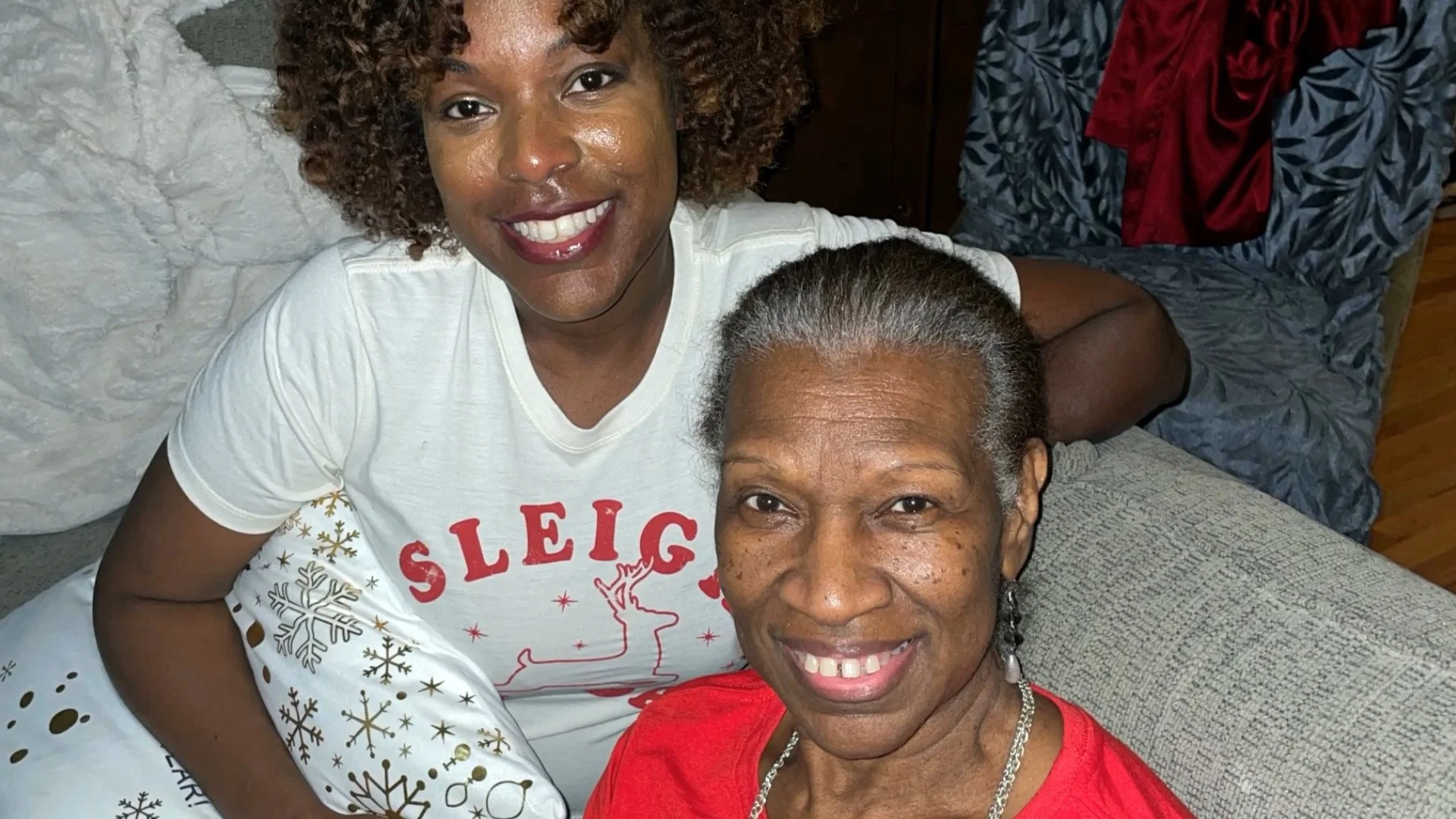
Veronica Shanklin with her mother, whom she has cared for through dementia. (The Oprah Podcast/YouTube)
A listener, Veronica Shanklin of Dallas, joined the conversation as well. Shanklin has spent 13 years caring for her grandmother and then her mother through dementia. She founded the nonprofit Dementia Care Warriors.
Asked what caregivers need most, she answered with two things: community and being seen. Perry agreed. She recalled friends who let themselves into David's bungalow, washed the dishes and left, and one who brought a beautiful meal. Perry took that meal as a reminder that life was still going on in a house where a man was dying.
The full episode of "The Oprah Podcast" is available on YouTube and on podcast platforms.