

GloRilla Has Another Gospel Hit. Where Does She Fit in the Genre?
Raised in church and celebrated in hip-hop, the Memphis rapper brings competing expectations about faith, music and recognition into focus.
By EEW Magazine Online News Editors

GloRilla in March 2025. The rapper’s latest gospel collaboration, “This Time,” debuted at No. 1 on Billboard’s Hot Gospel Songs chart. (Photo: Prince Williams/WireImage)Before GloRilla won a gospel award, she worried about asking a gospel artist to record with her. The Memphis rapper admitted as much while accepting the Dr. Bobby Jones Best Gospel/Inspirational Award at the 2025 BET Awards for “Rain Down on Me.” She had been nervous about approaching Kirk Franklin for the song, she said, “because y’all know how I be rapping.”
That admission captured a tension that has followed her success in gospel. An artist can carry the church’s influence into her work while building a career on music that challenges its teachings.
Now GloRilla has another No. 1 on Billboard’s Hot Gospel Songs chart. “This Time,” Franklin’s single featuring the rapper, debuted atop the chart dated Oct. 10 with 1.7 million U.S. streams, 2.5 million in radio audience and 1,000 sales in its first tracking week, according to Billboard.
The song follows their 2024 chart-topper “Rain Down on Me” and gives Franklin his record-extending 10th No. 1 on Billboard’s Hot Gospel Songs chart, which launched in 2005.
For GloRilla, the repeat recognition sharpens a question of belonging. Gospel names a musical category, a religious message and a community of artists whose work is often understood as ministry. Her reception shows how differently those meanings can operate.
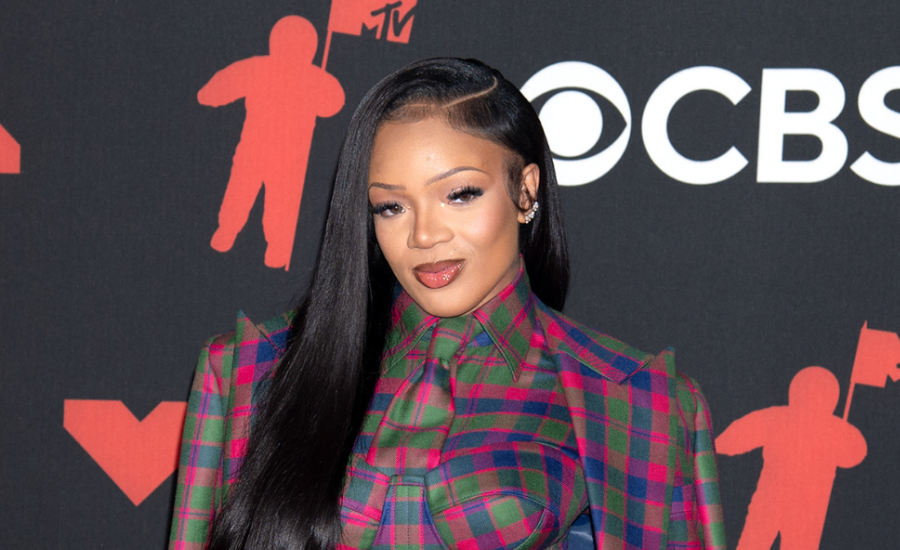
(Photo: Janet Mayer/INSTARimages.com)Born Gloria Hallelujah Woods, GloRilla grew up with gospel woven into family life. In a 2023 Elle cover story, she described going to church every Sunday, singing in the choir and serving on the praise-and-worship team. Yolanda Adams, Smokie Norful and Franklin himself were among the artists she grew up hearing.
“If church could’ve been open seven days a week, we would’ve been there every day,” she told Tamron Hall in 2024.
That history gives her gospel recordings personal weight. Her mainstream catalog, with its profanity and sexually explicit lyrics, also explains why her standing in the genre draws scrutiny. GloRilla acknowledged that distance herself when she described her nerves about asking Franklin.
Some objections to her BET win focused on who hands out the honor. A nationally known gospel singer and pastor criticized the choice on social media without naming her, arguing that the award belonged with artists working inside a genre already struggling for visibility.
The award itself covers both gospel and inspirational music. Its 2025 nominees included Common and Pete Rock featuring Jennifer Hudson, Fridayy and Rapsody alongside Yolanda Adams, Tamela Mann and Pastor Mike Jr. GloRilla’s presence reflected a field already stretching across musical categories.
The disagreement centers on what follows when a rapper’s song about God receives gospel’s public recognition: whether the honor celebrates a single recording, establishes an artist’s standing within the genre, or carries an expectation of religious example.
Chart performance cannot resolve those questions. Nor does it show how church audiences receive a record.
GloRilla’s own account is more personal than the numbers. She grew up singing in church and built her career in rap, and when she wanted to make a gospel record, she wondered whether the way she rapped would keep Franklin from saying yes. Two years later, the gospel giant she was afraid to ask is working with her again, this time on his own record.