

James Talarico made his Christian faith central to his Texas campaign. In Michigan, Abdul El-Sayed won after opponents attacked his Muslim faith.
By EEW Magazine Online Editors
U.S. Sen.-elect James Talarico of Texas, left, and U.S. Sen.-elect Abdul El-Sayed of Michigan both won their races on Tuesday, Nov. 3, 2026. (Getty Images/Illustration by EEW Magazine Online)
One grew up hearing his grandfather preach in South Texas and is studying to become a Presbyterian minister. The other is the son of Egyptian immigrants and met his wife through a college Muslim students’ association. On Tuesday, James Talarico and Abdul El-Sayed both won U.S. Senate seats in races where faith shaped the fight.
Talarico, 37, defeated Republican Attorney General Ken Paxton in Texas. El-Sayed, 42, defeated former Republican Rep. Mike Rogers in Michigan and will become the first Muslim to serve in the Senate.
Talarico won about 55% of the vote. He is the first Democrat elected to the Senate from Texas since Lloyd Bentsen in 1988 and the first Democrat to win any statewide race there since 1994.
U.S. Sen.-elect James Talarico speaks at his election night watch party at the Long Center for the Performing Arts in Austin, Texas, on Tuesday, Nov. 3, 2026. (Photo by Ronaldo Schemidt/AFP via Getty Images)
A former public school teacher, Talarico was first elected to the Texas House in 2018. He quoted Scripture often on the campaign trail and ran on affordability, public education and limiting the influence of wealthy donors.
In his victory speech at Austin’s Long Center, he cast the race as David against Goliath. “The people of Texas were my slingshot,” he said, according to The Dallas Morning News. He told supporters his faith follows “a barefoot Rabbi” who taught love of God and neighbor, the Houston Chronicle reported.
Paxton spent the race casting Talarico as a radical who threatened the Texas way of life, according to the Texas Tribune. Some religious conservatives questioned his theology. The Daily Wire highlighted past remarks in which he credited Islamic mystics, including the poet Rumi, with shaping his faith. Paxton congratulated Talarico in his concession.
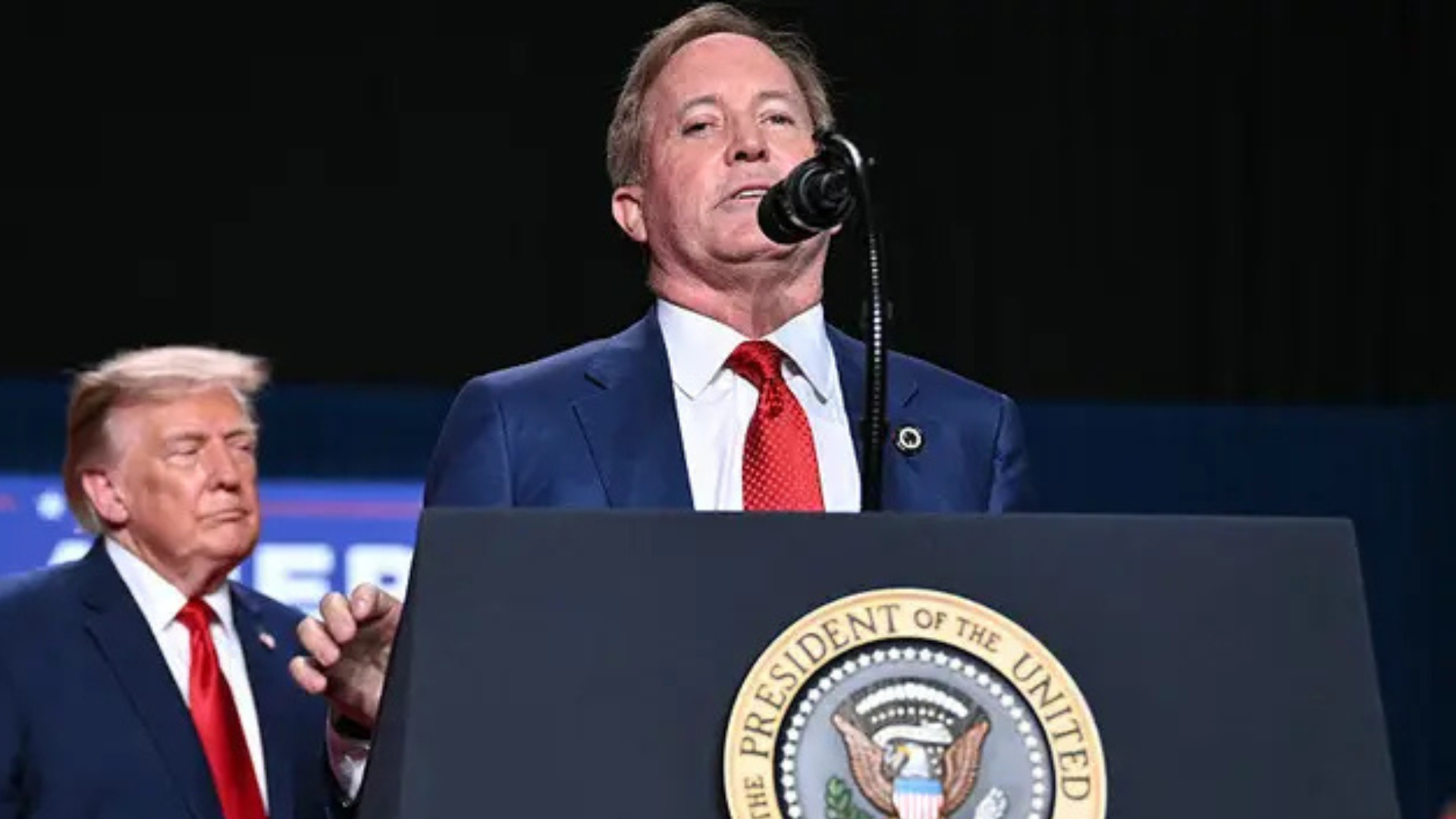
President Donald Trump, left, listens as Republican Senate candidate Ken Paxton speaks at a campaign rally at the Freeman Coliseum in San Antonio on Wednesday, Oct. 7, 2026. Paxton conceded the race to Democrat James Talarico on Tuesday night. (Photo by Mandel Ngan/AFP via Getty Images)
In Michigan, the questions about faith came largely from El-Sayed’s opponents. An epidemiologist who led the health departments in Detroit and Wayne County, El-Sayed had never held elected office and lost the 2018 Democratic primary for governor. The Associated Press called the race for him early Wednesday. He will succeed retiring Democratic Sen. Gary Peters.
His criticism of Israel, including calling the war in Gaza a genocide, divided Democrats. The American Israel Public Affairs Committee spent nearly $30 million against him in the August primary, which he narrowly won over Rep. Haley Stevens.
After a March attack on a synagogue in West Bloomfield Township, El-Sayed said “hurt people hurt people.” Critics said the phrase appeared to excuse the violence. He apologized in August, saying he had not meant to justify the attack, CBS Detroit reported.
Dr. Abdul El-Sayed, then the Democratic nominee for U.S. Senate in Michigan, speaks to supporters at his final rally at The Majestic Theater in Detroit on Monday, Nov. 2, 2026. He defeated former Republican Rep. Mike Rogers the next day. (Photo by Salwan Georges/Getty Images)
Two days before the election, Stevens endorsed Rogers at Perfecting Church in Detroit. She said El-Sayed had made clear she was not welcome in his campaign and objected to his ties to outspoken Twitch streamer Hasan Piker.
President Donald Trump called El-Sayed a “jihadist” and a member of the Muslim Brotherhood. Rogers pointed to social media posts by El-Sayed’s half-sister claiming their mother belonged to the group in Egypt in the 1970s. PolitiFact found no evidence that El-Sayed belonged to the Muslim Brotherhood. El-Sayed denied any ties to extremist groups and called questions about his loyalty “shameful.”
In Detroit early Wednesday, El-Sayed said his opponents rejected “an America big enough for anyone” who looks or prays differently, The Detroit News reported. “You took a chance on the unlikeliest of candidates,” he told supporters, according to The Associated Press.
Both men won in states President Donald Trump carried in 2024.