A Lilly Endowment grant will fund five years of research into the hymns, Scriptures and faith of Black Christians in early New England, from Beacon Hill to Nantucket.
By EEW Magazine Online Editors
The African Meeting House on Smith Court in Boston’s Beacon Hill, built in 1806 by the African Baptist Church, is the oldest surviving Black church building in the United States.
On Aug. 8, 1805, 24 Black Christians in Boston formally organized the African Baptist Church, and 15 of them were women, according to the National Park Service. Led by the Rev. Thomas Paul, a minister from New Hampshire, the congregation moved into its own brick meetinghouse on Beacon Hill the following year. Black craftsmen supplied most of the labor, and Cato Gardner, a native of Africa, personally raised $1,500 toward the cost.
That building, the oldest surviving Black church building in the United States, still stands on Smith Court.
The founders were building a church of their own. At the time, Black worshipers in Boston's white churches were seated apart in the galleries and barred from voting in church elections or holding committee posts, the Christian Science Monitor has reported. Women made up nearly two-thirds of the congregation that chose independence instead.
History remembers what happened inside their meetinghouse. The building held a school for Black children starting in 1808. William Lloyd Garrison founded the New England Anti-Slavery Society there in 1832, and Frederick Douglass and Maria Stewart both spoke there. In 1863 it served as a recruiting station for the Massachusetts 54th, one of the first Black regiments to fight in the Civil War.
The Rev. Leonard A. Grimes, pastor of Boston’s Twelfth Baptist Church, and his wife, Octavia, in a portrait from the 1860s albums of abolitionist Harriet Hayden. Twelfth Baptist, formed by members who left the African Meeting House, traces its roots to the 1805 congregation. (Boston Athenaeum)
Far less is known about the worship that sustained the people who built it. "We don't even know the theological perspective that was presented and debated in these spaces," Noelle Trent, president and CEO of the Museum of African American History, told the Boston Globe. She listed the questions she wants answered: "What was the liturgy? What hymns were sung? What scriptures were shared? Where were people baptized?"
In October, Lilly Endowment Inc. awarded the museum, which owns the meetinghouse, a $2.5 million multiyear grant to pursue those answers. The five-year initiative carries a name that echoes the Epistle of James: Faith & Works: Exploring New England's African American Religious History, Tradition, Legacy. It will study Black Christian theology, worship practices and religious history in the 18th and 19th centuries, centered on the museum's two African Meeting Houses, in Boston and on Nantucket.
The research could also shed light on the spiritual lives of the Black women who made up most of that first Boston congregation.
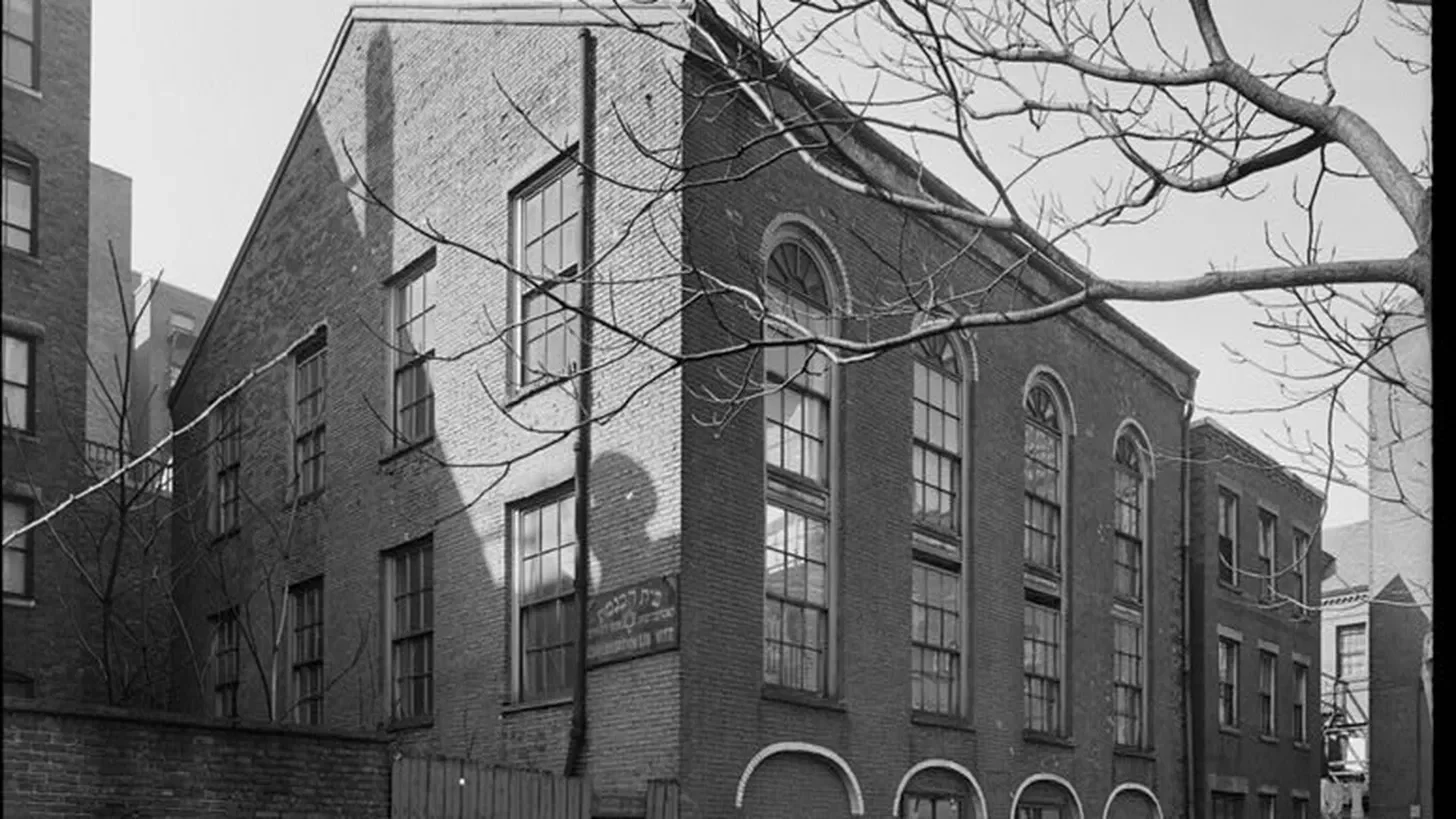
The African Meeting House, photographed for the Historic American Buildings Survey during the decades it served as a synagogue, after the African Baptist congregation moved to the South End in 1898. (Library of Congress, Prints & Photographs Division, Historic American Buildings Survey)
Trent sees the project filling a wider gap. She told CAI, the Cape and Islands NPR station, that Black Christianity in the United States has been largely a story of the South. Little analysis, she said, has reached Black religious history north of the Mason-Dixon Line, beyond Philadelphia.
The research, she said, is a chance to show that "there is a compelling Black Christian dialogue that is happening here in New England." Trent said the team believes what took place in the meetinghouses was "the antecedent to a modern 20th century notion of Black Christian theology." She pointed to theologian James Cone and to civil rights leaders including the Rev. Martin Luther King Jr. and the Rev. Ralph Abernathy. She described that link as a working belief the research will need to confirm.
On Nantucket, the island's African Baptist Society built its own meetinghouse on York Street in the 1820s. It served as church, school and gathering place for the Black neighborhood known as New Guinea, and whaling captain Absalom Boston was among its founding trustees.
The Rev. Thomas Paul, first pastor of Boston’s African Baptist Church, in a portrait painted around 1825 by Thomas Badger. (National Portrait Gallery, Smithsonian Institution)
The Boston congregation's line continues today. The African Baptist Church sold its building in 1898 and moved to the South End. In 1915 it merged with two other congregations to form Peoples Baptist Church, according to the church's own history. Twelfth Baptist Church began in 1840, when 46 members left the African Meeting House, according to the Park Service, and it also traces its roots to 1805.
Under Faith & Works, the museum plans to bring institutional descendants, congregations, families and individuals into the research. An advisory council of religious leaders, historians, scholars and museum professionals will guide the work, according to the museum's announcement as reported by the Provincetown Banner. Findings are expected to shape exhibitions, tours, reenactments and public programs.
The grant arrives during a difficult season for the museum. In September it laid off three director-level employees, leaving seven full-time staff, and cut public hours to Thursday through Sunday. Its most recent public tax filings show a $1.8 million deficit, and Trent told the Globe the grant pays for the research without solving those problems.
The congregation's role in education, abolition and the Civil War has been told for generations. The questions Trent raised about its worship remain open. More than 220 years after 15 Black women and nine men organized the African Baptist Church, researchers will spend the next five years searching for answers.
They will look for evidence of the hymns sung in its meetinghouse, the Scriptures read there and the places its believers were baptized.