Four U.N. agencies warn that aid is falling behind as fighting, displacement and Ebola push hunger toward a record in early 2027.
By EEW Magazine Online Editors
Marie-Therese Tsesi, a 63-year-old nurse who has taken in five children orphaned by the Ebola outbreak, stands outside her home in Mongbwalu, in Congo's Ituri province, on Oct. 11. (Marie Ruwet/AFP via Getty Images)
Mwajuma has fled her home in eastern Congo more than once, driven out by conflict and flooding. Each time, the farmer from South Kivu province lost more of what her family depended on: belongings, income and access to the fields where she grew food.
Finding enough food for her children is a daily struggle, she told the humanitarian organization CARE in an Oct. 30 report, and "sometimes we go to bed hungry, unsure where our next meal will come from."
Her family's struggle reflects a growing humanitarian emergency in the Democratic Republic of the Congo, where a record 30.3 million people are projected to face severe food insecurity between January and June 2027.
Four United Nations agencies issued a joint warning Friday. The World Food Programme, the Food and Agriculture Organization, UNICEF and the World Health Organization said conflict, displacement, rising food prices and disease outbreaks are driving the crisis while humanitarian assistance falls dangerously behind.
The latest Integrated Food Security Phase Classification analysis estimates that 28.8 million people, nearly a quarter of the population analyzed, are already experiencing crisis-level hunger or worse. That number is projected to rise by about 1.5 million in the first half of next year.
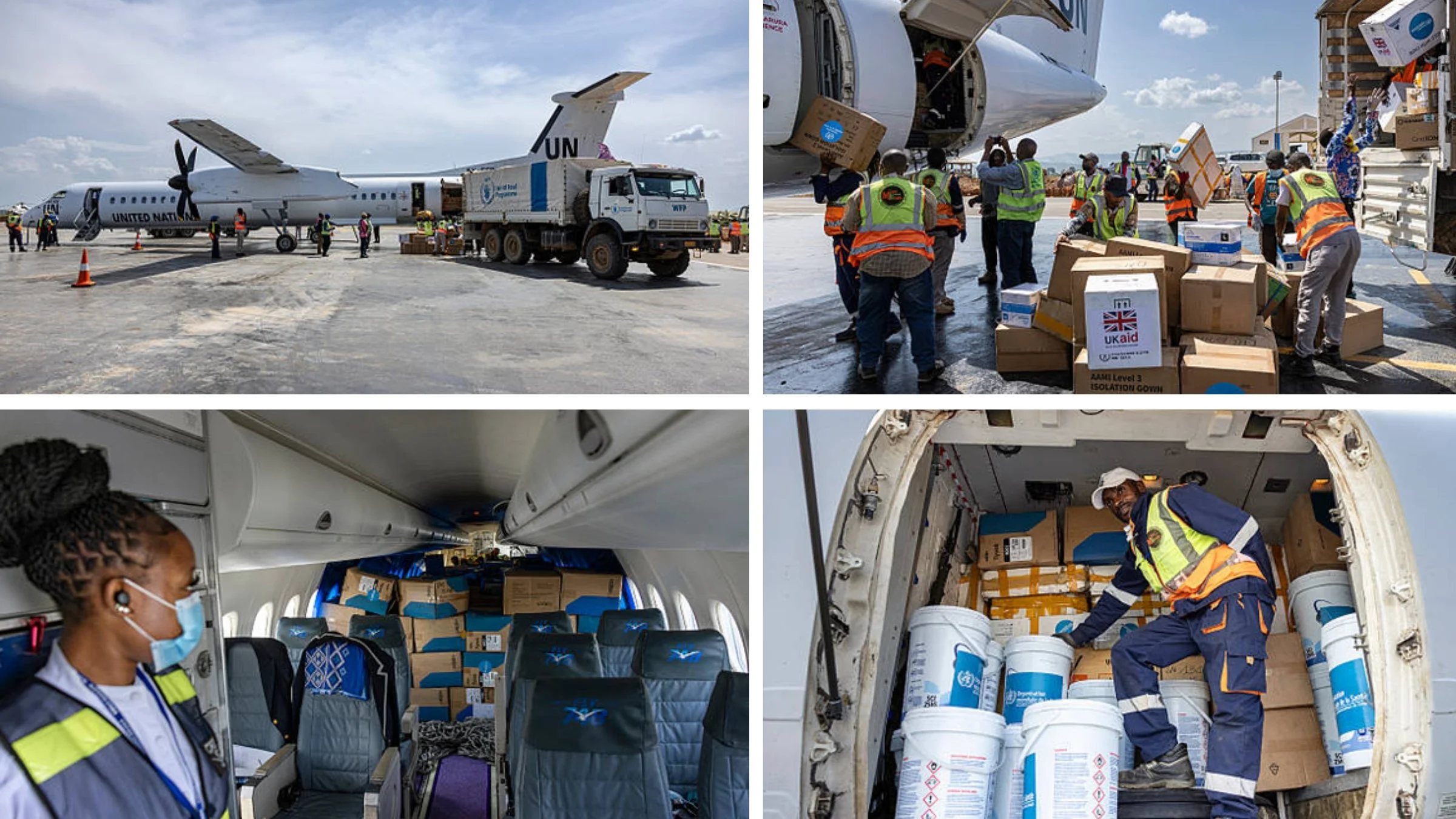
Humanitarian workers unload World Health Organization emergency supplies from a U.N. Humanitarian Air Service plane and transfer them to a World Food Programme truck at Bunia Airport in Congo's Ituri province on May 28. (Getty Images/Illustration by EEW Magazine Online)
Among them, 4.2 million people are projected to face emergency levels of hunger, one step below the most severe phase on the five-phase scale. That is nearly 600,000 more than today.
The crisis is most severe in eastern Congo, where fighting has repeatedly forced families from their homes and cut farmers off from their fields. More than 11 million people in North Kivu, South Kivu and Ituri provinces are projected to experience crisis-level hunger or worse in early 2027.
Conflict remains the main driver, Jean-Martin Bauer, WFP's director of food security and nutrition analysis, told reporters Friday at a U.N. briefing in Geneva.
For mothers, the consequences are immediate.
In Ituri and South Kivu, people are skipping meals and choosing among food, schooling and medicine to get by, said Clemeny Nkubizi, CARE's country director in Congo.
Women are the backbone of local food production, Nkubizi said, and they are caught in a cycle of displacement, hunger, disease and sexual violence.
Disease is compounding the emergency. Ebola, mpox and cholera outbreaks are hitting communities where basic services are already stretched, the U.N. agencies said.
Grace Mugisa, 35, a single mother of five, stands at the construction site of new Ebola treatment and isolation facilities at the Evangelical Medical Institute in Bunia, in Congo's Ituri province, on June 4. She joined the work crew to provide for her family. (Michel Lunanga/Getty Images)
Six months into the Ebola outbreak, more than 11,000 infections and 5,400 deaths have been recorded, Dr. Chikwe Ihekweazu, executive director of WHO's Health Emergencies Programme, said at the Geneva briefing.
The agencies said families need more than emergency food. They also need treatment for malnutrition, health care, clean water and sanitation, and the means to resume farming.
Assistance is not keeping pace.
WFP says it needs $214 million to sustain lifesaving operations in eastern Congo through February 2027.
Farmers who receive seeds and tools before planting begins in early 2027 could harvest by midyear, FAO said.
"Every agricultural season missed deepens hunger and increases dependence on humanitarian assistance," said Rein Paulsen, director of FAO's Office of Emergencies and Resilience.
The agencies are calling for urgent funding, diplomatic action, safe and unimpeded humanitarian access, and the protection of civilians by all parties to the conflict.
Mwajuma told CARE the assistance her family received has helped feed them. The needs in her community remain immense, she said, and children are growing weaker because they do not have enough to eat.