Up to 50,000 people have crossed from Ethiopia into Kenya since late October, local authorities estimate, and many of them are women and children who arrived with almost nothing.
By EEW Magazine Online Editors
Ethiopians fleeing fighting in their country cross into Kenya near Qlita village, Moyale, Kenya, Wednesday, Nov. 4, 2026. (AP Photo/Patrick Ngugi)
Shukria Dalacha crossed from Ethiopia into Kenya on foot, late at night, with her daughter, Sijra Bonaiyo, who was just 5 days old. The 26-year-old mother had fled fighting that has driven tens of thousands of people from their homes in southern Ethiopia, and she reached the Kenyan border town of Moyale with very little.
Safety has brought a new fear. Dalacha now sleeps on the floor and relies on rice and beans provided to families awaiting registration, and she told The Associated Press she is struggling to produce enough breast milk and is worried about feeding her newborn.
"We came here on foot late in the night, running for our lives, and arrived with very little," Dalacha told the AP in a Nov. 12 report. "We do not have the means to sustain our families."
Her family is part of a growing emergency along the Kenya-Ethiopia border. Local authorities estimate that up to 50,000 people have crossed into Kenya since Oct. 22, according to the U.N. refugee agency, known as UNHCR.
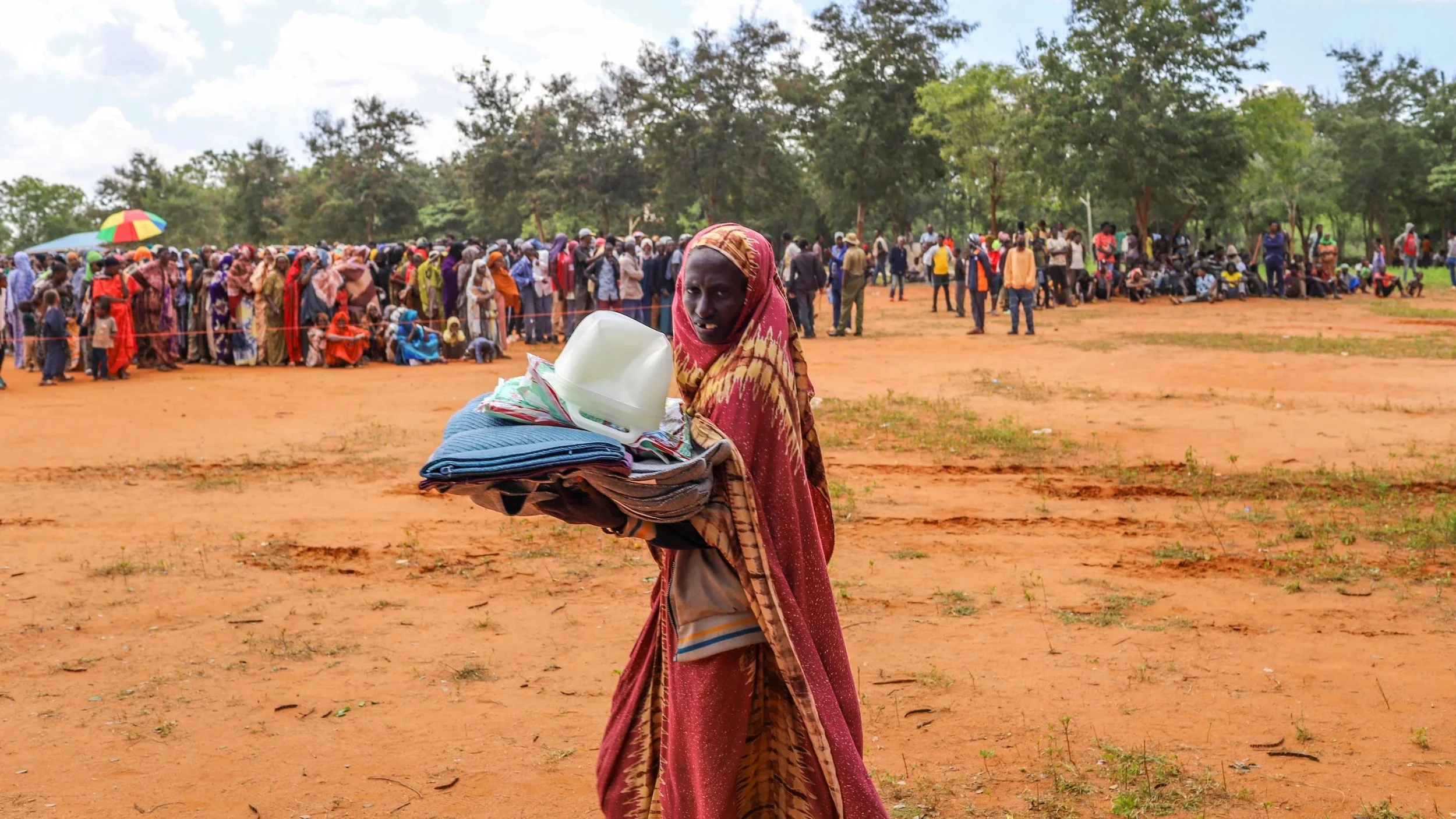
A woman holds blankets and a water container as others wait for aid at the OMC camp in Moyale, Kenya, Wednesday, Nov. 4, 2026. (AP Photo/Patrick Ngugi)
They are fleeing fighting between Somali and Oromo communities that is rooted in a long-running boundary dispute between Ethiopia's Oromia and Somali regions. The U.N. humanitarian office, OCHA, said the latest violence began Oct. 18 and escalated into armed clashes Oct. 22.
The emergency falls hardest on pregnant women, nursing mothers and young children. In an Oct. 27 statement, the Kenya National Commission on Human Rights reported that two women had given birth at Manyatta and two more at Bitiye, both sites sheltering new arrivals.
The commission said the births showed the urgent need for maternal and newborn health care, emergency medical services and postnatal support. It also warned that the influx was placing significant pressure on host communities and on food, clean water, shelter, sanitation and health care.
For Dalacha, those warnings describe her daily life. Her daughter needs nourishment today, no matter how long the family remains displaced or when more help arrives.
Some families have found shelter in schools and churches, including a temporary camp at Moyale's Oriental Mission Church. Many more are staying with Kenyan families who have opened their doors despite having little to spare. In one host's home, 30 displaced people shared a single room for sleeping, the AP reported, and at the Al-Huda temporary camp, families of six ate from a single tray.
A young girl in a floral head covering and a blue identification wristband crouches over a small fire between two rocks, setting down a cooking pot, as women sit along the steps of a building behind her in Moyale, Kenya.
Kerko Mohammed, 70, fled after gunfire struck her family's home. A Kenyan host had provided food and water, she told the AP, but the household had limited money.
UNHCR, UNICEF, the World Food Programme, the International Organization for Migration and the Kenya Red Cross Society are working with Kenya's Department of Refugee Services and county authorities to respond.
In the first days of the influx, the Kenya Red Cross began setting up temporary shelter and distributing tents, blankets, sleeping mats, jerrycans, kitchen sets and fortified porridge flour. UNHCR and Red Cross teams have since issued identification wristbands at camps to document the growing number of arrivals.
By Nov. 6, UNHCR had profiled about 14,000 people to assess their needs. That count covers only those assessed so far, and the total number of arrivals is far higher.
On Nov. 5, UNHCR, UNICEF, IOM and the World Food Programme jointly appealed for $8.9 million to meet lifesaving needs for up to 50,000 people over the next three months. UNHCR did not say how much of that money it had received, the AP reported. Henok Ochalla, a senior emergency coordinator for the agency, said limited funds restrict what relief workers can do.
"With the limited capacity in terms of financial resources that we have, we will not be able to respond to a larger population," Ochalla said.
In the meantime, Kenyan households keep sharing their homes, food and water with families who crossed the border seeking protection. Much of the care in Moyale has come from neighbors who made room on their floors and shared scarce supplies with strangers.
That kind of hospitality echoes a charge Scripture gives to God's people: "Open thy mouth, judge righteously, and plead the cause of the poor and needy" (Proverbs 31:9). Moyale sits thousands of miles from most of the women who read this magazine, and its suffering can easily go unseen. The need for advocates and for prayer is urgent all the same.
As relief agencies work to reach displaced families, believers can keep Moyale before God in prayer. For Shukria Dalacha, the need is as close as the newborn in her arms. Sijra survived the journey out of the violence, and now she needs the nourishment, protection and care every baby deserves.