

The Roots of Obesity Among Black Women Run Deeper Than Diet
New CDC maps show high obesity rates among Black adults, and new research finds that socioeconomic disadvantage explains more of Black women’s higher rates than diet or exercise.
By Stephanie Daniels | EEW Magazine Online Health and Wellness Editor
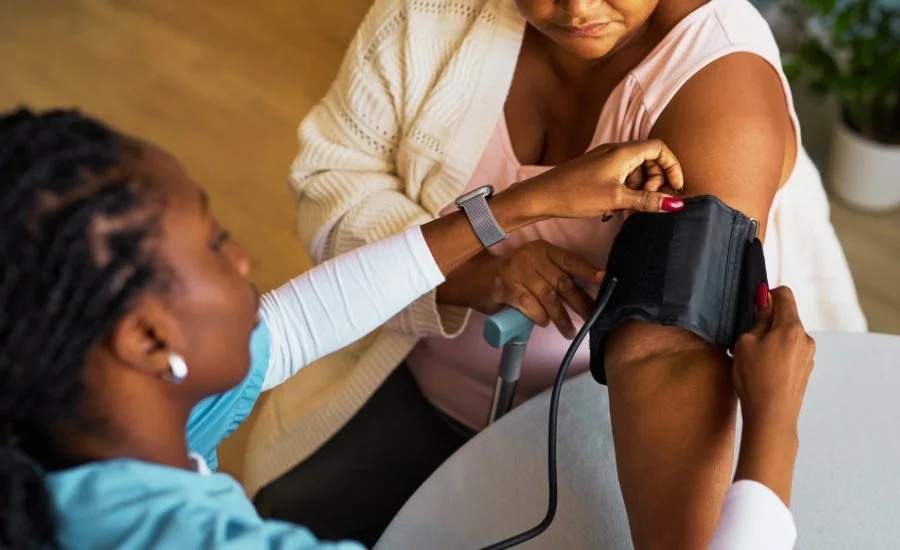
Regular checks of blood pressure, blood sugar and cholesterol can help women spot health risks early.
The nation’s latest obesity maps show a troubling pattern for Black Americans. According to new data from the Centers for Disease Control and Prevention, obesity affected at least 35% of Black adults in 35 of the 44 states and Washington, D.C., with enough data to report. For White adults, 13 areas reached that threshold. Black women have long had some of the country’s highest obesity rates, and new research suggests the circumstances shaping a woman’s weight may begin decades before she walks into a doctor’s office.
The maps, updated Sept. 24, rely on adults’ self-reported height and weight. The breakdown by race and ethnicity combines survey responses from 2023 through 2025.
For Black women, the findings add urgency to a long-standing health concern. Earlier national data based on physical measurements found that 56.9% of Black women had obesity in 2017 and 2018, compared with 39.8% of White women.
Obesity is linked to a higher risk of heart disease, stroke, type 2 diabetes, chronic kidney disease and several cancers. Understanding why the burden falls so unevenly means looking well beyond eating habits and physical activity.
A study published in December 2025 in the peer-reviewed journal Demography offers important insight. Researchers followed 2,598 Black and White women from adolescence into adulthood. They examined childhood neighborhoods, household circumstances, education, income, exercise, eating habits and other factors linked to obesity.

Research suggests the conditions a girl grows up in can shape her health well into adulthood.
The findings challenge the idea that differences in individual behavior explain the disparity. Socioeconomic disadvantages in adolescence and adulthood accounted for more than half of the gap in obesity between Black and White women. The health behaviors the researchers measured accounted for about 15%. Neighborhood disadvantage in adolescence and lower household income in adulthood were among the significant contributors.
The study could not establish cause and effect, and the researchers acknowledged limits in how health behaviors were measured. Still, the findings suggest that efforts to improve Black women’s health must account for the social and economic conditions that shape their opportunities across a lifetime. A woman’s health today can reflect years of accumulated influences, including some she had little power to change as a child.
Food insecurity adds another piece to the picture. In 2024, 24.4% of Black households experienced food insecurity, compared with 10.1% of White households, according to the U.S. Department of Agriculture. Food insecurity means a household struggles to consistently get enough food because of limited money or other resources. It can also limit the quality and variety of what families eat.

Food insecurity can limit both the amount and the quality of food a family can afford.
Research has found an especially consistent association between food insecurity and obesity among women in high-income countries, though the reasons remain under study.
A nearby supermarket is only part of the equation. Having a grocery store close by does not guarantee a household can afford nutritious meals, and studies of new supermarkets in underserved neighborhoods have found that better store access alone does not reliably change body weight. Household finances, education, neighborhood conditions and the mix of food options around people all deserve attention.
The CDC describes obesity as a complex chronic disease shaped by many factors. Chronic stress can affect hormones involved in appetite and metabolism, and too little sleep can disrupt the body’s regulation of hunger and energy.
Conditions such as polycystic ovary syndrome and hypothyroidism may contribute to weight gain, as can certain antidepressants, steroids, hormonal medications and drugs used to treat other conditions. Genetics, age and environment add further layers.
These factors affect women differently, and none of them makes obesity inevitable. Together, they make the case for individualized medical care.
For women concerned about their weight or metabolic health, a thorough medical assessment can identify risks and treatment options. That may include checking blood pressure, blood sugar and cholesterol, reviewing medications, discussing sleep and stress, and looking for underlying conditions that need attention. When appropriate, treatment can include nutrition counseling, physical activity programs, behavioral support, FDA-approved weight-management medications or other medical care.
The conversation should also account for the limits of body mass index, or BMI, the measure behind the CDC maps. BMI is useful for screening populations, but it cannot on its own determine a person’s overall health or distinguish muscle from fat.
Respectful care is essential. Weight stigma can discourage patients from seeking help and derail productive conversations about their health.
Churches and community organizations can contribute through health education, affordable wellness activities, walking groups, screenings and practical support for families facing food insecurity.

Churches and community groups can support wellness through walking groups, health screenings and fellowship.
For Black women, the goal is better health: lower risk of preventable illness, access to appropriate treatment and the opportunity to stay well throughout life.
The CDC’s latest maps show the scale of the concern. A growing body of research on Black women’s lives helps clarify what a meaningful response must address: the economic circumstances, health needs and opportunities that shape women’s lives long before a diagnosis.