

Most Black mothers with anxiety or depression symptoms got no treatment during pregnancy, and nearly 3 in 4 who had an episiotomy say they had no input, a national survey finds.
By EEW Magazine Online Editors
A doctor checks a pregnant woman’s blood pressure during a prenatal visit. A new national survey of more than 1,600 Black mothers finds nearly half felt judged by a member of their care team. (Viktor Cvetkovic/Getty Images)
Her feet were swelling, and her vision had begun to blur. Convinced she was showing signs of preeclampsia, a potentially dangerous pregnancy complication, she raised her concerns with the medical professionals caring for her. She said they brushed her warnings aside.
"I was repeatedly ignored and told I was overreacting," the mother said in an anonymous response to a sweeping new national survey of more than 1,600 Black mothers.
Released Tuesday in Atlanta, Listening to Black Mothers: A Call for Liberated Black Births documents experiences ranging from unwanted medical interventions and poor communication to untreated depression, gaps in insurance coverage and limited access to the maternity care providers women prefer.
Nearly half of respondents, 47%, said someone on their care team had judged them negatively. Among those who had an episiotomy, a surgical incision made during childbirth, 73% said they had no input in the decision. Among women with symptoms of anxiety or depression during pregnancy, 58% received no treatment.
The National Partnership for Women & Families produced the report with the Black Mamas Matter Alliance and MomsRising. It draws on the experiences of mothers in all 50 states and Washington, D.C., who gave birth in hospitals from 2023 through 2025. The report arrives amid persistent racial gaps in maternal health despite years of public attention and policy efforts.
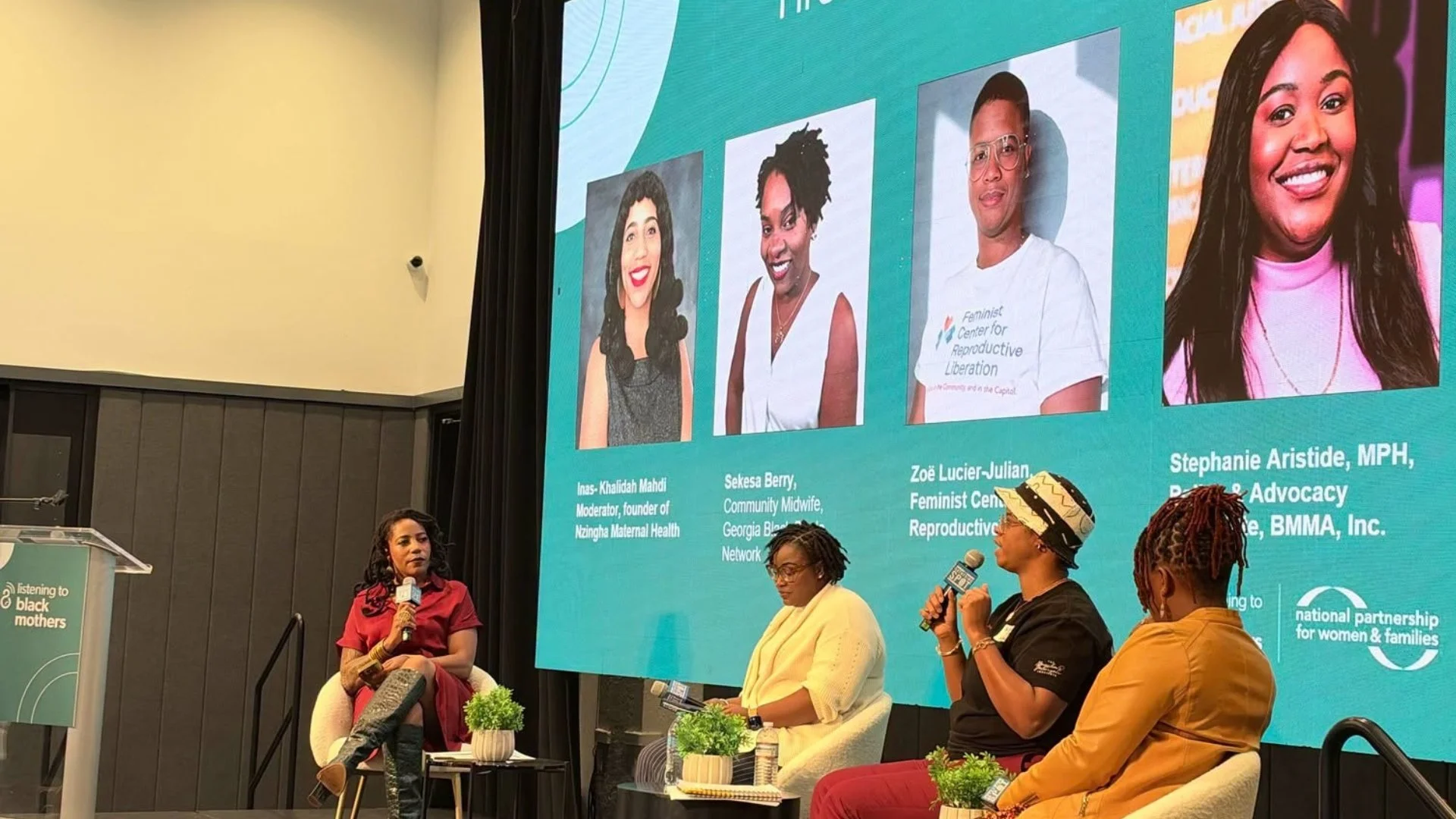
Panelists discuss Black maternal care at the Nov. 17 launch of Listening to Black Mothers at The Gathering Spot in Atlanta. The National Partnership for Women & Families released the report with the Black Mamas Matter Alliance and MomsRising. (MomsRising)
In 2024, non-Hispanic Black women died of maternal causes at a rate of 44.8 per 100,000 live births, compared with 14.2 for non-Hispanic white women, according to federal data from the Centers for Disease Control and Prevention. That is more than three times the rate.
The survey looks at what happens well before a death or medical emergency makes headlines. It examines the everyday exchanges that shape whether a woman feels safe asking questions, reporting pain or taking part in decisions about her care.
Disrespectful treatment is one of six major concerns the report identifies. In addition to the 47% who felt judged, 44% of Black respondents said they did not feel heard or listened to, and 45% said their requests did not get timely responses.
That treatment changed how some women dealt with their providers. Among respondents who felt negatively judged, 32% said they withheld information from their providers, 23% felt anxious or stressed during appointments and 21% lost trust in their health care team.
The CDC's Hear Her campaign lists vision changes like those the mother described among the urgent maternal warning signs that call for prompt medical attention during pregnancy and after delivery.
Questions of communication and choice followed women into the delivery room. Among Black respondents who delivered by cesarean, 63% had an unplanned procedure, compared with 46% of white respondents who delivered by cesarean. Nearly one-third of Black respondents whose labor was induced reported little or no shared decision-making about it.
An unplanned cesarean can be medically necessary, and the survey does not judge whether any particular surgery was appropriate. Many mothers, though, said they wanted more say in how their babies were delivered. One mother wrote that her C-section was not the experience she wanted or expected. "I felt like the decision was out of my control, and that loss of choice left me frustrated and disappointed," she wrote.
Experiences varied. About three-quarters of Black respondents said they always felt safe during their postpartum hospital stay, and a similar share trusted every member of their hospital care team. Those accounts sit alongside substantial reports of mistreatment.
Emotional and psychological care showed another wide gap. During pregnancy, 46% of Black respondents reported symptoms of anxiety and 35% reported symptoms of depression. After delivery, nearly 40% reported anxiety symptoms and 30% reported depression symptoms.
Among respondents with those symptoms, 58% received neither counseling nor medication during pregnancy, and 53% went without treatment after giving birth. One mother said she waited two years for mental health services from the same clinic that provided her care after delivery.
Getting care also depends on insurance, transportation, provider availability and time off work. Nearly 1 in 4 respondents, 23%, could not schedule their first prenatal appointment as early as they wanted, and 28% said their health insurance coverage began during pregnancy. Among employed respondents, 42% had no paid sick time or other benefit that would have let them attend prenatal visits without losing pay.
Many mothers want different kinds of care. Just 7% of Black respondents received most of their maternity care from a midwife, yet 73% said they would want or consider a midwife in a future pregnancy. Doula support was also uncommon, with 17% having a doula during birth.
See all figures as a table
| Finding | Figure |
|---|---|
| Felt negatively judged by a member of their care team | 47% |
| Did not get timely responses to requests | 45% |
| Did not feel heard or listened to | 44% |
| Had no input in the decision (of those who had an episiotomy) | 73% |
| C-section was unplanned, Black respondents (of those who delivered by cesarean) | 63% |
| C-section was unplanned, white respondents (of those who delivered by cesarean) | 46% |
| Little or no shared decision-making (of those whose labor was induced) | 31% |
| No anxiety or depression treatment during pregnancy (of those with symptoms) | 58% |
| No anxiety or depression treatment after giving birth (of those with symptoms) | 53% |
| No paid time off for prenatal visits (of those employed) | 42% |
| Insurance coverage began during pregnancy | 28% |
| Could not book a first prenatal visit as early as wanted | 23% |
| Would want or consider a midwife in a future pregnancy | 73% |
| Had a doula during birth | 17% |
| Received most maternity care from a midwife | 7% |
| Maternal deaths per 100,000 live births, non-Hispanic Black women, 2024 | 44.8 |
| Maternal deaths per 100,000 live births, non-Hispanic white women, 2024 | 14.2 |
The report's authors argue that expanding community-based, Black-led maternity services could help close gaps in trust, communication and continuity of care. Their recommendations include greater investment in midwives and doulas, wider access to mental health treatment, systems that measure whether patients receive respectful care, and greater accountability from hospitals, insurers and policymakers.
Amani Echols, senior policy analyst for maternal health at the National Partnership for Women & Families, told Stateline the problems mothers described are structural.
"The issues that Black moms are experiencing are not due to individual failures or individual behaviors, but a reflection of systemic failures and inequities," Echols said.
The findings rest on mothers' own accounts of their hospital births. They offer substantial insight into how women experienced their care, though they are not clinical reviews of individual cases.
For years, the nation has measured its Black maternal health crisis largely through deaths, complications and disparities, and those measures remain essential. The mothers in this survey point to another: how a woman is treated while she is still in the exam room, asking questions and trying to be heard. By their accounts, safer care begins with answering her concerns and respecting her decisions, from the first prenatal visit through the months after delivery.