When someone has betrayed your trust or taken advantage of your kindness, honoring God can guide you through the difficult work of moving forward.
By Dianna Hobbs | EEW Magazine Online

Long after the truth comes out, the memory of a betrayal can keep pulling you back to what happened. (Photo Credit: Jen Harwick | EEW Magazine Online)
Sometimes the hardest part of trusting the wrong person is living with what comes afterward. You believed someone who turned out to be dishonest. You invested your heart in a relationship that fell apart. You sacrificed for a person who repaid your generosity with manipulation or betrayal.
Long after the truth surfaces, you are still sorting through the consequences, trying to understand what you missed and how to rebuild what was damaged.
Even once you decide to move forward, the memory keeps pulling you back into old conversations, unanswered questions, and the longing to hear that person admit what they did.
The Israelites faced a reckoning of their own in Joshua 9. Fresh from victories at Jericho and Ai, they were approached by the Gibeonites, a people who lived close by, within a few days’ walk.

The Book of Joshua records how Israel’s leaders kept a costly oath after discovering they had been deceived. (Photo Credit: Nathan Karas | EEW Magazine Online)
The issue was that God had commanded Israel to destroy every nation inside the land and to make no covenant with them. The Lord only allowed peace terms for cities “very far off” (Deuteronomy 7:1-2; 20:15-17). Living in the heart of the territory, the Gibeonites got around this stipulation by building a lie around the one exception. They arrived posing as travelers from a distant country, and worn sandals, patched wineskins, and moldy bread backed up the story.
Israel’s leaders inspected the provisions, took the men at their word, and were fooled. Ultimately, they made a covenant without consulting God (Joshua 9:14). Three days later the truth came out. The strangers were neighbors. The congregation murmured against the leaders who had bound Israel to them.
Despite the mistake, the leaders refused to wiggle out of it. “We have sworn unto them by the LORD God of Israel: now therefore we may not touch them,” they said (Joshua 9:19).
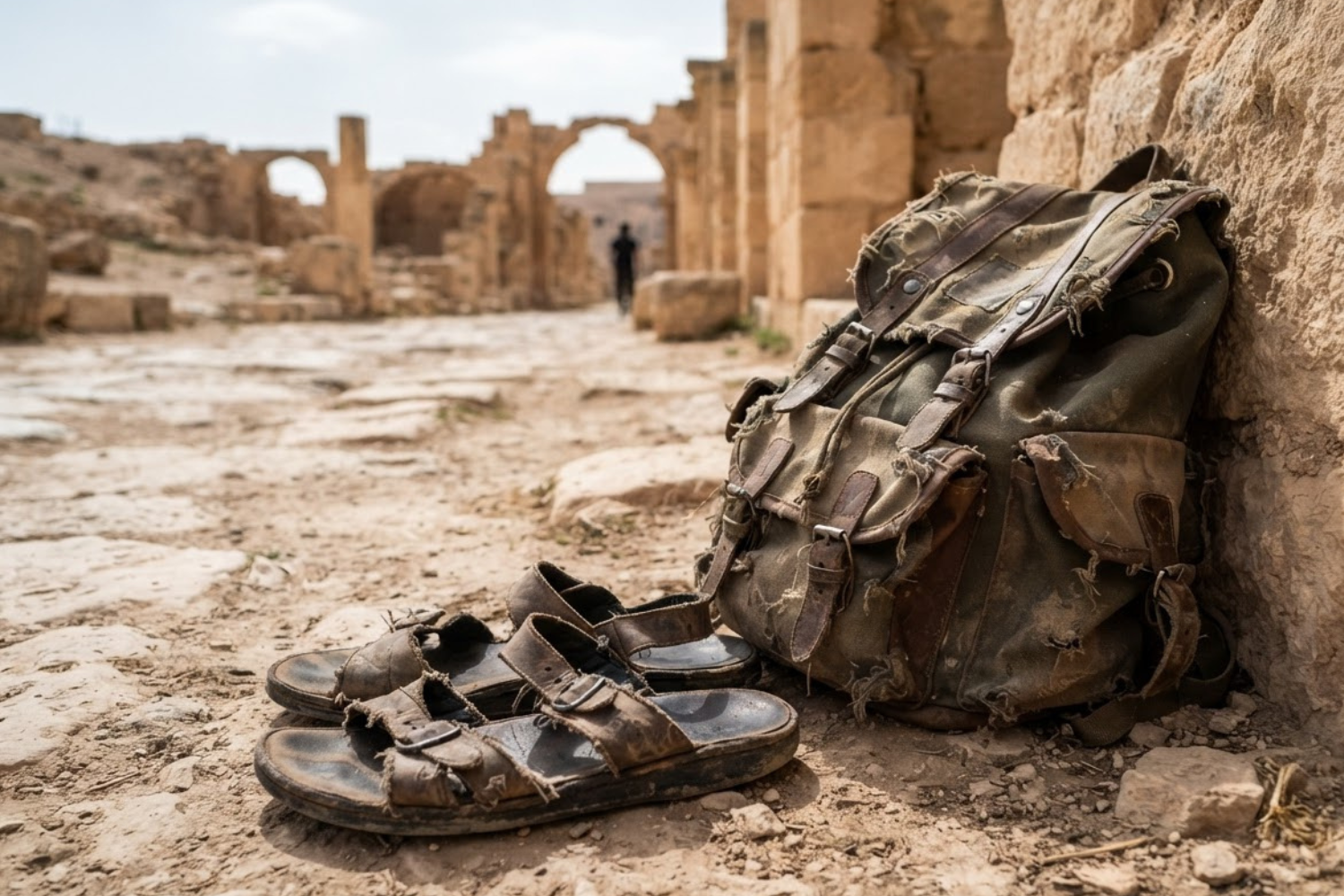
Worn sandals and a weathered pack, the kind of travel-beaten gear the Gibeonites used to convince Israel they had come from a distant country (Joshua 9:5). [Photo Credit: Joshua Harris | EEW Magazine Online]
Verse 21 records their ruling: “Let them live.”
The Gibeonites would be spared, assigned to cut wood and carry water for the congregation, and the oath would stand.
The leaders knew breaking a vow sworn in His name would bring wrath upon Israel (verse 20). So they absorbed the people’s complaints and the lasting burden of a treaty secured through lies, and they refused to let someone else’s dishonesty become their excuse for dishonoring God.
Centuries later, when King Saul broke the oath by attacking the Gibeonites, the Lord sent a three-year famine during David’s reign that lifted only after the wrong was addressed (2 Samuel 21:1-14). God remembered what was promised in His name and expected the vow to be kept long after the men who made it had died.
Like those leaders, we are bound by a commitment. We have pledged ourselves to Christ, and that pledge reaches into the private moments when resentment feels justified and nobody is watching. Colossians 3:17 instructs believers to do all things, “in word or deed,” in the name of the Lord Jesus. Our words about the person who hurt us belong to Him. So do our decisions about how to deal with them, even after betrayal. We must refuse revenge, speak truthfully, seek wise counsel, and leave vengeance where Scripture places it: “Vengeance is mine; I will repay, saith the Lord” (Romans 12:19).
Letting someone live honors God and leaves room for boundaries. The leaders spared the Gibeonites and also set the terms on which they would remain. You can extend mercy and still end contact, protect your household, or pursue accountability through the proper channels.
Let them live, because you belong to the Lord. Leave the accounting to Him, and give your strength to the life He has placed in your hands. The God who asks you to honor Him in hard places will honor your trust in Him as you keep moving forward.
A prayer for today: Heavenly Father, You see everything that happens and what it costs me. Teach me to honor You in the way I respond. Let my reverence for You guide my decisions and my love for You govern my conduct. In Jesus’ name, Amen.
For deeper study: Joshua 9:1-27; 2 Samuel 21:1-14; Colossians 3:17; Romans 12:17-21.