In today’s Devotion, Dianna Hobbs revisits a message she wrote one month before a traumatic brain injury and reminds readers that whatever verdict people or circumstances deliver, God speaks last.
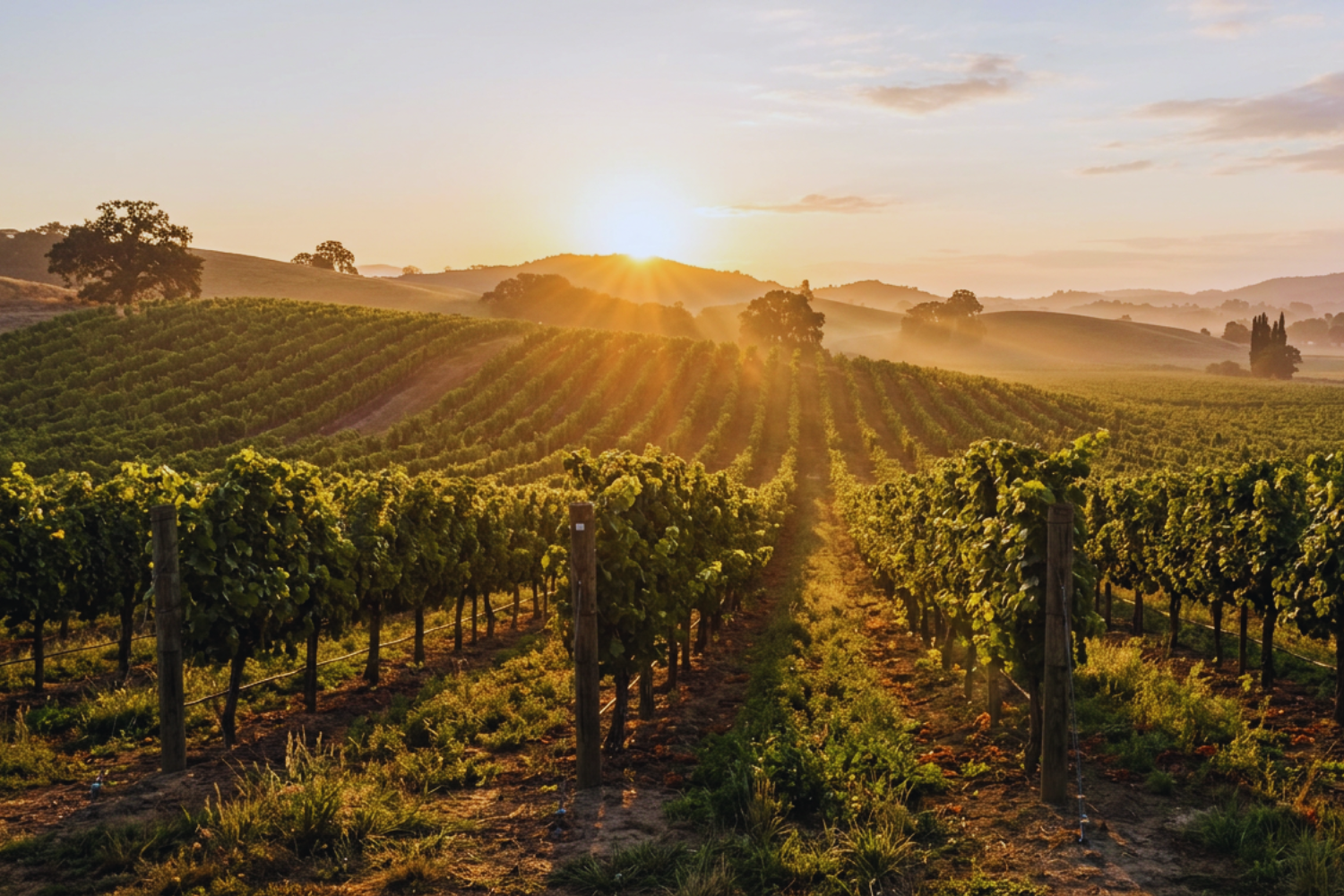
The God who saw Naboth’s vineyard sees what has come against yours. (Credit: Paris Vijello / EEW Magazine FILE)
This week I stumbled across a devotion I published here in July 2019 under the title “God Will Have the Final Say.” About a month after it went live, I suffered a traumatic brain injury and a ministroke. Doctors later told me the window for recovering my memory had closed. That was their verdict, and God overruled it. The memory restoration I have experienced since then is documented, and I give Him all the glory for it. Reading that old title now, seven years later, I realized I had written a promise I was about to need more than I knew.
Verdicts come in many forms. Some arrive on a medical chart. Others come from people who misuse their power to take what does not belong to them. The man at the center of that 2019 devotion faced the second kind. People with power wanted what God had given him, and they used the courts, the elders and two lying witnesses to take it. No one on earth stopped them. God saw it and spoke.
His name was Naboth, and 1 Kings 21 tells us he owned a vineyard in Jezreel, right beside the palace of Ahab, king of Israel. Ahab wanted the land for a vegetable garden. He offered Naboth a better vineyard or its value in money, and Naboth turned him down: “The LORD forbid it me, that I should give the inheritance of my fathers unto thee” (1 Kings 21:3, KJV).
The Hebrew word translated “inheritance” is nachalah. It describes a portion allotted by God and passed down within a family. When Israel entered the Promised Land, each tribe and household received its nachalah, and God’s law kept that land in the family line (Leviticus 25:23; Numbers 36:7). To Naboth, that vineyard carried his family’s history and God’s provision. He held it as a trust, and he would not trade it for a king’s convenience.
Ahab could not stand being told no. Scripture says he went home angry, lay on his bed, turned his face away and refused to eat. When his wife, Jezebel, found out why, she promised to get him the vineyard herself. She wrote letters in Ahab’s name, sealed them with his seal and sent them to the elders and nobles of Naboth’s city. Her instructions were to proclaim a fast, seat Naboth in a place of honor and set two worthless men against him to testify that he had cursed God and the king. The leaders did exactly as she asked. Naboth was carried outside the city and stoned to death for crimes he never committed.
When Jezebel told Ahab the news, he got up and went down to claim his new vineyard. An innocent man was dead, his family’s inheritance had been taken, and the people responsible sat on the throne of Israel. Every earthly safeguard had failed. The elders cooperated, the witnesses lied and the proceedings were corrupt from start to finish. For a moment, it looked as though the powerful had gotten away with everything.
God had seen all of it.
He sent the prophet Elijah to meet Ahab in the vineyard with a question that cut straight to the heart: “Hast thou killed, and also taken possession?” (1 Kings 21:19, KJV).
The phrase “taken possession” comes from the Hebrew verb yarash. Scripture uses the same word for Israel taking possession of the land God promised them, the very process that gave Naboth’s family its nachalah in the first place. Ahab tried to inherit by murder what God had given Naboth by promise. God bound the two acts together in a single sentence. The vineyard in Ahab’s hands could never be separated from the blood that made it his.
Through Elijah, the Lord pronounced judgment on Ahab and Jezebel. Ahab humbled himself, and God delayed part of that judgment (1 Kings 21:27-29). Ahab later died in battle (1 Kings 22), yet Scripture carries Naboth’s story more than a decade further.
In 2 Kings 9, Jehu, anointed at God’s command to judge Ahab’s house, met Ahab’s son, King Joram, on the very ground that had belonged to Naboth (2 Kings 9:21). Jehu’s arrow struck Joram, and Jehu ordered his body thrown onto that field, recalling the word of the Lord: “Surely I have seen yesterday the blood of Naboth, and the blood of his sons, saith the LORD; and I will requite thee in this plat, saith the LORD” (2 Kings 9:26, KJV).
That verse reveals what 1 Kings 21 never mentioned. Jezebel’s scheme had also killed Naboth’s sons, the heirs who could have claimed the land. No court in Israel ever answered for them. God remembered every one. Judgment landed on the exact plot Ahab stole, and Jezebel met her end in Jezreel soon after (2 Kings 9:30-37).
What moves me most is that Naboth never saw any of it. His faithfulness did not spare him from injustice, and he did not live to see his name cleared. God’s final say came after Naboth was gone, but it came anyway. God never needed an honest witness or a working court to know the truth. He saw everything, and He said so: “I have seen.”
Reading Naboth’s story now, I recognize my own. God gave me a promise, an inheritance and a destiny, and in 2019 a brain injury moved to take possession of all three. Like Ahab standing in a vineyard that was never his, a traumatic brain injury laid claim to what God had placed in my hands. Doctors said the window for recovering my memory had closed. God knew whose inheritance it was. A verdict was pronounced over me, but God had the final say.
My brain injury had no motive behind it, but the enemy did. He thought he could use it to rob me of my inheritance. That subtle trickster works through physical afflictions and through people alike. Human perpetrators may deny their actions, manipulate circumstances, throw a stone and hide their hand, misuse their influence or convince others to believe a lie. They may even appear to prosper after causing great harm.
They cannot hide the truth from God.
Paul wrote to believers suffering persecution in Thessalonica, “God is just: He will pay back trouble to those who trouble you” (2 Thessalonians 1:6, NIV). His promise directed their confidence toward the righteous judgment of God, whose timing and wisdom exceed our own.
Friend, perhaps someone has treated you unfairly, blocked an opportunity or tried to take something you worked hard to build. Maybe you are carrying a report from a doctor, a lender, a courtroom or an employer that sounds like the end of the matter. Whatever the source of your distress, the Lord knows exactly what you are facing, and the verdict in front of you is still subject to His.
You can place your circumstances in His hands without letting bitterness, fear or the desire for revenge consume your heart. You can keep doing what is right, even when people around you choose otherwise. And on the days you cannot understand what God is doing, you can rest in the assurance that He knows what has been done.
I wrote those words in 2019 without knowing that, the very next month, a devastating diagnosis would pronounce a seemingly irreversible verdict over my life. I understand and believe the words I wrote then about God’s justice and restoration even more today.
Nahum 1:7 holds the promise I want to leave with you: “The LORD is good, a stronghold in a day of distress; he cares for those who take refuge in him” (CSB). The word for stronghold, ma’oz, describes a fortified place where people ran for safety when an enemy approached. To take refuge, chasah, means to flee to that shelter and trust it to hold. Notice where Nahum locates God’s protection: in a day of distress. His presence meets you in the middle of the trouble.
So bring Him your concerns. Tell Him what hurts. Ask for wisdom, strength, protection and peace. Trust Him to guide your steps and sustain you through whatever comes.
As you drink down the contents of your cup, know this: the Lord knows your name, sees your circumstances and cares about what happens to you. The verdict you are facing has not escaped His notice, and it is not the last word.
God will have the final say.
Now let’s pray.
God, thank You for being my refuge in times of trouble. When I face injustice, opposition or circumstances I cannot control, help me trust Your wisdom and Your timing. When people or circumstances pronounce a verdict over my life, remind me that You speak last. Guard my heart against fear and bitterness. Give me courage to stand for what is right, strength to endure hardship and peace in knowing that You see and care for me. I place my circumstances and my future in Your faithful hands. In Jesus’ name, Amen.