

Byron Donalds and John James could become the first elected Black Republican governors in American history. Their campaigns are exposing the hostility Black conservatives face and the divisions over who gets to define Black political loyalty.
By EEW Magazine Online Empowerment Editors
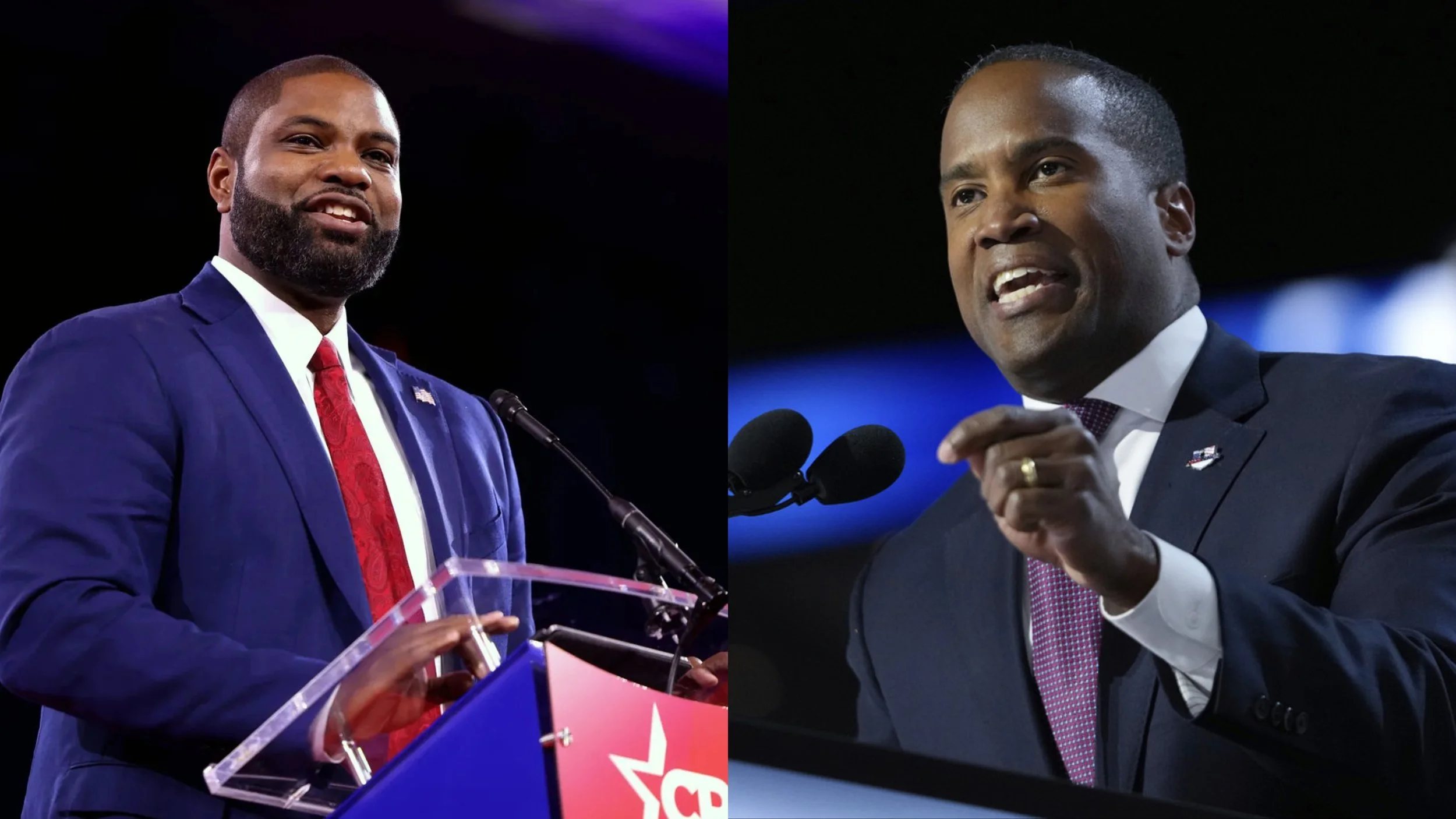
Florida Rep. Byron Donalds, left, and Michigan Rep. John James are each running to become the first Black governor of his state on Nov. 3.
Photos: Getty Images. Illustration: EEW Magazine Online
When a Black American publicly identifies as conservative or Republican, the backlash is often swift and vicious. The ridicule comes from political opponents, celebrities, strangers online, and sometimes members of their own communities. It frequently goes beyond disagreements over policy or party allegiance. Black conservatives are branded sellouts and race traitors, and some are subjected to racial slurs intended to shame them into political conformity.
For decades, these attacks have reinforced an unmistakable message: Black Americans who depart from expected political loyalties should expect to pay a personal price.
But something is shifting, even if slowly. On Nov. 3 two Black Republicans will stand before voters with an opportunity to make history.
Florida Rep. Byron Donalds and Michigan Rep. John James are running to become the first Black governors of their respective states. A victory by either man would also make him the first Black Republican ever elected governor of a U.S. state.
Republican P.B.S. Pinchback became the nation’s first Black governor in 1872, serving about five weeks in Louisiana after the sitting governor was removed during impeachment proceedings. He never won the office at the ballot box. More than 150 years later, Donalds and James are seeking to accomplish what no Black Republican has done.
Their candidacies have caught the attention of rapper Nicki Minaj. On Sunday, she flew aboard Air Force One with President Donald Trump and joined him at a rally in Port Huron, Michigan, where he campaigned for James and Senate candidate Mike Rogers. Later that night, she posted on X that she felt Donalds’ and James’ candidacies “on a deeply maternal level.”
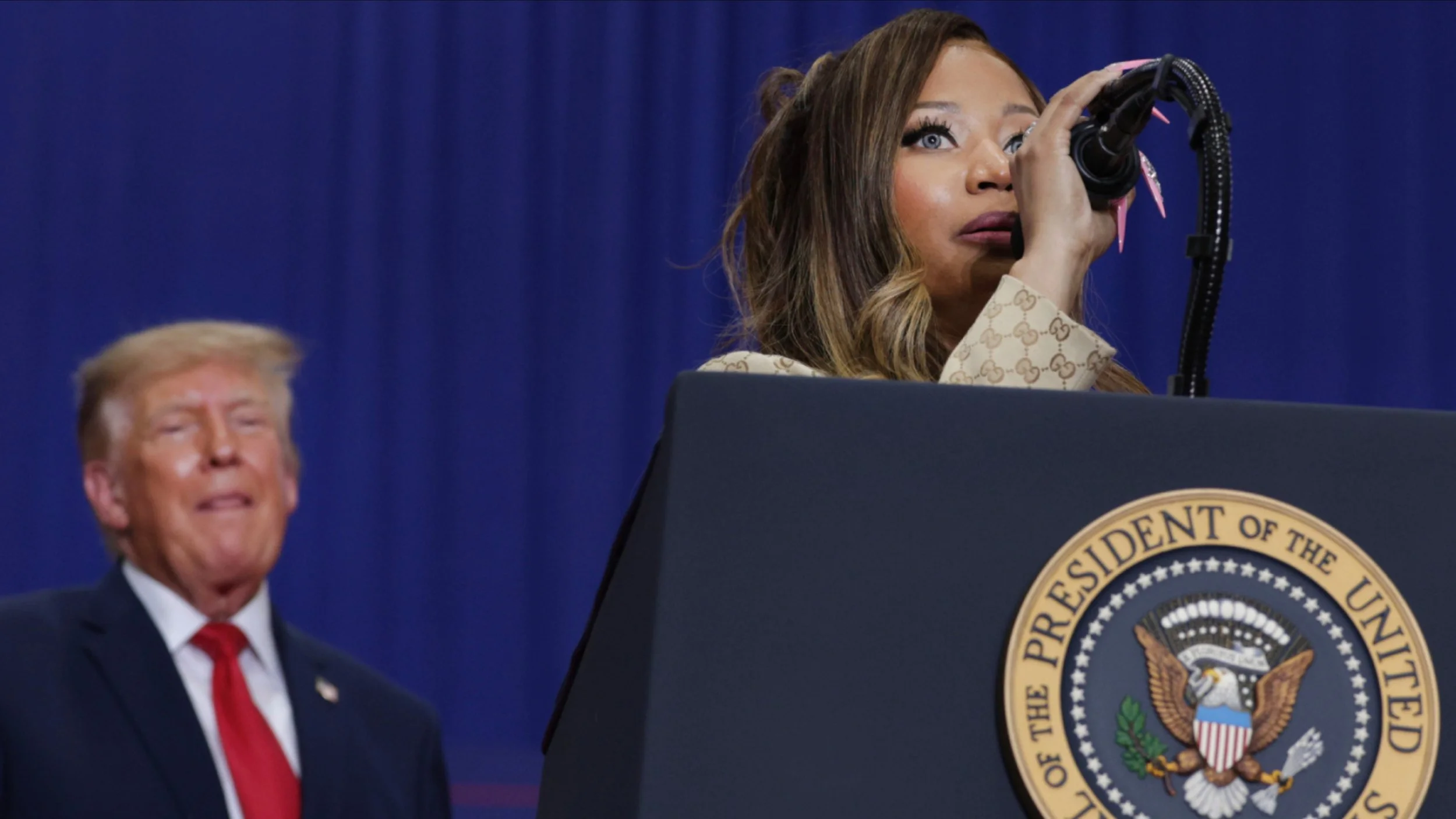
President Donald Trump watches as Nicki Minaj speaks at a rally in Port Huron, Michigan, on Oct. 25.
Credit: Alex Wong/Getty Images
Minaj knows the cost of that kind of allegiance. In January, at a Washington event promoting the Trump administration’s investment accounts for children, she called herself “probably the president’s No. 1 fan.” Many longtime fans turned on her. She said that the criticism only made her support him more.
Black Republicans in public office have faced harsher versions of the same treatment. In April 2021, Sen. Tim Scott of South Carolina delivered the Republican response to President Joe Biden’s address to Congress. Within hours, “Uncle Tim” was trending on Twitter. The phrase played on “Uncle Tom,” an epithet used to portray a Black person as subservient to white interests. In the speech itself, Scott had said liberals and progressives called him “Uncle Tom” and the N-word.
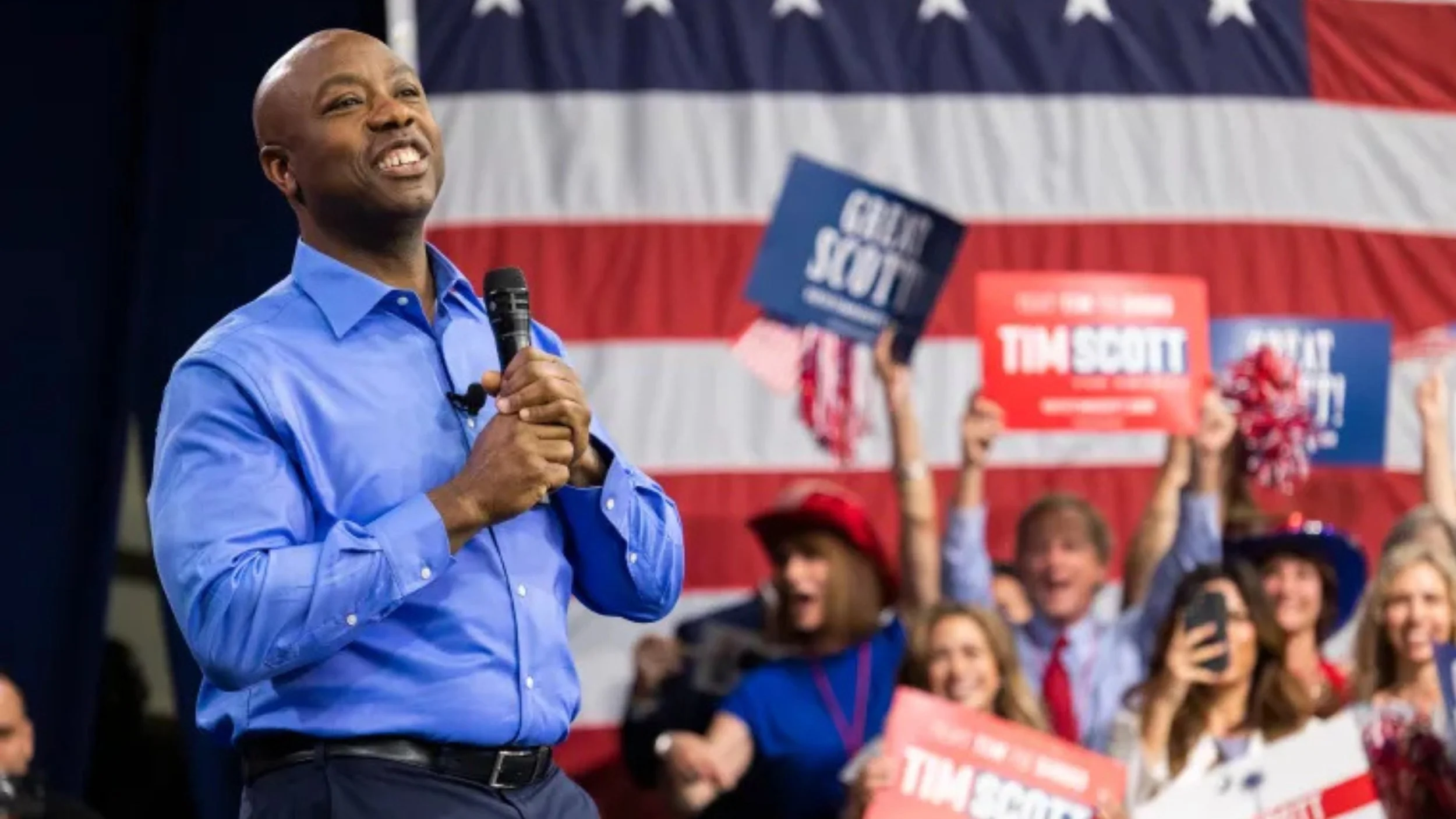
Sen. Tim Scott of South Carolina speaks to supporters at a campaign event. In 2021, the slur “Uncle Tim” trended on Twitter after Scott delivered the Republican response to President Joe Biden’s address to Congress.
Credit: AP Photo/Mic Smith
Scott’s positions on voting rights, policing and taxation were fair game for criticism. The slur aimed past all of them and questioned his racial identity because of his party.
Donalds has faced sharp scrutiny of his own. On Sept. 29, he held a town hall at Florida A&M University, the historically Black school he attended before transferring to Florida State. When he defended the president’s immigration crackdown, boos and shouting drowned him out. Students also pressed him on diversity programs and civil rights. One pre-law student said many classmates saw a deep disconnect between everyday Black Americans and a Black Republican who backs rolling back civil rights protections.
Donalds responded that the Republican Party has a long record of fighting for civil rights, which drew laughter from the crowd. He then challenged the students to stop voting as a bloc for Democrats and to ask whether that party has delivered on its promises to them.
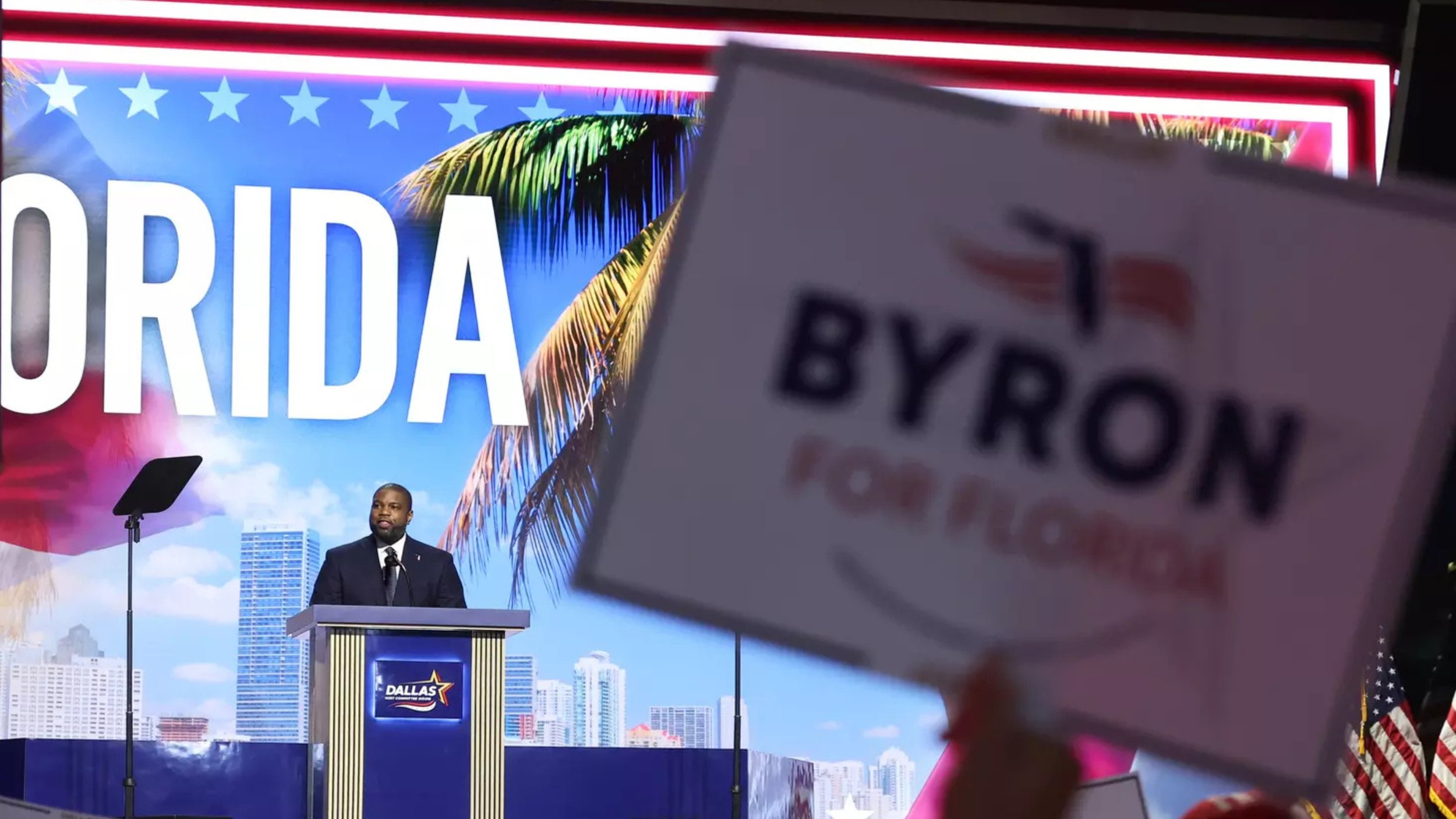
Florida Rep. Byron Donalds speaks at the Republican National Midterm Convention in Dallas in September as a supporter holds a “Byron for Florida” sign. (Credit: Kevin Dietsch/Getty Images)
Resistance has come from inside the Republican Party as well. In March, delegates at Michigan’s GOP convention booed James, though the reason was never clear. In Florida, Donalds won the August primary with less than half the vote and lost 17 counties. In 16 of them, more than 90% of Republican voters are white. University of Florida political scientist Sharon Wright Austin said the results show some white voters will not support a Black candidate regardless of party.
Donalds has rejected race as the explanation. Appearing on HBO’s “Real Time with Bill Maher,” he pointed instead to the crowded field of 11 Republicans on the primary ballot. Primary results alone cannot establish what motivated individual voters.
Even so, Republican support among Black voters has grown. Trump won 15% of the Black vote in 2024, up from 8% in 2020, according to a Pew Research Center study of validated voters, including 21% of Black men. Harris still carried 83%, and Pew traced much of Trump’s gain to changes in who turned out, with relatively few voters switching sides.
In Florida, the shift has a face. Gainesville City Commissioner Cynthia Moore Chestnut, a Black Democrat and former state legislator, endorsed Donalds this fall.
“My endorsement of Byron Donalds is not a betrayal of my values; it is a declaration that Black voters are not political property,” she wrote in a public statement.
Chestnut said she wants to see a Black governor of Florida in her lifetime. She faulted Jolly’s choice of former Rep. Gwen Graham as his running mate, saying qualified Black and Hispanic candidates were passed over. She remains a Democrat. Haines City Commissioner Anne Huffman, another Democrat, also joined Donalds’ coalition of Black leaders. In Gainesville, the Alachua County Democratic Executive Committee answered with 12 endorsements of Jolly from local Democratic officeholders. Mayor Harvey Ward urged residents not to let Chestnut’s endorsement distract them.
Many Black voters have substantive objections to Donalds’ record. He has backed restrictions on diversity, equity and inclusion programs, defended the Trump administration’s immigration agenda, and drawn criticism for remarks about Black family life during the Jim Crow era.
Recent polls show both candidates drawing little Black support. Democrat David Jolly leads Donalds among Black voters 76% to 10% in a Mason-Dixon survey for NBC6, and Democrat Jocelyn Benson leads James 73% to 6% in a Mitchell Research poll, though subgroup results carry larger margins of error.
The Rev. Al Sharpton weighed in this month at Bethel Missionary Baptist Church in Tallahassee, during a service Jolly attended. Recalling being asked whether he supported Black empowerment now that a Black Republican was running, he told the congregation, “Everybody my color ain’t my kind.” The sanctuary rose in a standing ovation.