

The former columnist said she did not feel safe going back, closing a 14-month fight that began when the Post fired her over posts after Charlie Kirk's killing.
By EEW Magazine Online Editors
Karen Attiah, then the Washington Post’s Global Opinions editor, speaks about the killing of Saudi journalist Jamal Khashoggi at an event in London on July 9, 2019. (ISABEL INFANTES/AFP via Getty Images)
Journalist Karen Attiah spent more than a year fighting to get her job back at The Washington Post. When an independent arbitrator finally ordered the newspaper to reinstate her, she weighed the offer for nearly three months and then decided to walk away. Attiah, who spent 11 years at the Post as an editor and columnist, announced Sunday, Nov. 8, in a Substack essay that she had accepted a settlement with the newspaper.
The Post fired her in September 2025 over social media posts she wrote after the assassination of conservative activist Charlie Kirk.
"I have decided not to return to what The Washington Post has become," Attiah wrote.
The Washington-Baltimore News Guild, which represented Attiah, confirmed the agreement to the media newsletter Status. The union said the settlement includes the back pay the arbitrator ordered in August. Attiah will not rejoin the Post in any capacity, and the remaining terms were not disclosed.
A Post spokesperson declined to comment Monday on Attiah's decision, The Associated Press reported.
In her interview with Status, Attiah said she did not trust that the paper would stand behind her. "I think I just didn't feel safe returning and that I would be protected," she said. She also questioned whether she could practice the kind of journalism she believed readers deserved.
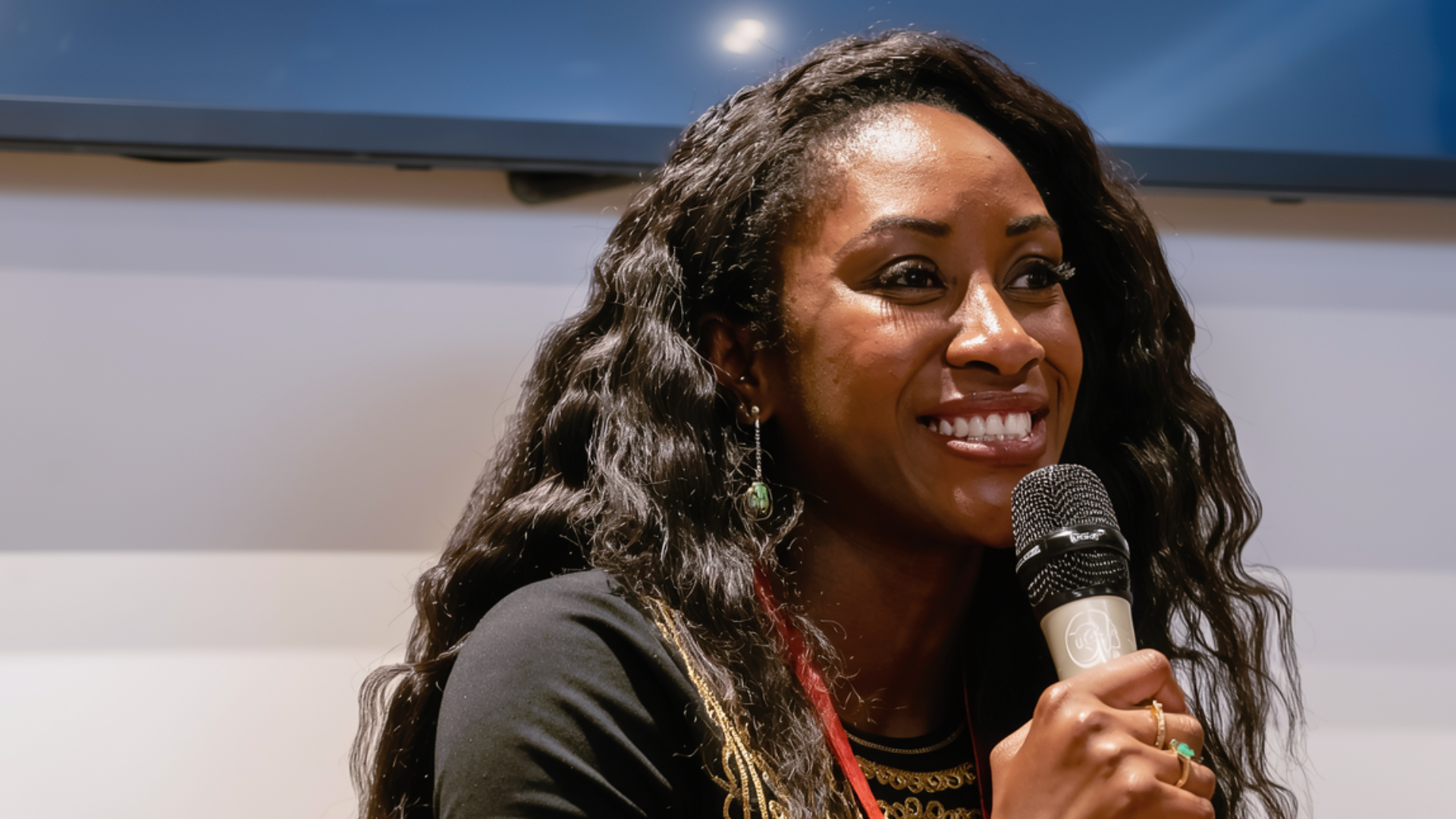
Karen Attiah, then a Washington Post editor, leads a discussion on Saudi hacking techniques at the Oslo Freedom Forum in Oslo, Norway, on May 28, 2019. (Julia Reinhart/Getty Images)
The decision followed a public moment of deliberation. On Thursday, Nov. 5, Attiah asked her more than 600,000 social media followers to vote yes or no on whether she should go back to the Post.
In her essay, she described reaching a painful realization that returning would mean working without the guaranteed freedom and institutional support she needed to use her voice and serve readers.
Kirk, 31, was fatally shot Sept. 10, 2025, while speaking at Utah Valley University in Orem, Utah. That day, Attiah posted a series of comments on Bluesky about the public response to his death, race and political violence.
In one post, she wrote that declining to join in performative mourning for a white man who espoused violence was not the same as violence. In another, she argued that America's insistence on extending care and absolution to white men who espouse hatred and violence helps keep the country violent.
The Post fired her by email on Sept. 11, accusing her of "gross misconduct." The termination letter said her comments violated the newspaper's social media policies, harmed the organization's integrity and potentially endangered the physical safety of staff. It also cited documented performance concerns.
A separate Bluesky post by Attiah also drew scrutiny. In it, she attributed this statement to Kirk without further comment: “Black women do not have the brain processing power to be taken seriously.”
The wording was not an exact quotation. Kirk made the underlying remarks during a July 13, 2023, episode of his show, two weeks after the Supreme Court struck down race-conscious college admissions policies.
Kirk was discussing four prominent Black women: former first lady Michelle Obama, Supreme Court Justice Ketanji Brown Jackson, television host Joy Reid and then-Rep. Sheila Jackson Lee of Texas. He argued that their public statements about affirmative action confirmed his contention that they owed their positions to preferential treatment.
Jackson Lee had described herself as a recipient of affirmative action while emphasizing that she earned her degree. Reid said affirmative action helped bring her to Harvard, explaining that she had strong grades and test scores but might otherwise have gone unnoticed by recruiters. Obama recalled wondering whether classmates assumed she had been admitted to Princeton because of affirmative action, adding that she belonged there. Jackson, who dissented from the Supreme Court’s ruling, had not made a comparable statement about her own admission.
Addressing the four women, Kirk said, “You do not have the brain processing power to otherwise be taken really seriously.” He went on to accuse them of taking opportunities from more deserving white applicants.
The fact-checking organization Lead Stories classified Attiah’s version as an altered quote because it presented remarks directed at four named women as a statement about Black women generally. Kirk’s original comments nevertheless explicitly questioned the intellectual abilities and qualifications of those four women.
The disputed quotation was not among the two social media posts specifically cited in the Post’s termination letter, according to Defector, which reviewed the correspondence.
Attiah rejected the Post's allegations, arguing that her commentary fell within her role as an opinion writer. With support from the Washington-Baltimore News Guild and the Democracy Defenders Fund, co-founded by Norm Eisen, she challenged the firing through arbitration.
In August, arbitrator Sarah Miller Espinosa ruled that the Post failed to establish gross misconduct and lacked good and sufficient cause to fire Attiah under its collective bargaining agreement. She ordered Attiah reinstated with full back pay and lost benefits.
Espinosa found fault with the timing of the posts, describing them as "ill-timed," according to JNS. She concluded they still fell short of the gross misconduct standard the labor agreement required.
The arbitrator was more pointed about the Post's safety argument. She wrote that it was strange for the newspaper to justify the firing partly on the grounds that criminals might commit violence against other employees. She also noted that other staff members whose social media posts drew management's attention were not fired, and she called the gap "absolutely disproportional," Washingtonian reported.
The Washington Post’s name appears on the newspaper’s headquarters in Washington. (AP Photo/Mark Schiefelbein)
The settlement comes amid continued turnover in the Post's opinion section, which owner Jeff Bezos reoriented toward personal liberties and free markets in February 2025. Adam O'Neal, who led the section when Attiah was fired, has since departed. Mark Lasswell is overseeing it on an interim basis, according to TheWrap.
Attiah was among dozens of people across professions who were fired over comments about Kirk's assassination, the AP reported.
She joined the Post in 2014 and became the founding editor of its Global Opinions section in 2016. There she recruited and edited Saudi journalist Jamal Khashoggi, who was killed by Saudi agents inside the Saudi consulate in Istanbul in 2018. She became a columnist in 2021, writing about race, gender, culture and human rights.
Her work on Khashoggi's killing earned her a George Polk Special Award, shared with Post columnist David Ignatius. The National Association of Black Journalists named her its 2019 Journalist of the Year. At the time of her firing, she was the only Black full-time member of the Post's opinion desk.
Attiah has continued writing through her Substack newsletter, The Golden Hour, and has not announced a new position. She closed her announcement with a rallying cry associated with Kwame Nkrumah, Ghana's first president: "Forward ever, backward never."