
5 Takeaways from the DNC's Long-Awaited 2024 Election Autopsy
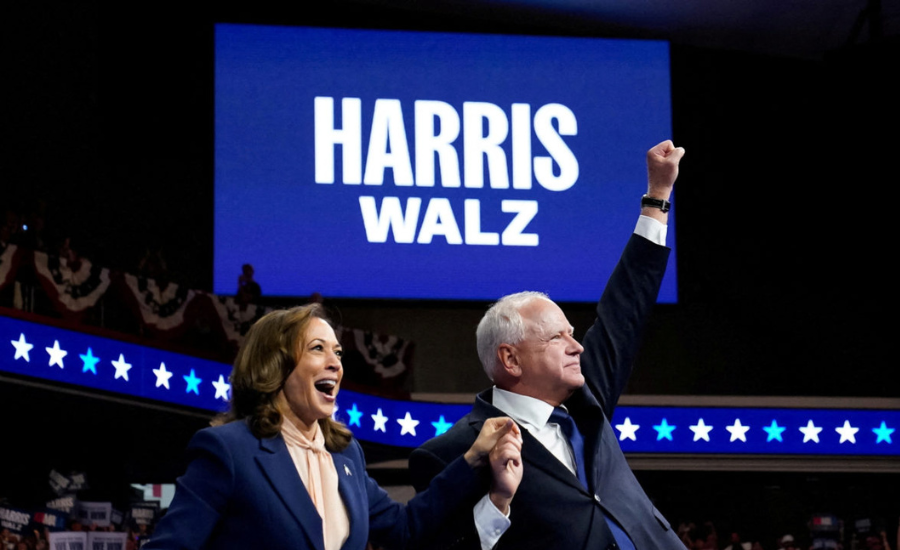
The Democratic Party finally releaseThe DNC finally released its 192-page 2024 election autopsy. Here are five key takeaways on Kamala Harris's campaign shortfalls, messaging failures, and what Republicans did right.
Written By Mary Adams // EEW Magazine Online
AP
"A people without the knowledge of their past history, origin and culture is like a tree without roots." Marcus Garvey wrote those words over a century ago, and they have never been more applicable to an American political institution than they are to the Democratic Party today.
More than a year after Election Day 2024, the Democratic National Committee released what it had spent months resisting: a 192-page internal autopsy of how and why Kamala Harris lost to Donald Trump.
The report, authored by outside Democratic strategist Paul Rivera and commissioned by DNC Chair Ken Martin, came with an unusual disclaimer stamped in red across every page. The DNC itself noted that the document “reflects the views of the author, not the DNC.”
Martin released the report under pressure after months of internal revolt, acknowledging that by withholding it, he had “ended up creating an even bigger distraction.”
What followed was a rare and candid, if imperfect, accounting of Democratic failure. The party’s executive summary, conclusion, appendices, and source notes were either missing or incomplete, a significant credibility problem for a document billed as a serious diagnostic. Still, what remains is the party’s reluctant attempt to look at itself in the mirror. What it sees is a coalition that drifted so far from its working-class foundation that millions of voters stopped recognizing it.
EEW Magazine’s five takeaways below reveal not just what went wrong in 2024, but how long it has been going wrong.
1. Kamala Harris Was Never Properly Defined
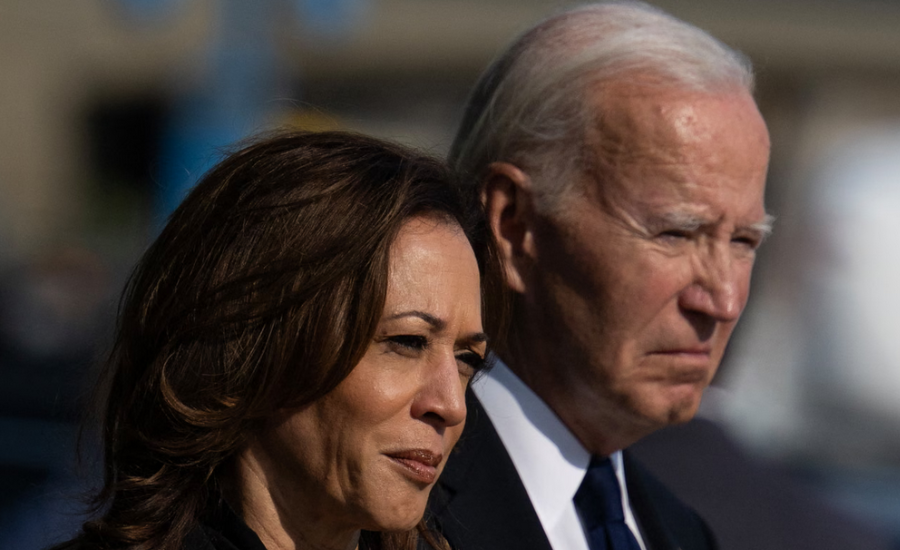
Kamala Harris and Joe Biden. (Photo: Drew Angerer/AFP/Getty Images)
The report's most pointed criticism of the former vice president is not about her debate performance, her likability, or even her policy positions. It is simpler and more damning than that: the campaign never told voters who she was. According to the report, "Harris struggled with definition beyond 'not Trump' and 'prosecutor vs. felon.'"
That failure began before the campaign even started. The report argues the White House "did not effectively support Vice President Harris over three and a half years to improve her standing before the candidate switch," and suggests that had the administration found ways to elevate Harris earlier, it "could have helped prepare her to lead the ticket."
The campaign's near-total reliance on antipathy toward Trump as a turnout driver left Harris without an affirmative case. Voters, particularly those who had supported Biden in 2020 and sat out or switched in 2024, were never given a compelling reason to choose her, only a reason to oppose him. The assumption that anti-Trump sentiment was enough turned out to be the campaign's most costly strategic miscalculation.
2. The Messaging Was Broken at Its Core
Democrats raised and spent approximately twice what Republicans did in campaign-affiliated advertising. Harris and allied committees spent roughly $903 million compared to $435 million for Trump, and still lost every battleground state. The problem was not volume. It was what the money was saying.
The report cited messaging that "created tensions with key constituencies" on the economy, pointing to late-arriving ground-level organizing efforts and a lack of alignment between the party's main super PAC and the Harris campaign itself. Democrats leaned heavily into "democracy" framing at a moment when working-class voters across racial lines were preoccupied with groceries, housing, and wages.
The report was blunt about the anti-Trump ad strategy: "There was a decision in the 2024 Democratic leadership not to engage in negative advertising at the scale required," while "the Trump campaign and supportive Super PACs went full throttle against Vice President Harris." Democrats assumed Trump's negatives were already baked into voters' minds. The report called that assumption "a major failure of analysis and reality."
3. Republicans Did What Democrats Refused To
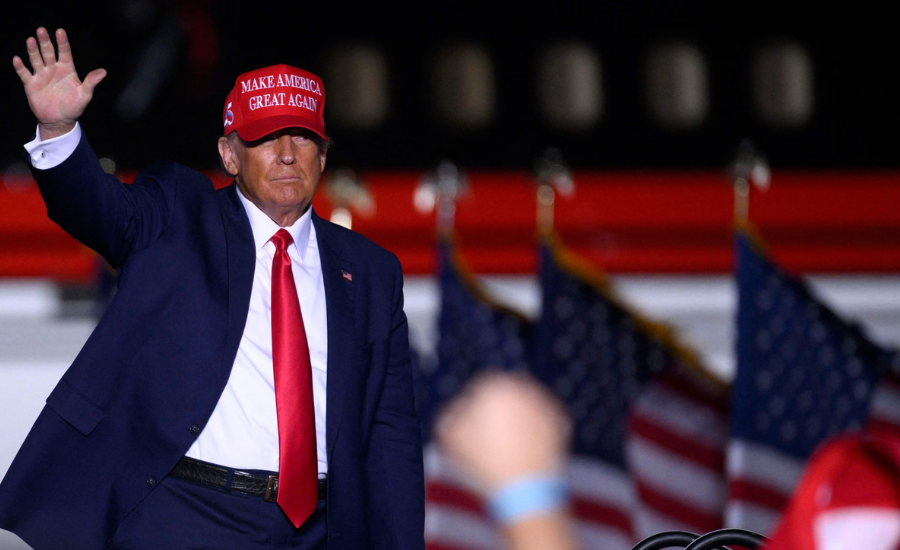
Donald Trump arrives for a ‘Save America’ rally at Arnold Palmer regional airport in Latrobe, Pennsylvania. (Photograph: Angela Weiss/AFP/Getty Images)
While Democrats debated the right tone, Republicans executed. The GOP ran relentless negative advertising. They activated male voters, a demographic the Harris campaign treated as either unreachable or a lower priority. They dominated in rural America while Democrats wrote it off. And they out-organized Democrats among irregular voters who showed up specifically for Trump.
The report held up successful Democratic statewide candidates in Arizona, Nevada, and North Carolina as proof that "economic messaging and addressing cost-of-living concerns resonate more than identity politics," essentially conceding that Republicans framed the kitchen-table argument more effectively.
The RNC's post-election response was triumphant and pointed. RNC press secretary Kiersten Pels argued that "voters overwhelmingly rejected their toxic far-left agenda and weak leadership," and used the delayed, contested release of the autopsy itself as evidence of Democratic dysfunction. Whether or not that framing is fair, the Republican Party in 2024 ran a disciplined, consistent message on the economy, immigration, and cultural identity, and it worked.
4. Democrats Lost Men and Ignored the Warning Signs
The report dedicates an entire section to the conclusion that "The Male Voter Problem Was Solvable," pointing to North Carolina Gov. Josh Stein as the model. Stein won 51 percent of men, while Harris won only 40 percent, an 11-point gap the report says reflects "fundamentally different approaches to male voter engagement."
That gap showed up across racial lines. Every down-ballot Democrat in 2024 performed better with men than Harris did, including candidates who lost their own races. That pattern suggests the problem was not Democratic politics broadly but the specific way the national campaign engaged, or failed to engage, male voters.
The report was direct: "Male voters require direct engagement. The gender gap can be narrowed. Deploy male messengers, address economic concerns, and don't assume identity politics will hold male voters of color." Democrats received this warning in real time during the campaign. They largely did not act on it.
5. The Party Has Been Drifting Away from Its Own Base for Years
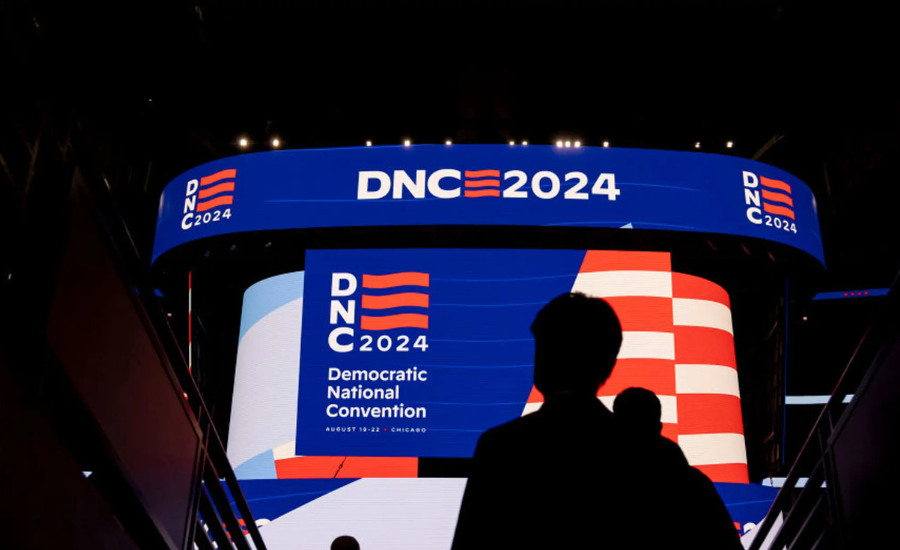
DNC signage at the United Center on May 22, 2024. (Photograph: Brian Cassella/Chicago Tribune/Getty Images)
Perhaps the most sobering finding in the report is not about 2024 specifically. It is about a longer trajectory. The 192-page report calls for "a renewed focus on the voters of Middle America and the South, who have come to believe they are not included in the Democratic vision," and acknowledges that millions of working-class Americans continue to vote against their stated economic interests because they do not see themselves reflected in the party.
The document flagged declining support among men, working-class voters, and non-college-educated Americans, particularly in rural areas, and noted that younger voters, especially young men, were another group where Democrats struggled to maintain support from earlier election cycles.
One Democratic strategist summarized the report's central warning as a caution against "relying solely on national messaging and short-term campaign tactics while neglecting long-term relationship building," arguing that Democrats have historically been strongest when they "organize consistently, invest locally, and show up everywhere, not just where polling says it's convenient."
The autopsy, flawed and contested as it is, confirms what many have argued for years: the party has been winning arguments while losing voters. Whether 2024 becomes a turning point depends entirely on whether Democrats are willing to hear what this document actually says, not just what they chose to annotate in red.
Sources: PBS NewsHour | NBC News | Newsweek | Axios | DNC Autopsy Report (Paul Rivera, 2024)
More on EEW Magazine Online:


The EEW Weekly Digest
Get EEW in Your Inbox
Our weekly digest brings the latest reporting on faith, culture, health, and the news that matters to Black Christian women straight to your inbox.
Subscribe FreeFree to join. Unsubscribe anytime.
Reader-Supported Journalism
Help Keep EEW Free and Growing
EEW Magazine Online is free for every reader, and we plan to keep it that way. Your support helps us expand our reporting on faith, culture, health, and the news that matters to Black Christian women. Become a monthly supporter today.
Support EEWGive once or monthly through PayPal. Gifts are tax-deductible to the extent allowed by law.
A biblical guide for Christians on responding to antisemitism, hostility, and division with truth, compassion, and unwavering faith in Christ.