
Iran and U.S. Trade Strikes as Ceasefire Talks Stall
Iran targeted a U.S. base in Kuwait after American forces struck a drone site near the Strait of Hormuz, raising fresh doubts about an Iran ceasefire deal.
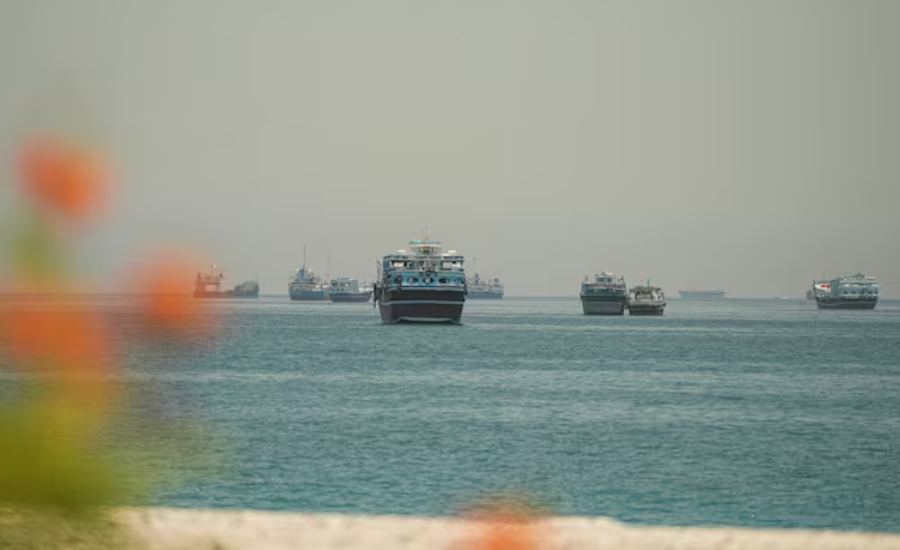
Vessels anchored at the Strait of Hormuz, as seen from Musandam, Oman, May 25, 2026. (REUTERS/Stringer)
(EEW MAGAZINE) -- Tensions between the United States and Iran escalated Thursday as the two nations exchanged military strikes for the second time this week, deepening concerns that a fragile ceasefire could collapse before a formal peace agreement is reached.
U.S. Central Command confirmed that American forces shot down five Iranian attack drones near the Strait of Hormuz and struck a ground control station in the Iranian port city of Bandar Abbas that was preparing to launch a sixth. Iran's Revolutionary Guard Corps responded by targeting a U.S. air base in Kuwait, warning that any further American action would bring a "more decisive response." Kuwait condemned the attack and called on Iran to stand down.
The military exchange came on the Muslim holiday of Eid al-Adha and coincided with President Donald Trump's public rejection of a reported compromise deal circulating in Iranian state media. The draft agreement, which Tehran described as an unofficial proposal, would have restored shipping through the Strait of Hormuz within a month, with Iran and Oman jointly overseeing vessel traffic. Trump dismissed the report as a "complete fabrication" and issued a stark warning to Oman, a longtime U.S. ally, saying it would "behave just like everybody else or we'll have to blow them up."
The strait, through which more than 100 ships passed daily before the war began Feb. 28, has seen traffic drop by 88 percent since U.S. and Israeli strikes on Iran triggered the conflict. Iran's Revolutionary Guard said it stopped two vessels and allowed 26 through in the past 24 hours.
Iran is pressing for the release of frozen funds, the lifting of a U.S. port blockade, and an end to sanctions. The U.S. Treasury Department this week expanded those sanctions to include Iran's Persian Gulf Strait Authority. Trump told reporters he is not satisfied with negotiations and that easing sanctions is not on the table.
Meanwhile, Israeli forces struck infrastructure tied to Iran-backed Hezbollah in Lebanon's Tyre and Beirut, where one Lebanese soldier was killed. Iranian Supreme Leader Mojtaba Khamenei wrote to parliament that Iran had emerged strengthened by the war and called on legislators to address the domestic hardship the conflict has caused.
Oil prices rose roughly 3 percent Thursday after falling 5 percent the day prior, as investor confidence in a near-term peace deal continued to waver.
Source: Reuters
More on EEW Magazine Online:





The EEW Weekly Digest
Get EEW in Your Inbox
Our weekly digest brings the latest reporting on faith, culture, health, and the news that matters to Black Christian women straight to your inbox.
Subscribe FreeFree to join. Unsubscribe anytime.
Reader-Supported Journalism
Help Keep EEW Free and Growing
EEW Magazine Online is free for every reader, and we plan to keep it that way. Your support helps us expand our reporting on faith, culture, health, and the news that matters to Black Christian women. Become a monthly supporter today.
Support EEWGive once or monthly through PayPal. Gifts are tax-deductible to the extent allowed by law.
The Bible offers timeless lessons on the importance of maintaining a “spiritual economy”—living fruitfully for God despite the decay around us. Let’s explore the topic.