A newly released World Vision report finds that mothers who work every day to provide for their children are watching their earnings fall short of nutritious meals, from a market stall in Haiti to a family table in Ethiopia.
By EEW Magazine Online Editors
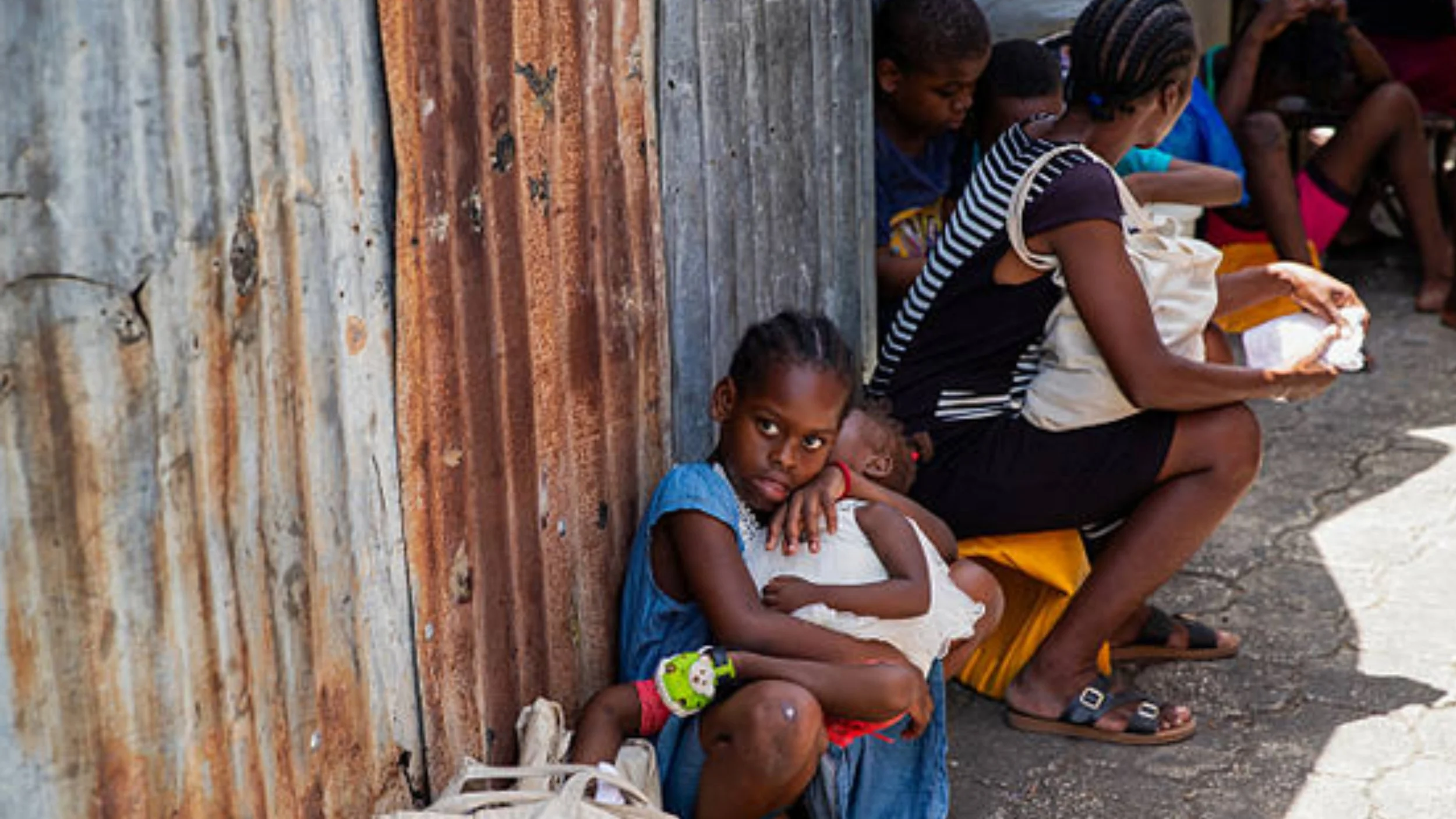
People displaced from their homes by gang violence are seen at a temporary camp in Port-au-Prince, Haiti, on Aug. 17. (Clarens Siffroy/AFP via Getty Images)
Every day in Hinche, Haiti, Cherlande sits at a small market stall surrounded by the food she sells to support her children. The stall is her family’s entire livelihood. It pays for their schooling, their clothes and the food on her own table, and each time prices climb, she absorbs the increase twice, first when she restocks and again when she feeds her children. A cup of rice that once cost 20 or 25 gourdes now sells for 50.
“I don’t have any other work,” she told World Vision. “I don’t have income from anywhere else.”
Her children still eat every day, though the meals have changed. They might have spaghetti before school and later collect a little rice from her stall to take home and cook. Meat has become an occasional addition, and a sauce made with smoked herring might appear a couple of times a week. “You can’t afford to eat meat every day,” she said.
Maximène, another vendor in the market, has cut her purchases to fit what she earns. “If I used to take two, I take one,” she told World Vision. Meals at home have shrunk along with her stock. “We eat so we don’t die,” she said. “We don’t make nice meals, the way we used to eat at home sometimes.”
In 2025, an estimated 35.5 million children under age five experienced acute malnutrition across 23 countries and territories facing nutrition crises, according to the 2026 Global Report on Food Crises. Nearly 10 million suffered from severe acute malnutrition.
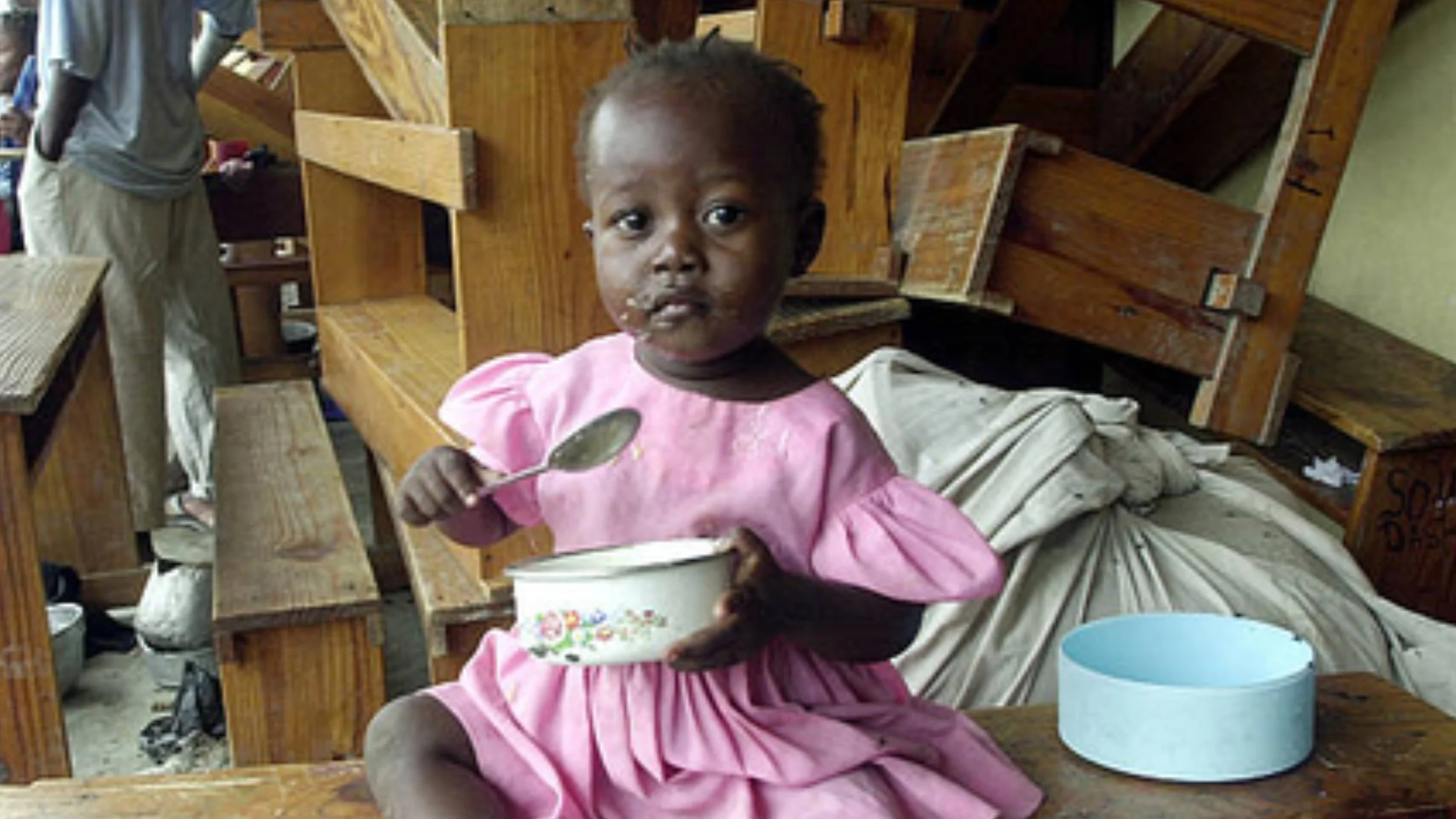
A child eats from a bowl in Hinche, Haiti, in this file photo. (Thony Belizaire/AFP via Getty Images)
Those figures appear in “Price Shocks: The Affordability Crisis Moving Nutritious Diets Out of Reach,” a report released Oct. 12 by World Vision, the Christian relief and development organization. Its fifth annual survey of food costs across 62 countries documents what the women of Hinche already know. Mothers who work every day to provide for their children are finding that their earnings no longer stretch far enough to put nutritious meals on the table.
World Vision compared the cost of a standardized basket of 10 common foods with each country’s purchasing-power-adjusted national income per person, using an eight-hour workday to estimate affordability. By that measure, the basket represented about 1.2 hours of income in the United States, Ireland and the United Kingdom, compared with 9.5 workdays in Haiti and 30.1 workdays in the Central African Republic.
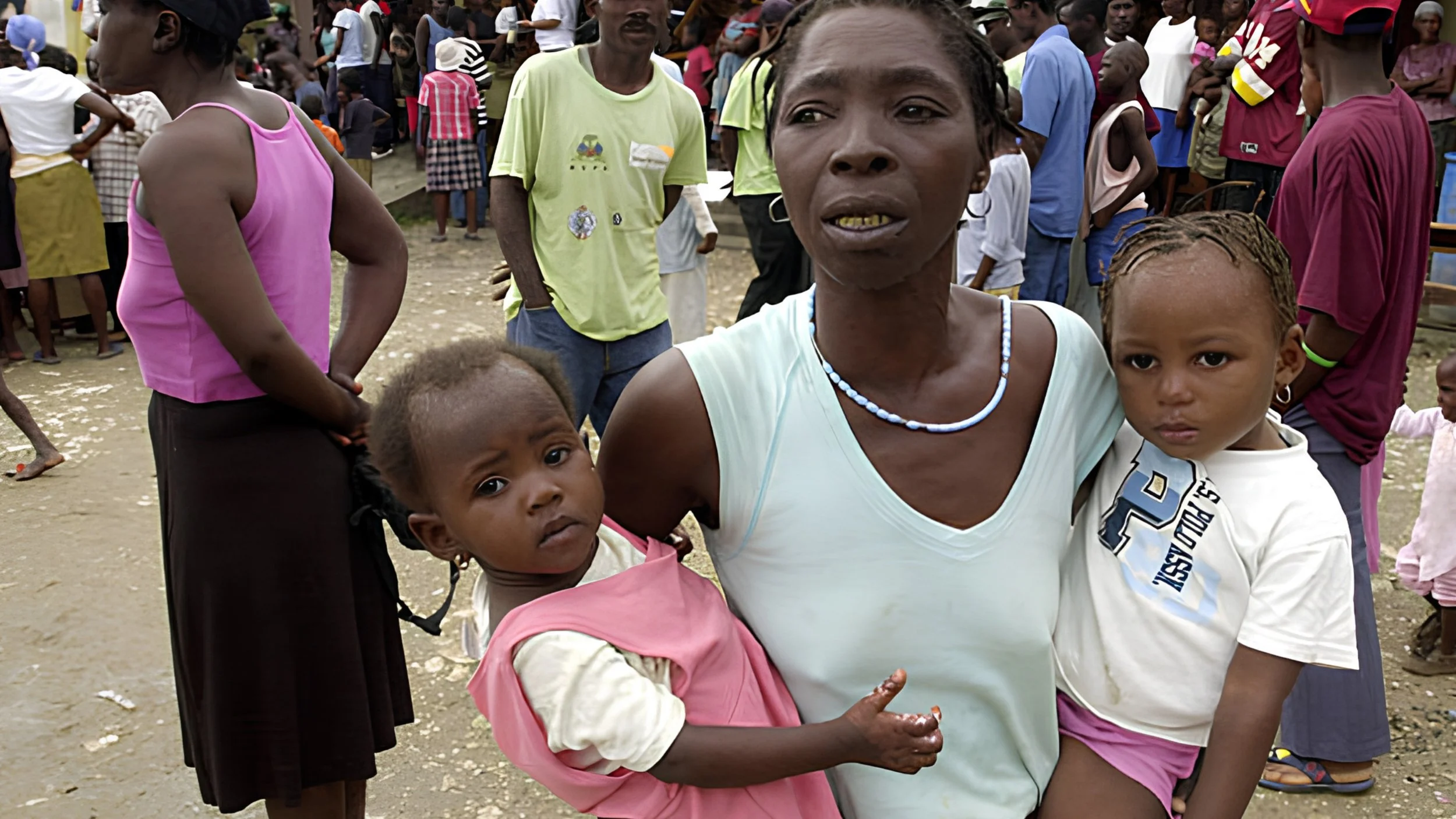
A woman holds two young children amid a crowd in Haiti in this file photo. (Thony Belizaire/AFP via Getty Images)
The basket serves as an affordability indicator and does not represent a complete, balanced diet. Because the calculation relies on national averages, World Vision notes, it can conceal deep income inequality, and the poorest households may face far greater hardship.
In Haiti, poverty reaches about 90% of the population, and 5.7 million people face acute food insecurity, including nearly 130,000 children under five who are acutely malnourished, according to the report. Since February 2024, escalating gang violence has brought Port-au-Prince to a standstill, cut key transport routes and driven food prices sharply higher. “One person’s hunger ripples outward until it touches everyone,” said Ralph Stephen Henri, advocacy manager at World Vision Haiti.
Across the 47 countries with comparable data, World Vision’s measured basket costs rose in 33 from 2024 to 2026. Those increases averaged 28.3%, more than double the 13.2% average decline where costs fell. In Sudan, the measured basket cost fell 36%, yet it still represented 19.3 workdays, with famine present in several areas.
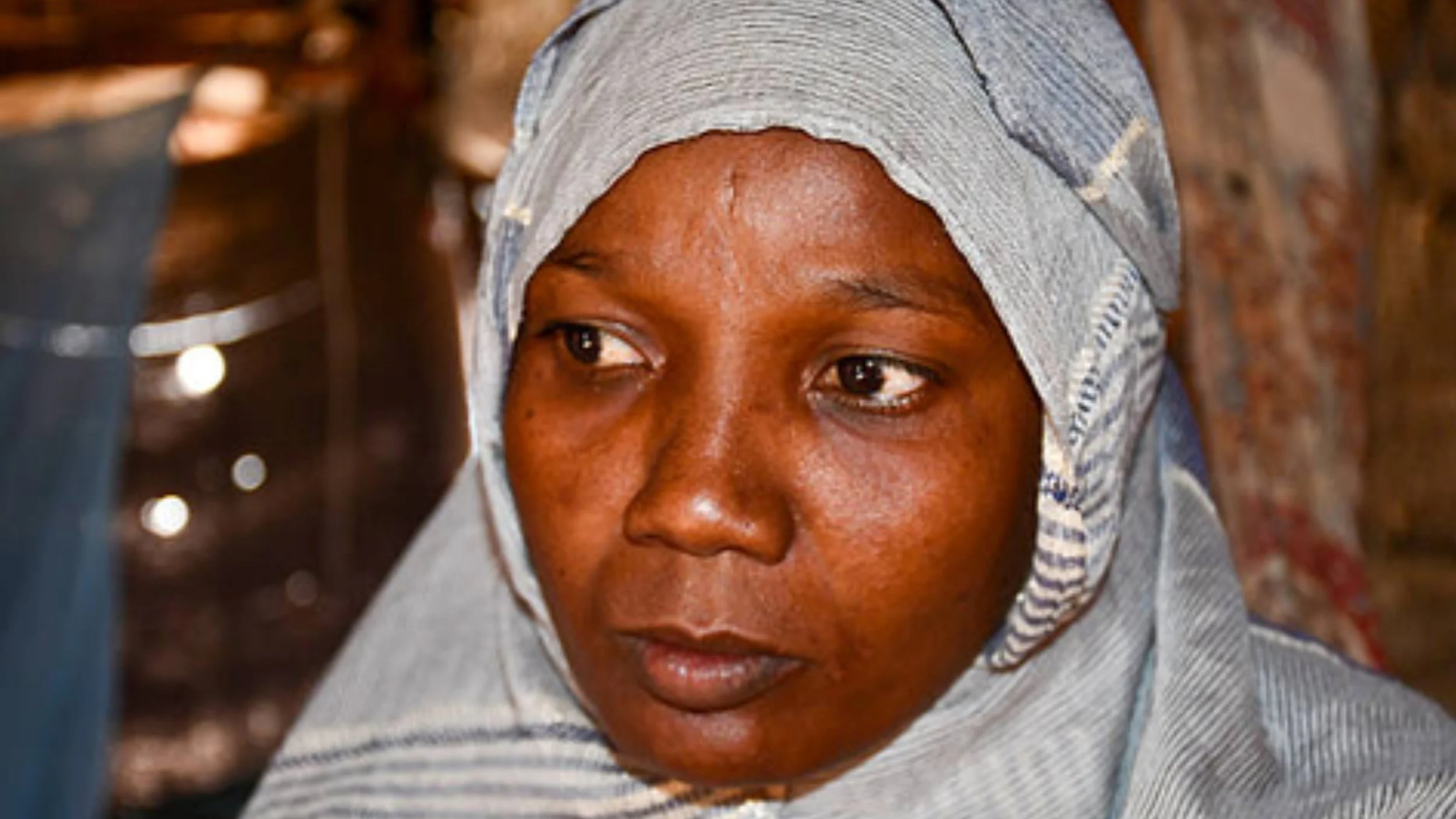
A woman is seen at the Renk Transit Center, which shelters refugees who fled the conflict in Sudan, in Renk, South Sudan, on April 13. Nearly three years after fleeing, families at the center continue to face hunger, limited access to education and inadequate basic services. (Lino Ginaba/Anadolu via Getty Images)
Afghanistan, South Sudan, Syria and Venezuela could not be ranked because national income data was unavailable, and Japan and Mauritania lacked a complete basket. Other monitors document hunger in those four, including U.N. figures showing crisis-level food insecurity across more than half of Afghanistan. “The absence of data does not indicate absence of crisis,” the authors wrote.
In the report’s foreword, Paul Kinuthia, World Vision’s senior director for food, cash and markets, writes that a child’s health, schooling and God-given potential should never hinge on whether a family can afford nutritious food. Scripture places that burden on believers directly: “If a brother or sister be naked, and destitute of daily food, And one of you say unto them, Depart in peace, be ye warmed and filled; notwithstanding ye give them not those things which are needful to the body; what doth it profit?” (James 2:15-16, KJV).
In Kersa, in Ethiopia’s Oromia region, Meskerem, 35, sells vegetables at the local market while her husband works as a teacher. On the day she spoke with World Vision, she had planned to buy cooking oil, charcoal and lentils. She left without the oil. “Most of the income my husband and I earn is spent on buying food, leaving us with very little money,” she said. The family now eats beef only on holidays.
Her 12-year-old daughter, Betelhem, still remembers when beef stew was a regular meal. These days she eats lentils, which she likes best cooked with tomatoes, and waits for the holidays, when there is meat. She already knows what she wants for her future. “When I grow up, I want to become a doctor,” she told World Vision. “To support my parents, I also want to build them a house with the income I earn.”
Ministry Note
EEW Magazine Online is published by Empowering Everyday Women Ministries, Inc., a 501(c)(3) nonprofit. Readers who want to respond to the hunger described in this report can give to the ministry’s Help & Hope for Haiti campaign, which provides food for families in Haiti, or its Sudan Hunger Relief appeal, which supports food for families and care for children in Sudan. Gifts are tax-deductible as allowed by law.