

A peanut paste Haitians call Medika Mamba is helping severely malnourished children recover, as a new U.N. projection finds nearly 94,000 young children in Haiti will need treatment within a year.
By EEW Magazine Online Editors
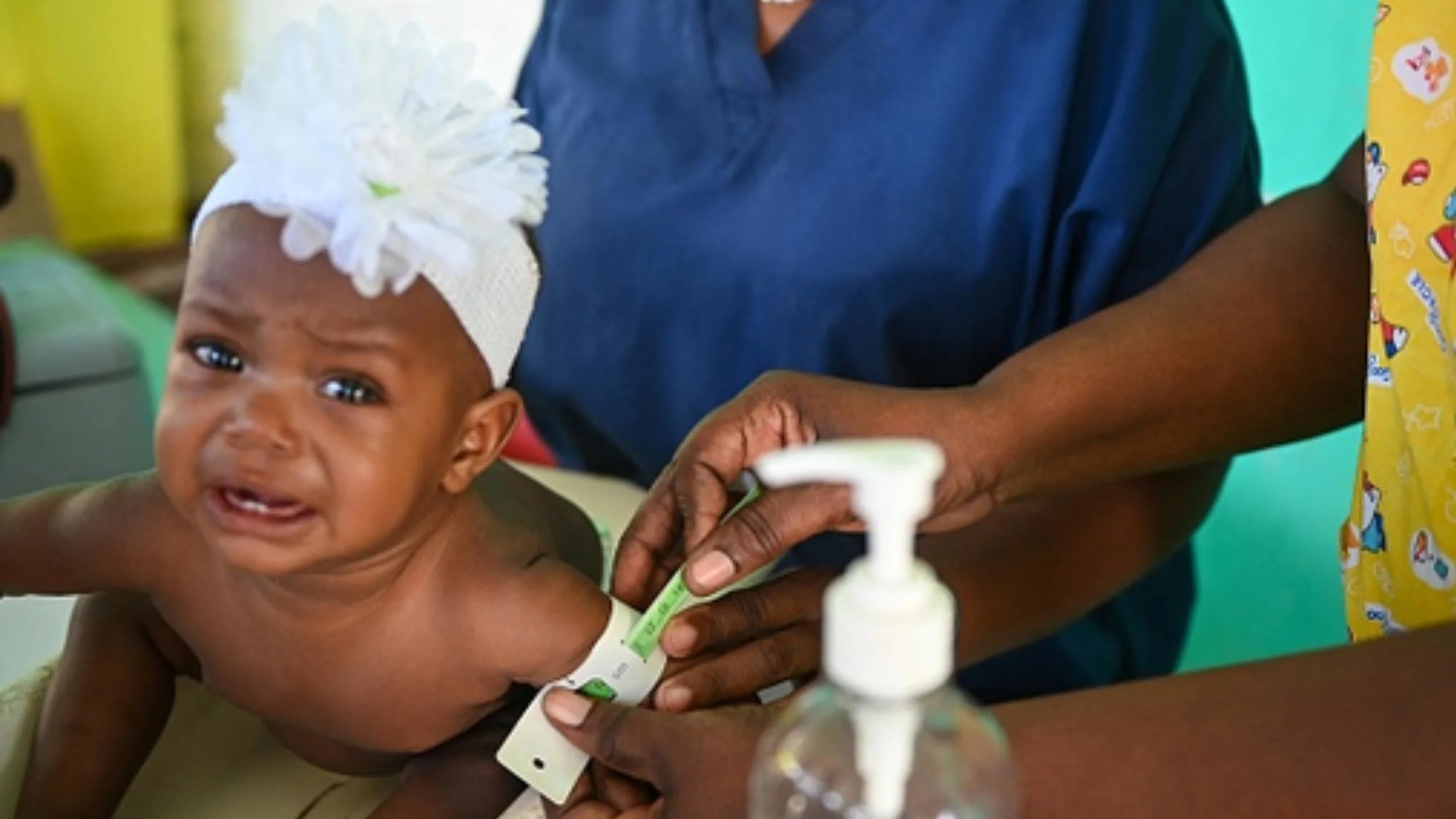
Health workers measure a baby’s upper arm with a color-coded screening tape at the Fontaine Hospital Center in the Cité Soleil neighborhood of Port-au-Prince, Haiti, on Aug. 4, 2023. (Richard Pierrin/AFP)
“Please, my six-month-old baby is starving,” Nadège said through tears as a health worker wrapped a color-coded measuring tape around her child’s upper arm. The reading fell in the red zone. Swaddled in pink, her baby lay limp and lethargic, showing signs of severe acute malnutrition.
A partner of Empowering Everyday Women Ministries, which publishes EEW Magazine Online, witnessed the screening. EEW Magazine Online is using a pseudonym to protect the mother’s identity.
Across Haiti, health workers use that simple screening test, known as mid-upper arm circumference (MUAC) measurement, to identify children at risk of life-threatening malnutrition. It takes only moments.
Green indicates that acute malnutrition is unlikely. Yellow signals likely moderate acute malnutrition and the need for follow-up. Red warns of likely severe acute malnutrition, a potentially fatal condition requiring urgent treatment, according to UNICEF, which supplies the tapes.
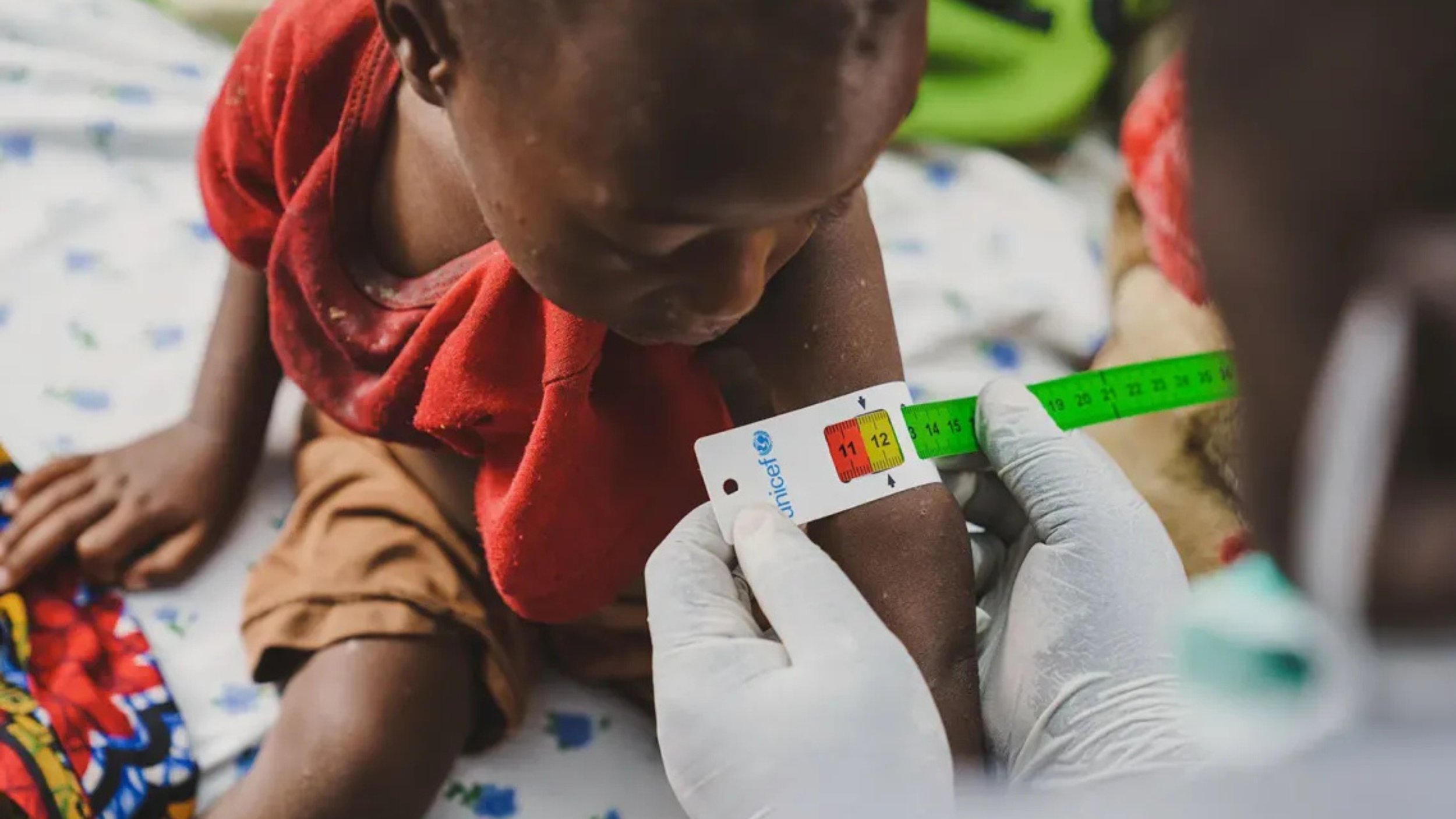
The yellow band on a MUAC tape suggests a 2-year-old may be moderately malnourished. (UNICEF)
A joint analysis released Sept. 17 projects that 253,725 Haitian children ages 6 to 59 months will suffer acute malnutrition between June 2026 and May 2027. Of those, 93,873 are expected to experience severe acute malnutrition. Another 25,750 pregnant and breastfeeding women will need nutrition support.
The assessment was led by Haiti’s Ministry of Public Health and Population, with support from UNICEF, the World Food Programme, the Food and Agriculture Organization, the World Health Organization and other nutrition partners. The projections account for cases expected over the full 12-month period, rather than the number of children experiencing malnutrition at any one time.
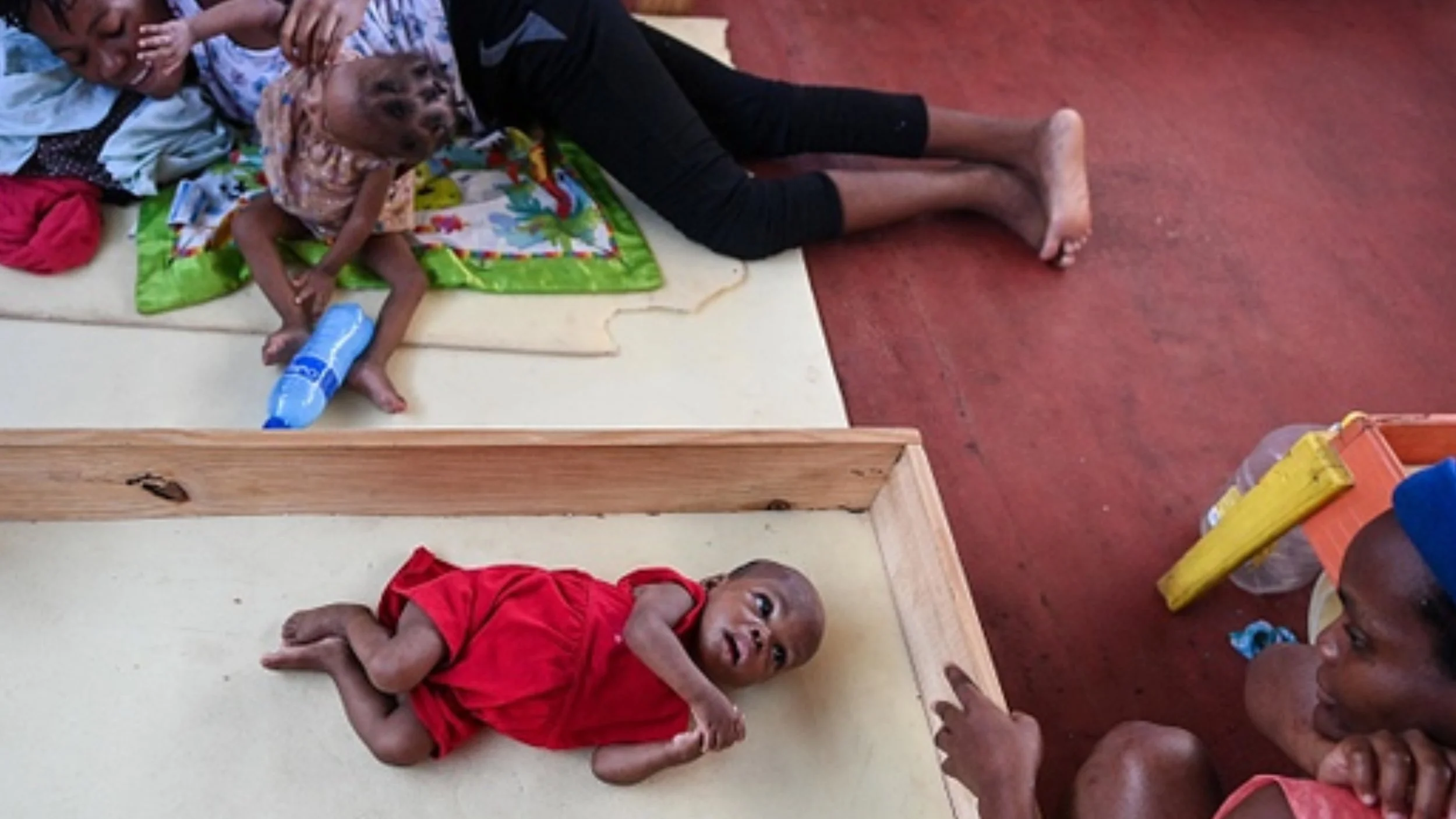
A young girl is treated for malnutrition at the Fontaine Hospital Center in the Cité Soleil neighborhood of Port-au-Prince, Haiti, on Aug. 4, 2023. (Richard Pierrin/AFP via Getty Images)
The analysis also projects that 29 of Haiti’s 140 municipalities will face serious levels of acute malnutrition between December 2026 and May 2027. Two others, Cité Soleil and Cabaret, are expected to reach critical levels, the second-highest classification for acute malnutrition.
For a child whose MUAC reading falls in the red zone, treatment typically includes Ready-to-Use Therapeutic Food (RUTF), a thick peanut-based paste made with milk powder, oil, sugar, vitamins and minerals. Each sachet contains approximately 500 calories and requires no refrigeration, allowing children without medical complications to receive treatment at home.
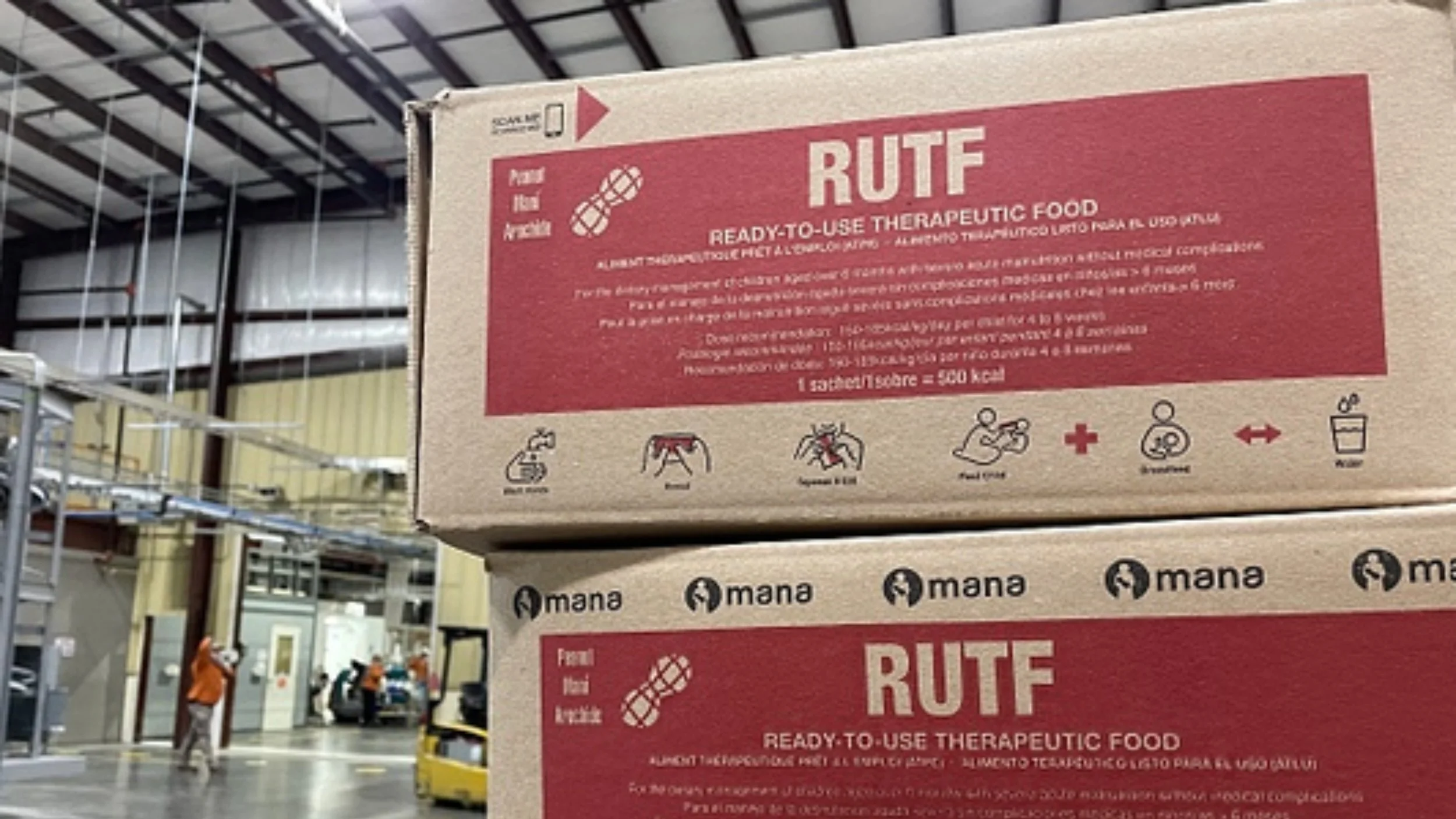
Boxes of Ready-to-Use Therapeutic Food (RUTF) wait to be shipped overseas on March 3, 2025. (John Falchetto/AFP)
A carton of 150 sachets can provide a six-to-eight-week course of treatment. Nearly 90% of children treated for severe acute malnutrition recover, according to UNICEF. Without treatment, a severely wasted child faces a risk of death 12 times higher than that of a well-nourished child.
Some RUTF is produced locally by Meds & Food for Kids in Quartier Morin, near Cap-Haïtien, using peanuts purchased from Haitian farmers. Haitians know it as Medika Mamba, Haitian Creole for “peanut butter medicine.” In a 2025 report, UNICEF said the partnership had treated nearly 270,000 severely malnourished children and trained more than 3,000 farmers.
Empowering Everyday Women Ministries provides Medika Mamba to malnourished children in Cap-Haïtien and Quartier Morin through humanitarian organizations in Haiti.
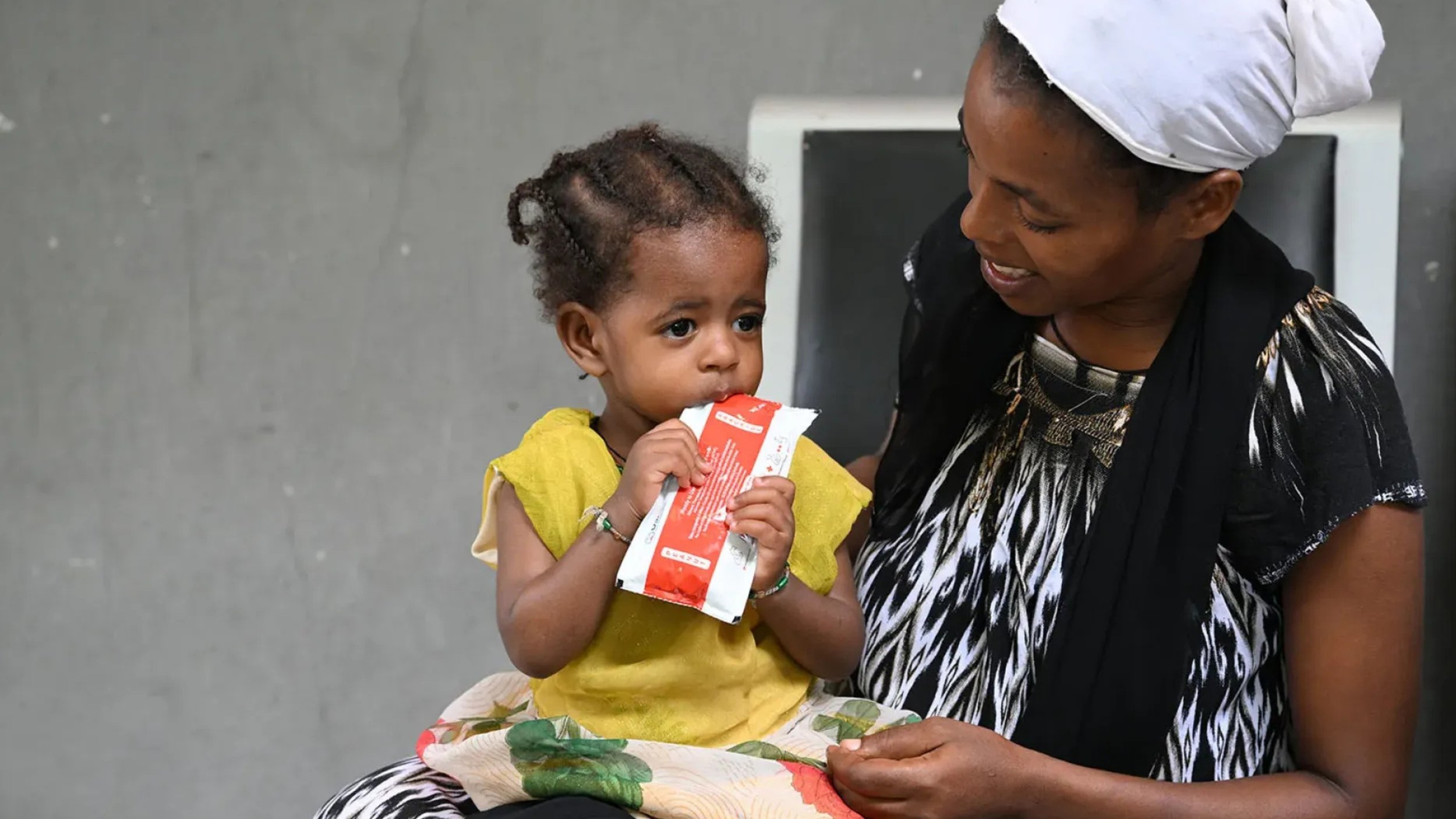
A young child eats ready-to-use therapeutic food from a sachet while sitting on a woman’s lap. (UNICEF)
Armed violence continues to disrupt access to food and treatment. According to UNICEF, grave violations against children, including attacks on schools and hospitals and the denial of humanitarian access, tripled between 2023 and 2025.
To reach children in areas affected by violence and limited access to health services, UNICEF is working with Haiti’s health ministry to expand malnutrition screening and treatment through community health workers and mobile teams.
Approximately 1.47 million Haitians had been displaced by mid-May, largely because of armed violence. A separate food security assessment, released in April, estimated that 5.83 million people, or 52% of the population analyzed, faced crisis levels of hunger or worse between March and June 2026. Earlier this month, EEW Magazine Online reported on Haitian mothers who sell food for a living but struggle to feed their own children as prices rise.
Funding shortages threaten efforts to address the crisis. In August, UNICEF reported a funding gap of more than 64% for nutrition programs under its 2026 humanitarian appeal, jeopardizing supplies of therapeutic food. Haiti’s broader humanitarian response plan was less than 20% funded in April, according to the United Nations, as reported by the Jamaica Observer.
UNICEF, the World Food Programme and the Food and Agriculture Organization have called for immediate funding and safe access to treatment, particularly in municipalities where malnutrition is expected to worsen.
“Behind these figures are children whose lives can change when they receive the right care at the right time,” said Geeta Narayan, UNICEF’s representative in Haiti.
Jesus told His disciples, “Even so it is not the will of your Father which is in heaven, that one of these little ones should perish” (Matthew 18:14, KJV).
In Haiti, the tools to identify and treat severe acute malnutrition already exist. A simple measuring tape can identify a child in danger. Therapeutic food can help that child recover. But health workers must be able to reach the children who need treatment, and supplies must be available when they do.
Nadège’s baby received treatment and survived, the ministry partner said. Nearly 94,000 Haitian children are projected to need the same care by next May.
Ministry Note
EEW Magazine Online is published by Empowering Everyday Women Ministries, Inc., a 501(c)(3) nonprofit organization. Readers who wish to support families facing hunger in Haiti can contribute to the ministry’s Help & Hope for Haiti campaign, which provides food assistance, including therapeutic food for malnourished children, to families in Haiti. Donations are tax-deductible as allowed by law.