

With nearly 19.5 million people facing acute food insecurity, drought and continued fighting threaten families already struggling to survive. Relief organizations and local volunteers are providing food, clean water and medical care as resources run dangerously low.
By EEW Magazine Online Editors
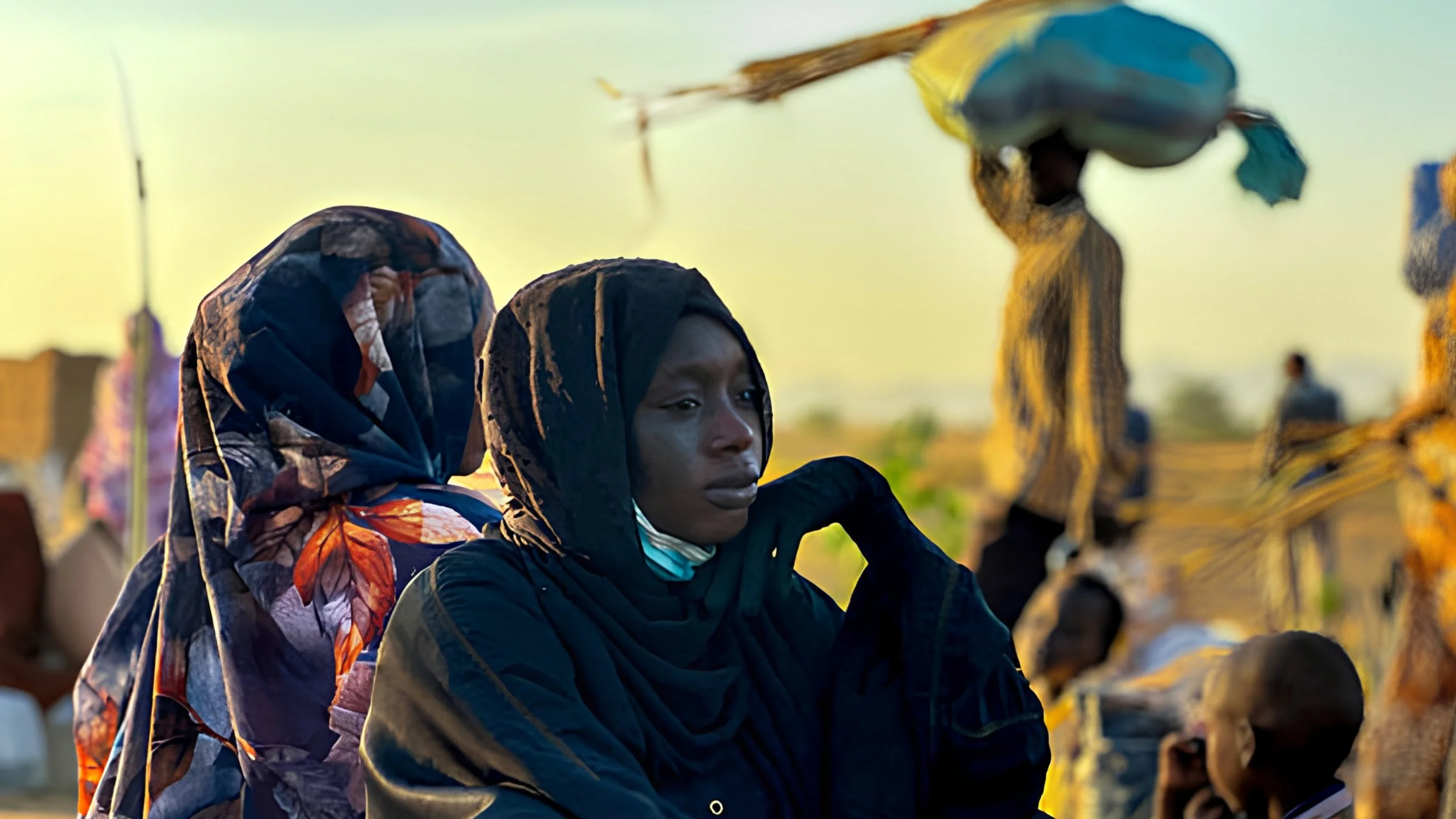
A displaced woman rests in Tawila, in Sudan’s Darfur region, on Oct. 28, 2025, after fleeing El Fasher following the city’s fall to the Rapid Support Forces. (AFP via Getty Images)
Hadia was detained in a school in El Fasher, Sudan, with her three children and hundreds of other women and children after the paramilitary Rapid Support Forces seized the city in late October 2025. Her husband had been shot during the takeover. Their captors gave them little food or water, and the 30-year-old mother became too malnourished to give her youngest child, an 18-month-old, enough breast milk.
When she escaped and reached the displacement hub of Tawila in August 2026, all three of her children were diagnosed with malnutrition, and one was hospitalized. “My children were very skinny and weak,” she told Amnesty International, which used a pseudonym to protect her identity.
Her family is among nearly 19.5 million people, two of every five Sudanese, facing crisis levels of hunger, according to the most recent full analysis by the Integrated Food Security Phase Classification, the U.N.-backed global hunger monitor known as the IPC. That analysis, released in May, came as UNICEF projected that about 825,000 children under 5 would suffer severe acute malnutrition this year, the most life-threatening form of the condition.
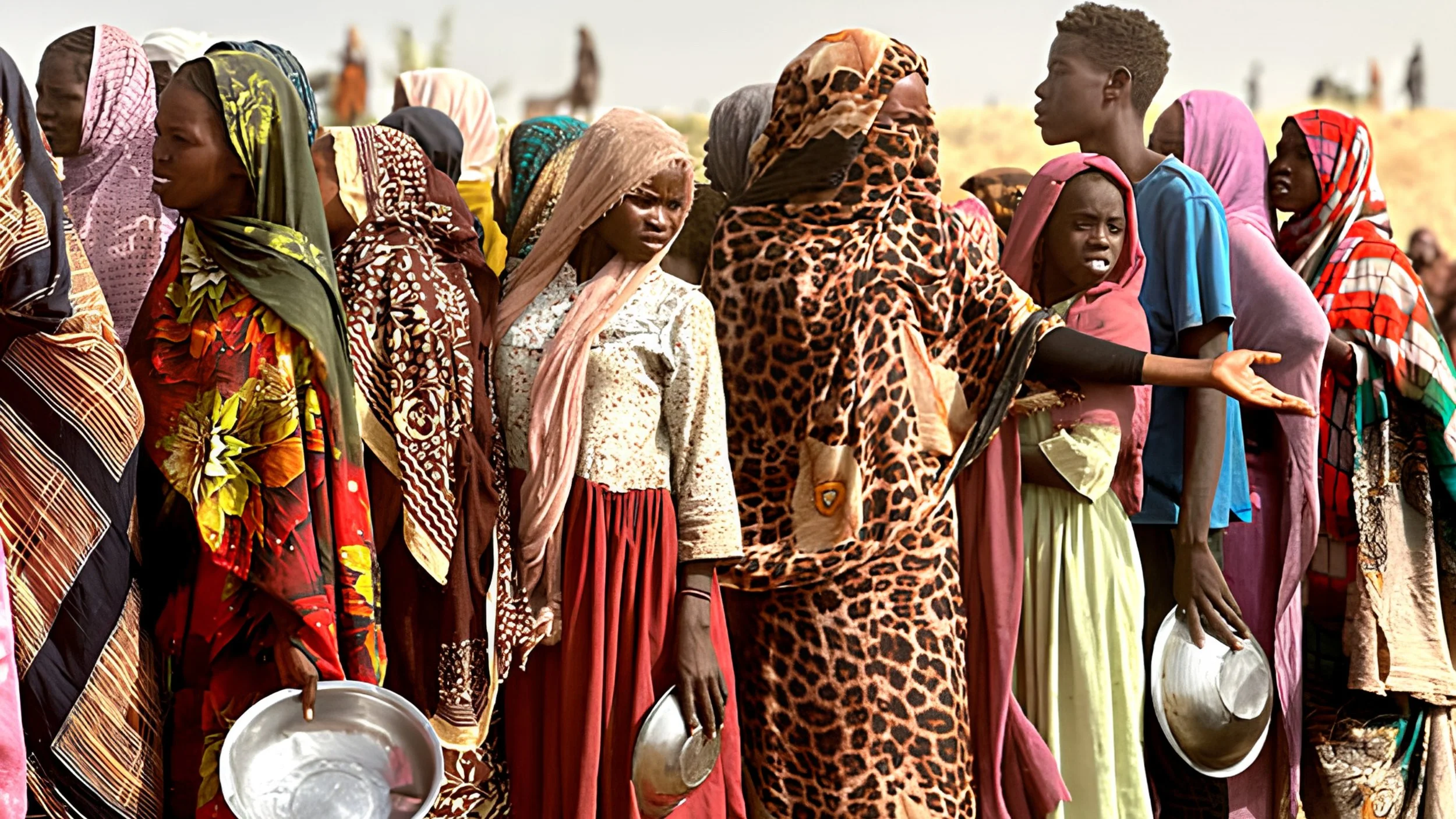
People who fled Zamzam camp after it fell to the Rapid Support Forces wait in line for food rations near the town of Tawila, in Sudan’s Darfur region, on April 13, 2025. (AFP via Getty Images)
The war behind the emergency began in April 2023, when fighting between Sudan’s military and the RSF broke out in Khartoum and spread across the country. It has displaced about 13 million people, according to The Associated Press.
On Oct. 12, the IPC warned that the risk of famine is growing across parts of Greater Darfur and Greater Kordofan. The IPC previously confirmed famine conditions in El Fasher and Kadugli in an analysis published in November 2025. Its October alert described worsening conditions but did not issue a new famine classification.
The Famine Review Committee said insufficient survey data prevented a new analysis, although available evidence pointed to a rapidly deteriorating humanitarian emergency. “Famine is the collapse of systems,” the committee said.
Drought has joined the war in breaking those systems down. An El Niño-driven drought now covers more than half of Sudan, and 64% of cropland in North Darfur shows poor plant growth. West Kordofan is enduring one of its worst droughts since 2004. World Vision, the Christian relief and development organization, reported in July that nearly 40,000 square kilometers of Sudanese farmland have been degraded since April 2023.
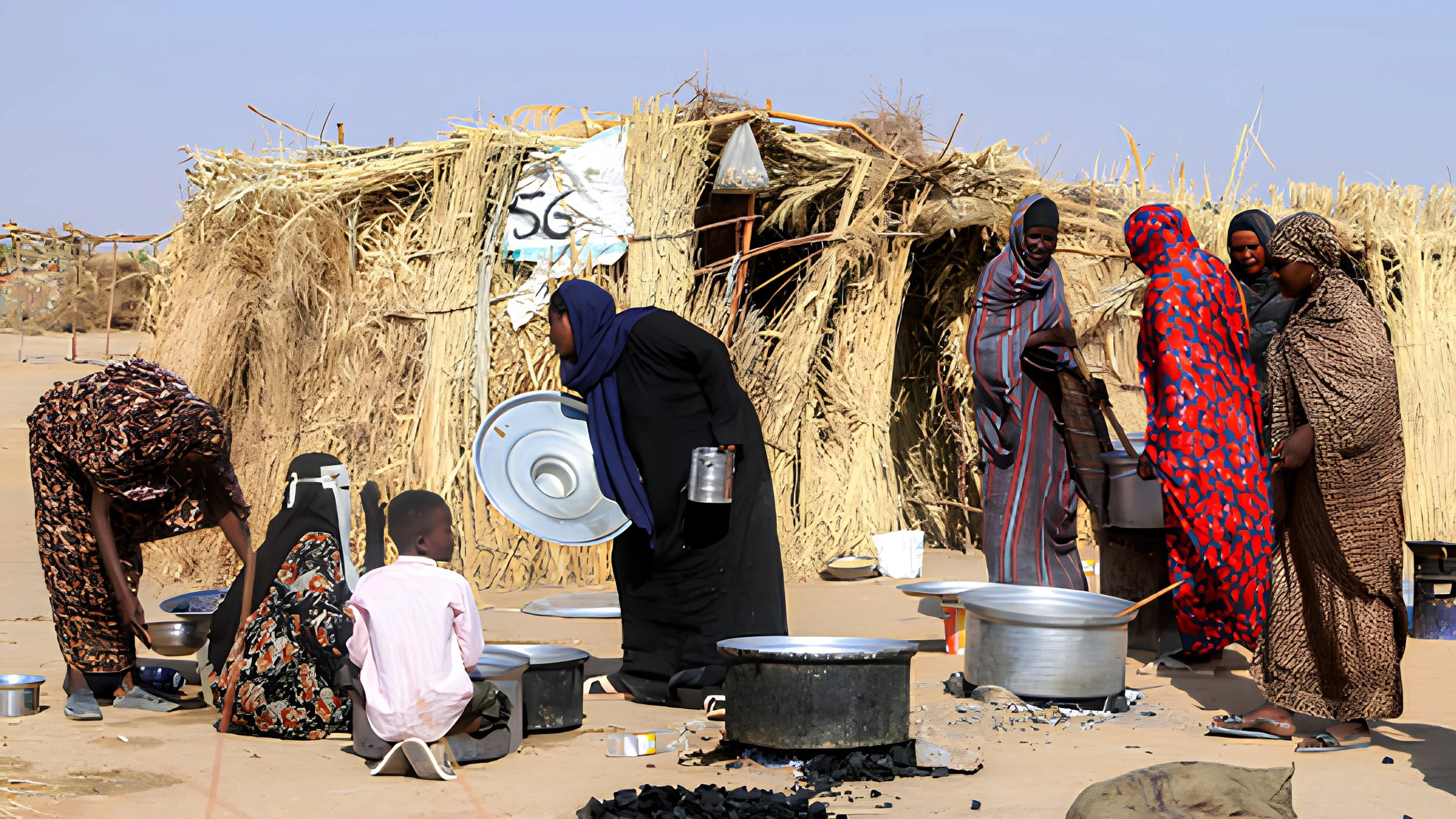
Sudanese people who fled El Fasher prepare a meal at a camp for displaced families in the northern town of Al Dabba on Nov. 13, 2025. (AFP via Getty Images)
“The land that feeds Sudan’s children is disappearing,” said Simon Mane, World Vision’s national director in Sudan. On Oct. 5, World Vision, the Norwegian Refugee Council and other aid groups warned that the next four months, which span the October-to-January harvest, could determine whether the crisis deepens in 2027.
The alert reported that surveys in August and September in two displacement camps in Eastern Jebel Marra, South Darfur, found acute malnutrition among 38% and 30.8% of children. Both figures exceed one of the thresholds used in famine classification, which also requires evidence of extreme food deprivation and deaths.
Across Greater Darfur, 13 of 17 nutrition surveys conducted since January found critical levels of acute malnutrition, U.N. News reported.
The World Health Organization said medical care in the hardest-hit areas is extremely limited and often impossible to reach, while clean water grows harder to find, leaving people already weakened by hunger exposed to disease. Malnourished people are more likely to develop severe cholera and measles, and West Kordofan is fighting a worsening cholera outbreak on top of its drought.
World Vision works in South Darfur, East Darfur, Blue Nile and South Kordofan. In a July report, World Vision said it had reached 3.2 million people, including 1 million children, since the conflict began. Its teams provide food, cash, health services and protection, and they supply farmers with seeds, tools, livestock and water systems so families can grow their own food again. A World Vision-supported stabilization center in South Darfur treated more than 200 children for severe acute malnutrition in 2025.
WHO has supported all 161 of Sudan’s operating stabilization centers, which care for the sickest malnourished children. Those centers treated more than 26,000 children between January and August. The International Rescue Committee provides nutrition treatment for children and for pregnant and breastfeeding women, along with water and sanitation services, in nine states.
Much of the help comes from Sudanese themselves. More than 26,000 volunteers serve in over 700 neighborhood Emergency Response Rooms across all 18 of Sudan’s states, according to Chatham House. They run community kitchens, build informal supply lines and negotiate safe passage across front lines into areas international agencies cannot reach.
As of Oct. 8, Sudan’s 2026 humanitarian appeal faced a 57% funding gap, with nutrition programs 30% funded and water and sanitation 23% funded, Sudan Tribune reported. On Oct. 2, a World Food Programme truck struck an explosive device in South Kordofan. The following day, an airstrike hit two more contracted aid trucks, killing a driver.
The book of Lamentations describes children fainting from hunger in the streets of a devastated Jerusalem and calls the survivors to cry out to God on their behalf: “Arise, cry out in the night: in the beginning of the watches pour out thine heart like water before the face of the Lord: lift up thy hands toward him for the life of thy young children, that faint for hunger in the top of every street” (Lamentations 2:19, KJV).
In Tawila, Hadia’s three children were diagnosed with malnutrition, and one was hospitalized. The town now shelters more than 650,000 displaced people, and the IRC warns that drought could push more families there in search of food and water. Without a quick and significant increase in aid, the IPC said, hunger, malnutrition and deaths will likely climb. Whether the next mother who arrives with a starving child finds the same help depends on funding and access that have fallen far short.
Ministry Note
EEW Magazine Online is published by Empowering Everyday Women Ministries, Inc., a 501(c)(3) nonprofit. Readers who want to respond to the hunger described in this story can give to the ministry’s Sudan Hunger Relief appeal, which supports food for families and care for children in Sudan. Gifts are tax-deductible as allowed by law.