

Matthew 18:18 is central to Pentecostal prayer. In context, Jesus gave His church authority to handle sin, correction and restoration under His will.
By EEW Magazine Online Editors

Scripture speaks directly about the believer’s authority over the enemy in passages such as Luke 10:19 and Matthew 12:29. (EEW Magazine)
In many Pentecostal and charismatic churches, few declarations stir a congregation quite like the words of Jesus in Matthew 18:18: “Whatsoever ye shall bind on earth shall be bound in heaven: and whatsoever ye shall loose on earth shall be loosed in heaven.” Believers have quoted those words for generations, binding the enemy, loosing blessings and declaring breakthrough over their families, finances and health.
The language is familiar to anyone who has spent time in spirited prayer meetings. A preacher declares something bound or loosed, the congregation responds, and the atmosphere fills with the conviction that Heaven is moving in agreement with the words being spoken.
When Jesus first spoke those words, He was discussing something that receives far less attention in our conversations about spiritual authority: how believers should handle sin, conflict and accountability within the church.
The context begins several verses earlier with a conversation about greatness. The disciples asked Jesus, “Who is the greatest in the kingdom of heaven?” (Matthew 18:1). Jesus called a little child into their midst and taught them that entering His Kingdom required humility. He warned against causing His little ones to stumble and urged His followers not to despise them.
Then He told the parable of a shepherd who left ninety-nine sheep to search for one that had wandered away, concluding, “it is not the will of your Father which is in heaven, that one of these little ones should perish” (Matthew 18:14).

Jesus told the parable of the lost sheep just before teaching on binding and loosing, concluding that “it is not the will of your Father which is in heaven, that one of these little ones should perish” (Matthew 18:14). (EEW Magazine)
Only after establishing these principles did Jesus begin discussing how to respond when a fellow believer sinned. The first step was a private conversation, and Jesus named the hope behind it: “if he shall hear thee, thou hast gained thy brother” (Matthew 18:15). If the individual refused to listen, one or two others were to become involved. If the matter remained unresolved, it was brought before the church, and one who refused to hear the church was to be regarded “as an heathen man and a publican” (Matthew 18:17).
Then came the declaration that still rings out in countless Pentecostal prayer meetings: “Verily I say unto you, Whatsoever ye shall bind on earth shall be bound in heaven: and whatsoever ye shall loose on earth shall be loosed in heaven” (Matthew 18:18). Jesus was giving His followers authority to make serious judgments within the believing community, decisions that affected people’s standing and relationships in the church.
Binding and loosing were familiar expressions in Jewish religious teaching. They could describe forbidding and permitting certain conduct, as well as making authoritative judgments about religious obligations. The disciples would have understood this language in a setting where teachers interpreted God’s law and determined how its requirements applied.
Jesus had spoken similar words to Peter in Matthew 16:19, when He promised him the keys of the Kingdom of Heaven. There, Jesus addressed Peter in the singular. In Matthew 18:18, He spoke in the plural, addressing the disciples together.
The early church exercised that authority when it faced its first great doctrinal dispute. Believers disagreed over whether Gentile converts had to be circumcised and keep the Law of Moses. The apostles and elders gathered in Jerusalem, heard testimony and searched the Scriptures, and they sent their decision to the churches with these words: “For it seemed good to the Holy Ghost, and to us, to lay upon you no greater burden than these necessary things” (Acts 15:28). The church loosed Gentile believers from circumcision and bound them to a few necessary requirements, and it framed the decision as agreement with the Holy Ghost.
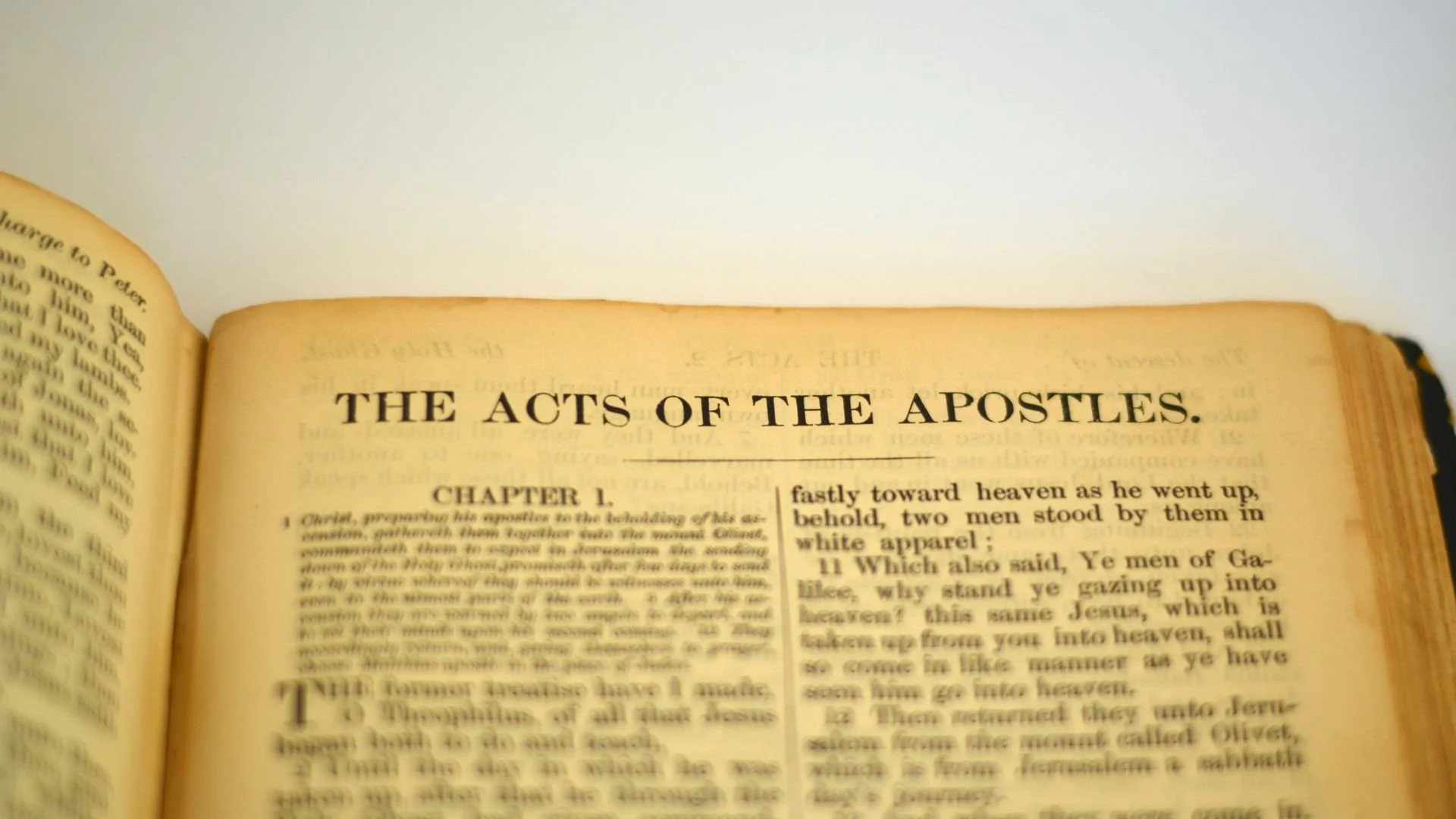
The Book of Acts records the early church exercising its authority to bind and loose when the apostles and elders met in Jerusalem to decide a dispute over Gentile believers (Acts 15). (EEW Magazine)
The familiar KJV wording says that whatever believers bind or loose on earth “shall be bound” or “shall be loosed” in heaven. The Greek uses a construction that can also be translated “will have been bound” and “will have been loosed.” Many biblical scholars understand the passage to describe earthly decisions that agree with what Heaven has already determined, though they differ over how much the verb tense alone establishes. The passage itself makes clear that the church’s authority comes from Christ and must be exercised in accordance with His will. Heaven is not obligated to endorse a decision simply because a believer or church leader confidently announces it.
The authority to bind and loose sits in the middle of Jesus’ teaching about humility, care, correction, restoration and forgiveness. Immediately afterward, Peter asked how often he must forgive a brother who sinned against him. Jesus answered, “Until seventy times seven” (Matthew 18:22), and then told the parable of a servant who was forgiven a great debt and refused to forgive a small one. Whoever makes difficult judgments in the church is to carry the Father’s concern for the wandering sheep into every act of correction, extending mercy and remaining accountable to the Lord of the church.
What, then, should believers make of the practice of binding Satan and loosing blessings in prayer? Scripture contains other passages that speak directly about spiritual warfare and authority over demonic powers. In Luke 10:19, Jesus told the disciples He had sent out, “Behold, I give unto you power to tread on serpents and scorpions, and over all the power of the enemy.” The first word translated “power” comes from the Greek exousia, referring to authority. The second comes from dynamis, referring to power or might.
In Matthew 12:29, Jesus spoke about binding a strong man before plundering his house. He gave that illustration while responding to accusations concerning His power to cast out demons, describing His victory over the kingdom of darkness. These passages provide biblical grounds for discussing Christ’s authority over evil and the authority He gave His disciples. Matthew 18:18 addresses a different responsibility: the church’s duty to deal faithfully with wrongdoing among its members.
The verses that follow add another familiar promise, often quoted when believers join together to pray for healing, provision or deliverance. “Again I say unto you, That if two of you shall agree on earth as touching any thing that they shall ask, it shall be done for them of my Father which is in heaven” (Matthew 18:19).

“If two of you shall agree on earth as touching any thing that they shall ask, it shall be done for them of my Father which is in heaven” (Matthew 18:19). (EEW Magazine file photo)
Jesus spoke these words immediately after explaining the church’s responsibility to address sin. The phrase “any thing” translates the Greek pantos pragmatos, and pragma can carry the legal sense of a matter or case, as it does when Paul rebukes believers for “having a matter against another” (1 Corinthians 6:1). Some scholars understand the agreement Jesus described primarily in connection with the serious matters under consideration by the church. Others understand the language as a broader promise concerning united prayer. Both interpretations recognize the significance of believers gathering under Christ’s authority.
Jesus continued, “For where two or three are gathered together in my name, there am I in the midst of them” (Matthew 18:20). The promise has long brought comfort to Christians gathering for prayer, even when their numbers were small, and there is good biblical reason to affirm Christ’s presence among His people. In Scripture, gathering in someone’s name means gathering under that person’s authority and in keeping with that person’s character. The reference to two or three recalls the witnesses mentioned in verse 16. For a community facing the difficult responsibility of correction and judgment, the assurance of Christ’s presence would have been deeply significant.
Jesus Himself exercised authority in complete submission to the Father. “The Son can do nothing of himself, but what he seeth the Father do,” He said (John 5:19). Before sending His followers to make disciples of all nations, the risen Christ declared, “All power is given unto me in heaven and in earth” (Matthew 28:18). Again, the Greek word is exousia, authority. The authority of His followers proceeds from Him.
That is why submission to God sits at the center of spiritual authority. James instructed believers, “Submit yourselves therefore to God. Resist the devil, and he will flee from you” (James 4:7). The same principle governs prayer. The apostle John wrote, “And this is the confidence that we have in him, that, if we ask any thing according to his will, he heareth us” (1 John 5:14). Believers can pray boldly, with confidence resting in God’s character, His promises and His faithfulness, while seeking His will and trusting His wisdom.
That brings us back to the words that have stirred so many congregations. When Jesus spoke about binding and loosing in Matthew 18, He was entrusting His followers with a serious responsibility to make judgments, confront wrongdoing, pursue reconciliation and remain faithful to His teaching. In the same breath, He promised He would stand among them as they carried it out.
The same words that fill a prayer meeting with expectation also call the church to discern what is right, care for one another, confront sin and remain accountable to God. The authority Jesus gives His people is profound, and it is meant to be exercised the way He exercised His own, in submission to the Father.
Matthew 18:18 belongs in the prayer meeting, and it belongs just as much in the everyday life of the church, where believers discern what is right, care for one another, confront sin and remain accountable to God. The authority Jesus gives His people is profound, and it is meant to be exercised the way He exercised His own, in submission to the Father.