Psalm 105:15 and the story of Elisha and the bears are often cited to place pastors, bishops and prophets beyond question. The Hebrew text, the stories in context and the New Testament point to a different understanding of spiritual authority.
By EEW Magazine Online Editors

Psalm 105:15 is often cited in debates over spiritual authority. In context, the verse describes God’s protection of Abraham, Isaac and Jacob. (EEW Magazine file photo)
In many Pentecostal and Black church settings, a few phrases end conversations quickly. “Touch not mine anointed.” “Don’t put your mouth on the man of God,” or the woman of God. They tend to surface when a member questions a sermon, a ministry decision or a leader’s conduct. They often arrive with a story attached: the youths who mocked a prophet and were mauled by bears, or Miriam struck with leprosy for speaking against Moses.
Over time, the message absorbed by many in the pews is that a title such as pastor, bishop, apostle or prophet places a person in a protected class beyond correction. Even Charisma, a magazine rooted in the Pentecostal and charismatic tradition, has called Psalm 105:15 one of the most abused verses in the Bible. The original language of that verse, and the stories most often paired with it, show something very different about whom God protects and why.
Reverence for the pulpit runs deep in the Black church, and much of it was earned. Pastors led congregations through slavery, segregation and the civil rights movement. Scripture affirms that honor, calling elders who rule well “worthy of double honour” (1 Timothy 5:17). The question is whether any title places a person beyond the reach of Scripture’s own standards.

Reverence for spiritual leaders runs deep in many Pentecostal and Black church congregations. Scripture affirms that honor and holds every leader to its standards. (EEW Magazine file photo)
Psalm 105 is a hymn of Israel’s history, beginning with God’s covenant with Abraham. The verses leading into the famous line set the scene: “When they were but a few men in number; yea, very few, and strangers in it. When they went from one nation to another, from one kingdom to another people; He suffered no man to do them wrong: yea, he reproved kings for their sakes; Saying, Touch not mine anointed, and do my prophets no harm” (Psalm 105:12-15).
The speaker is God. The audience is kings. The people under protection are Abraham, Isaac and Jacob, a small family of nomads with no land, no army and no throne.
The Hebrew identifies exactly who those people are. The word for “anointed” is meshichay, “My anointed ones,” the plural of mashiach. The word for “prophets” is nevi’ay, from nabi. Elsewhere in the Old Testament, both terms can designate recognized roles. Mashiach describes anointed kings and priests, and nabi describes those who carried a recognized prophetic ministry. The Law of Moses even made provision for the day “the priest that is anointed” would sin (Leviticus 4:3).
Psalm 105:15 applies both words to Abraham, Isaac and Jacob, who were never installed as kings, consecrated as priests or anointed with oil. Hebrew poetry often restates a line in different words, and the verse follows that pattern, with “Mine anointed” and “My prophets” describing the same family. The psalmist uses the language of anointing and prophecy for people God had chosen and placed under His covenant care.
Genesis shows where the language comes from. When Abimelech, king of Gerar, took Abraham’s wife into his house, God confronted him in a dream and told him to return her, “for he is a prophet, and he shall pray for thee” (Genesis 20:7). It is the first time the word nabi appears in Scripture. God names Abraham a prophet before any prayer is offered, and that declaration explains why Abraham’s intercession will matter. The first prophet in the Bible is introduced as a man who will pray for the king who wronged him.
In Isaac’s generation, Abimelech of Gerar ordered his people, “He that toucheth this man or his wife shall surely be put to death” (Genesis 26:11). The verb translated “touch,” naga, described seizing and harming. The warning concerned violence by rulers against a vulnerable household.
When the Old Testament was translated into Greek, the version most widely used in the early church rendered the phrase tōn christōn mou, “My anointed ones.” The Greek word christos is the same word that gives Christ His title.
The New Testament carries the language of anointing into the life of the church and applies it broadly. John wrote to an entire congregation, “But ye have an unction from the Holy One” (1 John 2:20), and Paul wrote that God “hath anointed us” (2 Corinthians 1:21). These passages address a different setting than Psalm 105, which concerns God’s covenant protection of the patriarchs. They offer further evidence that in Scripture, anointing is no exclusive privilege of religious leaders.
The story of Elisha and the bears is often told as a warning against criticizing a preacher. The narrative itself is brief. Shortly after Elijah was taken up into heaven, Elisha traveled toward Bethel. Young people came out of the city and jeered at him, “Go up, thou bald head” (2 Kings 2:23-24). Elisha cursed them in the name of the Lord, and two she-bears came out of the woods and mauled forty-two of them. The text says nothing further about who the youths were or what they intended.
Several details shape how scholars read the account. The Hebrew phrase ne’arim qetannim is commonly translated “small boys” or “young lads.” The word na’ar can describe older youths, as it does Joseph at seventeen (Genesis 37:2). The adjective qatan, meaning small, gives reason to consider younger ages, and the ages cannot be determined with certainty.
Bethel was the center of Jeroboam’s golden calf worship (1 Kings 12:28-29). Many scholars read “Go up” as mockery of Elijah’s ascension, a taunt aimed at the prophet and at the God who had just taken Elijah into heaven. Others take it as a demand that Elisha leave. Some commentators also connect the judgment to the Law’s warning that persistent rebellion would bring wild beasts among the people (Leviticus 26:22). Read in that setting, the account describes God’s judgment on contempt in a city devoted to idolatry. It gives no instruction concerning believers who raise concerns about a leader’s conduct.
Numbers 12 is often cited in the same breath. Miriam and Aaron spoke against Moses over his marriage and challenged his role, asking, “Hath the LORD indeed spoken only by Moses?” (Numbers 12:1-2). God defended Moses as the one He spoke with “mouth to mouth,” and Miriam became leprous under His judgment. The same chapter describes Moses as “very meek,” and Moses immediately prayed for her healing.
Elsewhere in Scripture, Moses received correction readily. His father-in-law Jethro told him, “The thing that thou doest is not good,” and Moses “hearkened to the voice of his father in law, and did all that he had said” (Exodus 18:17, 24). God Himself later barred Moses from entering the Promised Land after he struck the rock in anger (Numbers 20:12).
David offers the clearest example of honoring “the LORD’s anointed.” He twice refused to kill King Saul. In the same chapter, he called out to Saul, named the wrong being done to him and asked the Lord to “judge between me and thee” (1 Samuel 24:15). His restraint applied to his sword. He refused to harm the king, and he spoke candidly about the king’s conduct.
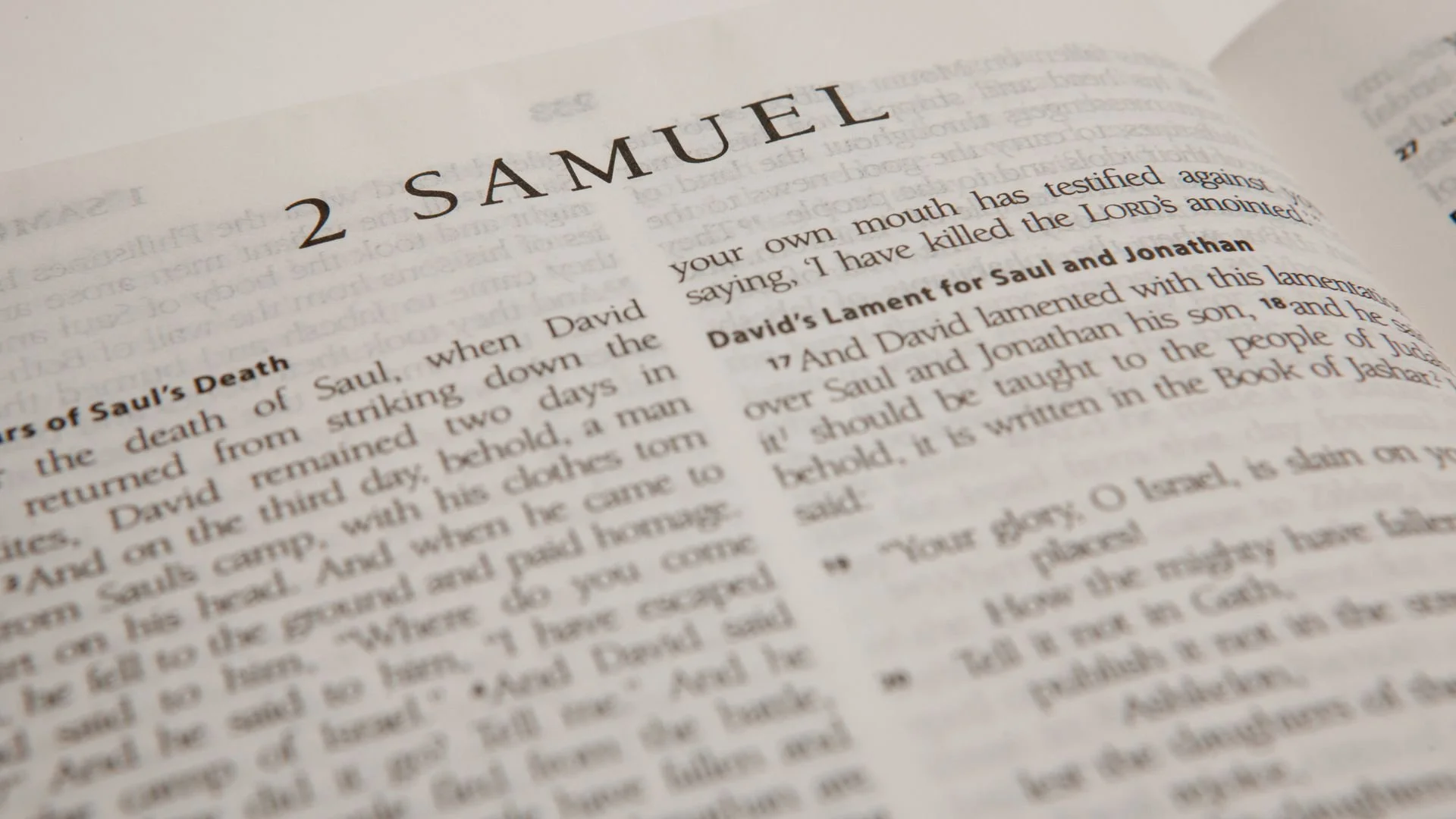
In 2 Samuel 1, David condemns the man who claimed to have killed Saul, “the LORD’s anointed,” a phrase tied throughout the account to taking the king’s life. (EEW Magazine file photo)
Years later, the prophet Nathan confronted David himself over Bathsheba and Uriah: “Thou art the man” (2 Samuel 12:7). David repented, and Scripture preserves the confrontation as faithfulness to God.
Jesus addressed titles directly. “But be not ye called Rabbi: for one is your Master, even Christ; and all ye are brethren,” He told His disciples, adding, “he that is greatest among you shall be your servant” (Matthew 23:8-11). Peter told elders to shepherd the flock “neither as being lords over God’s heritage, but being ensamples to the flock” (1 Peter 5:3). James warned that those who teach “shall receive the greater condemnation” (James 3:1). In the New Testament, a leadership role increases a person’s accountability.
Paul gave Timothy a procedure for that accountability: “Against an elder receive not an accusation, but before two or three witnesses. Them that sin rebuke before all, that others also may fear” (1 Timothy 5:19-20). He then charged Timothy “before God, and the Lord Jesus Christ, and the elect angels” to carry out those instructions “without preferring one before another, doing nothing by partiality” (1 Timothy 5:21). An elder’s standing earns no favoritism.
Prophetic ministry carried the same expectation. “Let the prophets speak two or three, and let the other judge,” Paul instructed the Corinthian church (1 Corinthians 14:29). John urged believers to “try the spirits whether they are of God: because many false prophets are gone out into the world” (1 John 4:1). The Bereans tested even the apostle Paul’s preaching, searching “the scriptures daily, whether those things were so,” and Scripture calls them noble (Acts 17:11). Paul also confronted Peter “to the face, because he was to be blamed,” when Peter withdrew from Gentile believers under pressure (Galatians 2:11-14).

The Bereans searched the Scriptures daily to test what they heard, and Acts 17:11 calls them noble. (EEW Magazine file photo)
Scripture also sets limits on how concerns are raised. The commandment against bearing false witness still stands (Exodus 20:16). Rumor and gossip wound the innocent and the church alike, and they stand apart from the truthful, public disclosure of established misconduct that 1 Timothy 5:20 itself requires. Jesus described a process for addressing personal sin within the community of believers, beginning privately and widening only when necessary (Matthew 18:15-17).
That passage, however, places no obligation on anyone to confront an alleged abuser privately before seeking help. Allegations involving abuse, violence, exploitation or possible crimes belong with civil authorities, whom Paul describes as “the minister of God” appointed to execute wrath “upon him that doeth evil” (Romans 13:4).
Psalm 105:15 remains a promise worth clinging to. God guards the people He calls, and He has rebuked kings on their behalf. The first prophet named in Scripture is introduced as one who would pray for the very ruler who had wronged him. The same God who protected Abraham in Gerar sent Nathan into David’s palace.
Honoring those who labor in the Word and testing everything by the Word belong to the same faithful walk, and no title exempts anyone from it.