Jesus of Nazareth lived in the first century, was crucified under Roman authority, and was proclaimed risen from the dead by His earliest followers. His own words explain why Christians believe He is the only way to God.
By EEW Magazine Online Gospel Editors
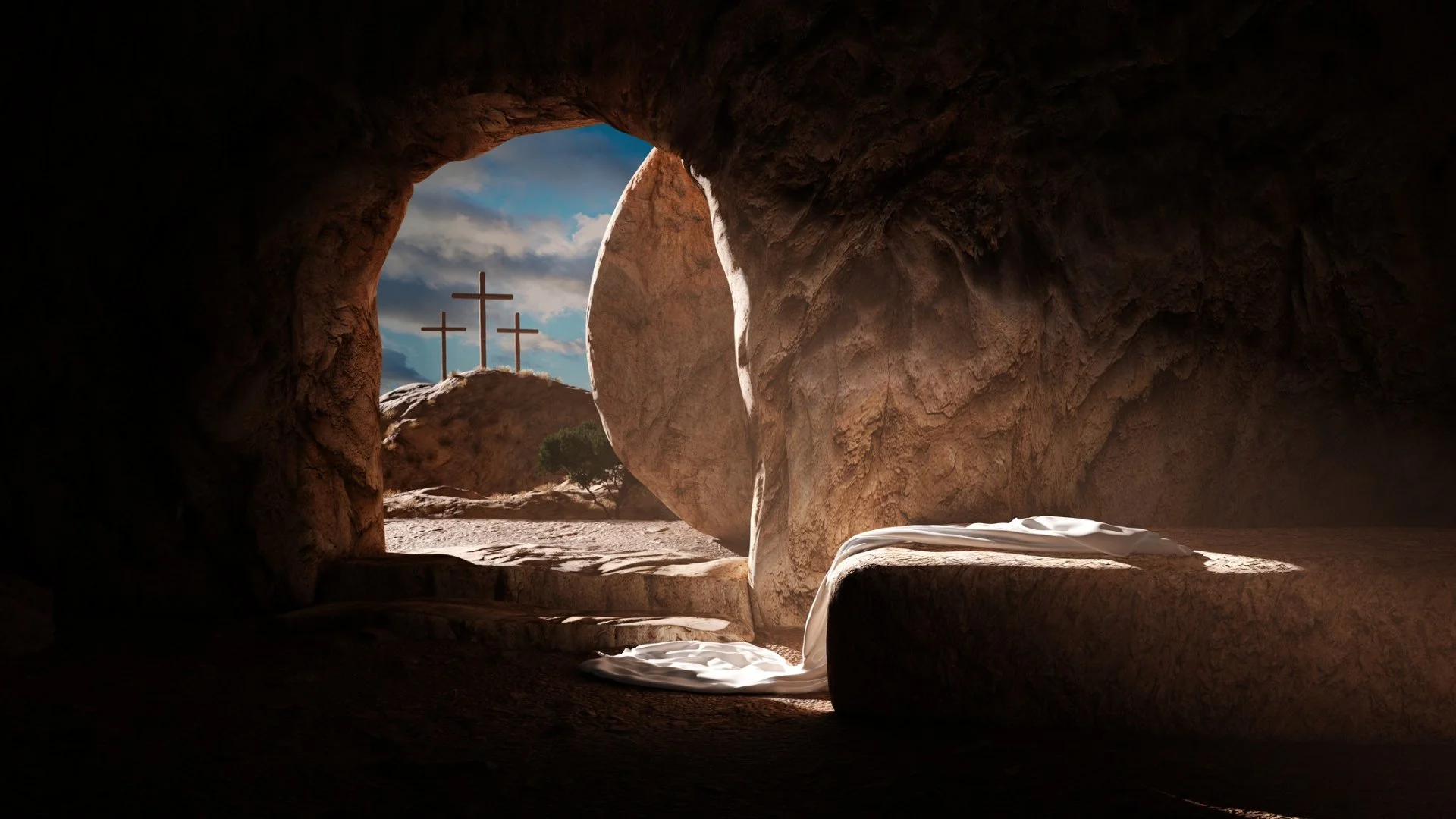
The tomb was found empty on the first day of the week, and the risen Christ appeared to His followers over 40 days (Acts 1:3). (Photo: EEW Magazine Online)
Jesus Christ is often discussed alongside Buddha, Muhammad, Confucius and Joseph Smith as one of history’s influential religious figures. Each shaped the beliefs of generations, and millions continue to follow the religious traditions associated with their names. For Christians, however, placing Jesus in the same category as other religious founders is unacceptable.
Jesus, in Whom we believe, taught us that He has authority to forgive sins, that He existed before Abraham, and that He is the only way to God the Father. He also promised to rise from the dead. His followers testified that they had seen Him alive after His crucifixion.
This is what sets Christianity apart.
Every believer should understand what Scripture says about Jesus and what history can establish about the Man at the center of our faith.
Jesus of Nazareth was a Jewish man who lived in the first century, during the reigns of the Roman emperors Augustus and Tiberius. The Gospels identify His mother as Mary, a virgin who conceived by the Holy Ghost (Matthew 1:18-23; Luke 1:34-35), and Joseph as His earthly legal father.
Matthew and Luke place His birth in Bethlehem of Judea, the town the prophet Micah named as the birthplace of a ruler “whose goings forth have been from of old, from everlasting” (Micah 5:2). He grew up in Nazareth, a town in Galilee. His exact birth year is unknown. Historians generally estimate that He was born between 6 and 4 B.C., several years before the traditional starting point of the Christian calendar.

Matthew and Luke place Jesus’ birth in Bethlehem of Judea, the town Micah named in prophecy (Micah 5:2). (Photo: EEW Magazine Online)
His public ministry began when He was approximately 30 years old, according to Luke 3:23. Jesus was baptized by John the Baptist, preached throughout Galilee and Judea, and called disciples to follow Him. He became known for His teachings, healings and miracles, and was crucified in Jerusalem under the authority of the Roman governor Pontius Pilate, most likely around A.D. 30 or 33.
Evidence of Jesus’ existence also appears outside the New Testament. The Jewish historian Flavius Josephus, writing around A.D. 93-94, referred to James as the brother of Jesus, who was called Christ, in Antiquities of the Jews (Book 20, section 200). The passage is widely accepted by scholars as authentic.
The Roman historian Tacitus, writing in the early second century, recorded that Christus, from whom Christians derived their name, had been executed under Pontius Pilate during the reign of Emperor Tiberius (Annals 15.44). Neither historian was writing a Christian Gospel.
Their accounts corroborate the historical frame of the Gospel record. Jesus was a real person who lived under Roman rule and was executed under Pontius Pilate. That corroboration, coming from writers outside the church, gives Christian apologetics an important foundation.
We know that Jesus lived. The central question is who He was.

Jesus preached throughout Galilee and Judea and called disciples to follow Him. (Photo: EEW Magazine Online)
Jesus made statements about His identity that distinguish Him from other major religious figures. In John 10:30, He declared, “I and my Father are one.” The Jewish leaders who heard Him understood this to be a claim of divinity. They took up stones to kill Him, explaining, “because that thou, being a man, makest thyself God” (John 10:31-33).
On another occasion, Jesus announced, “Before Abraham was, I am” (John 8:58). Abraham had lived many centuries before Jesus’ earthly birth. Jesus used one verb for Abraham’s coming into being (genesthai) and spoke of Himself with “I am” (egō eimi). Read alongside John 1:1-3 and John 17:5, His statement identifies the Son as One who existed before Abraham and has always existed, because He is God.
His words echo God’s self-identification to Moses at the burning bush: “I AM THAT I AM” (Exodus 3:14). His hearers understood the claim. John records that “then took they up stones to cast at him” (John 8:59).
Jesus also claimed authority to forgive sins. When a paralyzed man was brought before Him, Jesus first declared that the man’s sins were forgiven. The religious leaders protested, asking, “who can forgive sins but God only?” (Mark 2:7). Jesus responded by healing the man, demonstrating His authority to forgive sins on earth (Mark 2:10-12).
The apostle John opened his Gospel at the beginning of all things: “In the beginning was the Word, and the Word was with God, and the Word was God” (John 1:1). The verb “was” (ēn) describes continuous existence. When the beginning began, the Word already was. The verse also shows the Word as distinct from the Father, for He “was with God,” and fully divine, for He “was God.”
John then names Him as the Creator: “All things were made by him; and without him was not any thing made that was made” (John 1:3). The One through Whom everything came into existence cannot be counted among the things He made.
Thirteen verses later, John records the moment eternity entered time: “And the Word was made flesh, and dwelt among us” (John 1:14). The word translated “dwelt” (eskēnōsen) means to pitch a tent, or tabernacle. The God whose glory filled the tabernacle in the wilderness (Exodus 40:34) took on human flesh and lived among His people. After the resurrection, Thomas addressed Jesus as “My Lord and my God” (John 20:28).
These passages form part of the biblical foundation for the historic Christian doctrine of the Godhead. Scripture declares that God is one: “Hear, O Israel: The LORD our God is one LORD” (Deuteronomy 6:4). The full witness of Scripture reveals that the one true God exists eternally in three distinct Persons: the Father, the Son and the Holy Ghost. The three are coequal and coeternal, sharing one divine nature. The Son is distinct from the Father and from the Holy Ghost. The Father is God, the Son is God, and the Holy Ghost is God, yet there is one God.
All three Persons appear together at Jesus’ baptism. Matthew records that as Jesus came up out of the water, He “saw the Spirit of God descending like a dove, and lighting upon him,” while a voice from Heaven declared, “This is my beloved Son, in whom I am well pleased” (Matthew 3:16-17). After His resurrection, Jesus sent His disciples to baptize “in the name of the Father, and of the Son, and of the Holy Ghost” (Matthew 28:19).
The word “name” is singular, one name shared by three Persons.
On the night before His crucifixion, Jesus prayed to the Father for “the glory which I had with thee before the world was” (John 17:5). The Son shared the Father’s glory before creation. Jesus Christ is God the Son, who entered human history through the incarnation. Paul wrote that in Him “dwelleth all the fulness of the Godhead bodily” (Colossians 2:9).
Although He was “in the form of God” and “thought it not robbery to be equal with God,” He “took upon him the form of a servant, and was made in the likeness of men” (Philippians 2:6-7). He is fully God and fully man. His teachings concerning His identity are essential to understanding Christianity.
In John 14, Jesus prepared His disciples for His approaching death. When Thomas expressed uncertainty about where He was going and how they could follow Him, Jesus answered: “I am the way, the truth, and the life: no man cometh unto the Father, but by me” (John 14:6). Jesus identified Himself as the way to the Father. He was speaking about access to God and the eternal life He had promised His followers. The exclusivity of that claim is central to Christian doctrine.
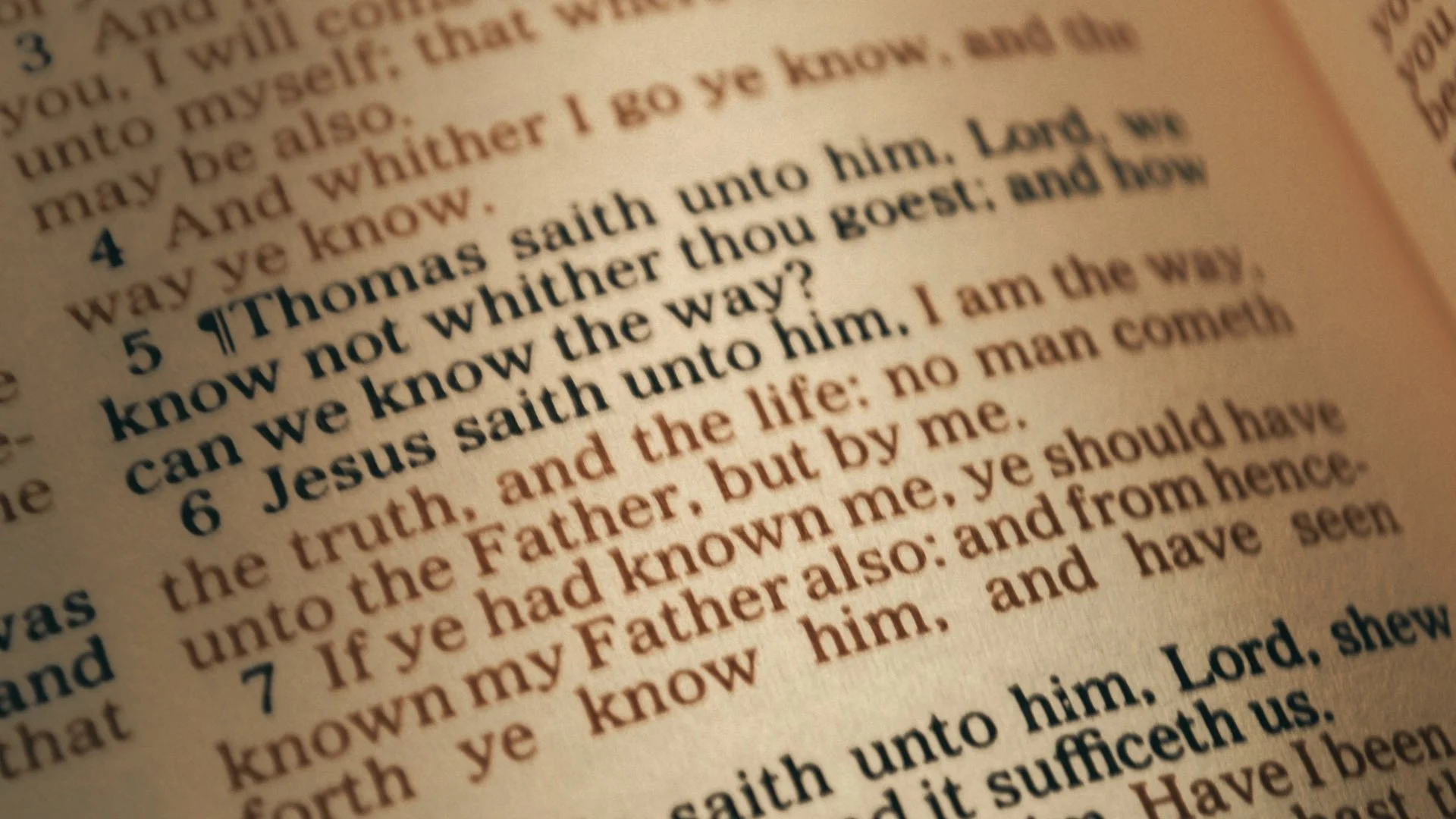
Jesus answered Thomas, “I am the way, the truth, and the life: no man cometh unto the Father, but by me” (John 14:6). (Photo: EEW Magazine Online)
In that same conversation, Jesus promised, “I will pray the Father, and he shall give you another Comforter, that he may abide with you for ever” (John 14:16). Jesus spoke of the Father sending the Holy Ghost in answer to His own prayer, and the Godhead remains at work in every believer’s life.
Following Jesus’ resurrection and ascension, Peter proclaimed the same message before the Jewish religious authorities: “Neither is there salvation in any other: for there is none other name under heaven given among men, whereby we must be saved” (Acts 4:12). Paul also taught that there is “one mediator between God and men, the man Christ Jesus” (1 Timothy 2:5).
These passages are why Christians do not affirm that all religious paths lead equally to God. Jesus Himself taught that reconciliation with the Father comes through Him. Christianity makes a definite claim about the identity of Jesus and the salvation He alone provides.
The purpose of Jesus’ death is another essential tenet of the Christian faith. Jesus told His disciples that He came “to give his life a ransom for many” (Mark 10:45). He understood His approaching death as part of His mission. The New Testament teaches that all humanity has sinned (Romans 3:23), that sin separates humanity from God, and that Jesus offered Himself as the sacrifice through which sinners could be reconciled to the Father. Paul wrote that “Christ died for our sins according to the scriptures” (1 Corinthians 15:3). Peter explained that Jesus “bare our sins in his own body on the tree” (1 Peter 2:24).

Paul wrote that “Christ died for our sins according to the scriptures” (1 Corinthians 15:3). (Photo: EEW Magazine Online)
The Christian Gospel therefore centers on Christ’s redemptive work. His death addresses humanity’s need for forgiveness, and His resurrection is the foundation of the believer’s hope of eternal life. Jesus had also predicted His own suffering, death and resurrection. Mark 8:31 records Him teaching His disciples that He would be killed and rise again after three days.
Early in His ministry, He told His critics, “Destroy this temple, and in three days I will raise it up,” and John explains that “he spake of the temple of his body” (John 2:19, 21). The resurrection would become the great declaration that death had been defeated.
One of the strongest passages for understanding the earliest Christian resurrection testimony is 1 Corinthians 15.
The apostle Paul wrote this letter around A.D. 53-55, roughly two decades after the crucifixion. He explained that he was passing along an account he had already received concerning Jesus’ death, burial, resurrection and appearances. Paul identified Peter, the Twelve, James, all the apostles and himself among those to whom the risen Christ appeared. Paul knew two of those witnesses personally. About three years after his conversion, he spent 15 days with Peter in Jerusalem and also saw James, the Lord’s brother (Galatians 1:18-19).
He also made a remarkable statement: “After that, he was seen of above five hundred brethren at once; of whom the greater part remain unto this present, but some are fallen asleep” (1 Corinthians 15:6). According to Paul’s account, more than 500 people saw Jesus alive on a single occasion. He further stated that most of those witnesses were still living when he wrote this letter. Paul himself was one of the witnesses who gave a personal account of encountering the risen Christ.
The Gospels provide additional resurrection narratives. John 20 identifies Mary Magdalene as a witness to the risen Jesus. Luke 24 describes His appearance to two disciples traveling to Emmaus and then His appearance to the gathered disciples. In John 20, Jesus invites Thomas to examine the wounds in His hands and side. Luke records Jesus telling His disciples, “Behold my hands and my feet, that it is I myself: handle me, and see” (Luke 24:39).
These passages describe the bodily resurrection Christians confess. Jesus rose in the same body that was nailed to the cross, and His disciples could see Him and touch Him. Acts 1:3 adds that Jesus appeared to His followers during a period of 40 days, teaching them about the Kingdom of God before His ascension.

Mary Magdalene told the disciples that “she had seen the Lord” (John 20:18). (Photo: EEW Magazine Online)
All four Gospels report that Jesus was buried and that His tomb was found empty on the first day of the week. Matthew identifies Joseph of Arimathaea as the man who received Jesus’ body and placed it in his own tomb (Matthew 27:57-60). John also names Nicodemus as participating in the burial preparations (John 19:39-42). The resurrection accounts describe women coming to the burial place and discovering that Jesus’ body was no longer there.
Matthew also records that the chief priests paid the soldiers who had guarded the tomb to say, “His disciples came by night, and stole him away while we slept” (Matthew 28:11-15). In Matthew’s account, the accusation itself shows the tomb was empty.
For Christians, the testimony concerning the empty tomb sits alongside the reports of Jesus appearing alive to His disciples, the preaching that followed and the earliest written declarations of His resurrection. The apostles understood the resurrection as an event that had truly occurred. Peter proclaimed, “This Jesus hath God raised up, whereof we all are witnesses” (Acts 2:32). The preaching of the early church was built upon that testimony.
Understanding the beliefs of other religious traditions helps Christians explain why the identity and work of Jesus are unique.
Buddha, who lived centuries before Jesus, taught a path toward enlightenment and liberation from suffering. Buddhism includes several traditions with differing beliefs, but the historical Buddha did not teach that he was the incarnate Creator God who came to die for humanity’s sins.
Confucius, a Chinese teacher who lived roughly five centuries before Jesus, taught moral cultivation, family duty and social harmony. He described himself as one who passed along the wisdom of earlier sages (Analects 7.1). He never claimed to be God, and his teaching offered no sacrifice for sin.
Muhammad, born around A.D. 570, founded the religious movement of Islam and died in A.D. 632. Muslims regard him as God’s final prophet. Muhammad presented himself as a messenger of God and made no claim to be God incarnate. Islam honors Jesus as a prophet and Messiah but rejects the historic Christian confession that Jesus is God the Son. The Qur’an also denies that Jesus was crucified (Qur’an 4:157), and Islam teaches a fundamentally different understanding of salvation.
Joseph Smith, born in 1805, founded the movement that became The Church of Jesus Christ of Latter-day Saints. He claimed that God had called him to restore Christ’s church through additional revelation. Latter-day Saints believe in Jesus’ divinity, atonement and resurrection, but their teachings about the Godhead and continuing revelation differ from historic Trinitarian Christianity. Latter-day Saint teaching holds that the Father, the Son and the Holy Ghost are three separate beings, and that the Father has a body of flesh and bones (Doctrine and Covenants 130:22). Smith understood himself to be a prophet. He never claimed to be the incarnate Savior.
Jesus’ own teachings and the apostolic Gospel make claims about His identity and saving work that cannot be absorbed into every other religious system. Jesus is God the Son who became flesh, gave His life for sinners and rose from the dead. Christians recognize Him as the one mediator between God and humanity, the fulfillment of God’s redemptive plan and the Lord to whom every person is accountable. No religious founder occupies that position within the historic Christian Gospel.

Jesus is God the Son, crucified for our sins and raised from the dead. (Photo: EEW Magazine Online)
Paul recognized that Christianity’s credibility depended upon the resurrection. He wrote: “And if Christ be not raised, your faith is vain; ye are yet in your sins” (1 Corinthians 15:17). Paul acknowledged that if Jesus had remained dead, the Christian message would fail at its very foundation. The resurrection was indispensable to the Gospel he preached.
He tied salvation itself to this truth: “if thou shalt confess with thy mouth the Lord Jesus, and shalt believe in thine heart that God hath raised him from the dead, thou shalt be saved” (Romans 10:9).
Peter instructed believers to be ready to give an answer to anyone who asks about the hope within them, doing so “with meekness and fear” (1 Peter 3:15). An informed Christian can explain the historical facts of Jesus’ life, identify the biblical claims concerning His deity and His place in the Godhead, describe the earliest resurrection testimony and explain why salvation through Christ is central to the Gospel. We defend our faith best when we understand what we believe and speak accurately about the evidence.
Jesus once asked His disciples, “But whom say ye that I am?” (Matthew 16:15). Peter answered, “Thou art the Christ, the Son of the living God” (Matthew 16:16). That remains the confession of the Christian church.
Jesus is the Christ, the Son of the living God, crucified for our sins and raised from the dead. As He declared in Revelation 1:18, He is the One who lives, who was dead, and who is alive for evermore. That is why Jesus stands alon