

The Scoreboard We Can't Stop Keeping
The Gospel offends something deep in us, the part that would rather earn than receive. Here’s a Scripture-rooted look at why grace is so hard to accept and why it is the only thing that saves.
By Patricia Payton // EEW Magazine Online

There is a reason the Gospel is harder to accept than it looks. Not because it is complicated. A child can grasp it. It is hard because it offends something deep in us, something that would rather earn than receive.
Tell a person their good behavior cannot save them and watch what happens. Something in them pushes back. They start listing reasons they are not so bad, the rules they have kept, the people they have helped, the church they attend. The instinct is automatic, and it reveals the oldest belief in the human heart. We think we can make ourselves acceptable to God if we try hard enough.
That belief has a name.
It is the self-salvation project, and it sits at the root of every false religion ever built. This is worth saying plainly so no one mistakes the point.
The problem is not devotion. Scripture calls pure and undefiled religion a good thing (James 1:27). The problem is the attempt to use our own effort to buy what God says cannot be bought. That project is as old as Eden and as current as the prayer you whispered this morning hoping God noticed how hard you are working.
Grace offends that project at its core, because grace gives us no credit.
Think about it. A wage is something you are owed, earned by your labor and handed over because you put in the work. A gift is something you did nothing to deserve. If salvation were a wage, you could collect it with your head high and the quiet pride of a debt repaid. But salvation is a gift, which means you receive it with empty hands, like a person who cannot cover their own bill and has to let someone else pay it in full.

One of those flatters us. The other humbles us. And most people, if they are honest, would rather feel they helped than admit they were helpless.
This is why Jesus was hardest on the most religious people of His day. The Pharisees fasted, tithed down to their garden herbs, and kept the law in public with flawless precision. By every visible measure they were the holiest people in Israel. Jesus looked straight through it and called them whitewashed tombs, clean on the outside and full of death within (Matthew 23:27).
Their religion had become the very thing keeping them from God, because it convinced them they had no need of grace. They were too busy keeping the rules to notice they were still lost.
It would be comfortable to read that and picture someone else. The legalist down the pew. The hypocrite on television. But the Pharisee is not a character in a story. He lives in all of us, in the part that keeps a private scoreboard, that feels closer to God on the days we behaved and distant on the days we failed, as if our standing rose and fell with our performance. That scoreboard is the self-salvation project still running quietly in the background of a believing heart.
The scoreboard does something worse than measure us. It measures everyone else too. It is the reason we rank ourselves against the person in the next pew, quietly grateful we are not as bad as they are. Grace destroys that comparison completely. It tells the upstanding churchgoer and the prisoner on death row that they arrive at the cross by the exact same road, with nothing to offer. There is no sliding scale, no partial credit for being respectable. That scandalizes us, because comparison is one of the things we love most, and grace takes it away.
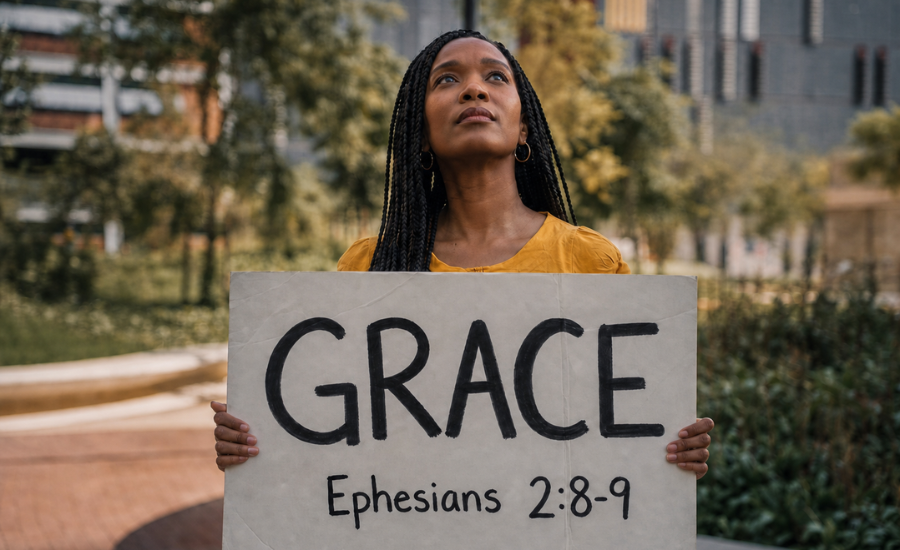
Here is what grace says to all of it. There is no scoreboard. The work that reconciles you to God was finished by Christ, and your worst day cannot lower it any more than your best day could earn it. Jesus lived the perfect life the law demanded, took the curse our failure deserved, and rose again so that anyone who trusts in Him is counted righteous on His record, not their own. Salvation was never about the strength of your résumé. It is about the One you are trusting to stand in your place.
That is offensive to the religious heart and liberating to the honest one. It means the worst person reading this is not too far gone, and the best person reading this is not safe on their own merit. The ground is level. Everyone comes the same way, with nothing in their hands.
In an EEW Magazine article titled, “What is the Gospel, Really?”, contributing writer Beth Paige beautifully examines the thief on the cross. He had no time to fix his life, join anything, or perform a single good work. All he had was faith, and he turned to Jesus and asked to be remembered. Jesus answered, "Today shalt thou be with me in paradise" (Luke 23:43). No probation. No conditions. A guilty man received grace in his final minutes, because grace was the only thing that could save him, and it was enough.
If you have spent years going through the motions and felt the hollowness underneath, that hollowness is mercy. It is the grace of God refusing to let you mistake activity for life. The invitation is not to try harder. It is to lay down the scoreboard and come to the One it was always pointing toward. Jesus said, "Come unto me, all ye that labour and are heavy laden, and I will give you rest" (Matthew 11:28). The rest He offers cannot be earned. It can only be received.
The great tragedy is not the crowd that openly rejects Him. It is the many who believe they have accepted Him while quietly trusting in themselves. Grace offends us right up until the day we stop defending our record and simply hold out our hands.
More on EEW Magazine Online:






The disciples wanted someone to blame for a man’s blindness. Discover how Jesus revealed God’s glory through suffering, and how Romans 8:18 brings hope today.