

When God Doesn't Fix It
Some of the most faithful people who ever lived died still waiting. Their faith was not failing. This is a Scripture-rooted word for anyone who has prayed the prayer that has not been answered. Hold on to Him, not to the outcome.
By EEW Magazine Online

There is a kind of suffering that prayer does not lift. You have asked. You have fasted. You have stood on every promise you know, and the thing you begged God to change is still exactly where it was. The diagnosis did not reverse. The marriage did not heal. The child did not come home. And somewhere in the long silence, a quiet, frightening thought begins to form. Maybe God is not going to fix this.
Much of the church has no language for that moment, and the silence does real damage. Believers are handed a version of faith that promises if they pray correctly and believe hard enough, relief will come. So when it does not, they are left to draw one of two conclusions. Either something is wrong with their faith, or something is wrong with God. Both are lies, and both have driven sincere people straight out of the church.
The Bible tells a truer story, and it is harder and better than the one we are often sold.
Scripture never promises believers a life free of suffering. It promises the opposite. Jesus told His followers plainly, "In the world ye shall have tribulation" (John 16:33).
Not might. Shall.
Paul, who planted churches across the known world and wrote much of the New Testament, was not spared. He asked God three times to remove a particular torment, and God said no (2 Corinthians 12:8-9). One of the most faithful men in the early church prayed a specific, repeated prayer for relief, and the answer was no. Sit with that, because it dismantles the idea that unanswered prayer is a sign of weak faith.
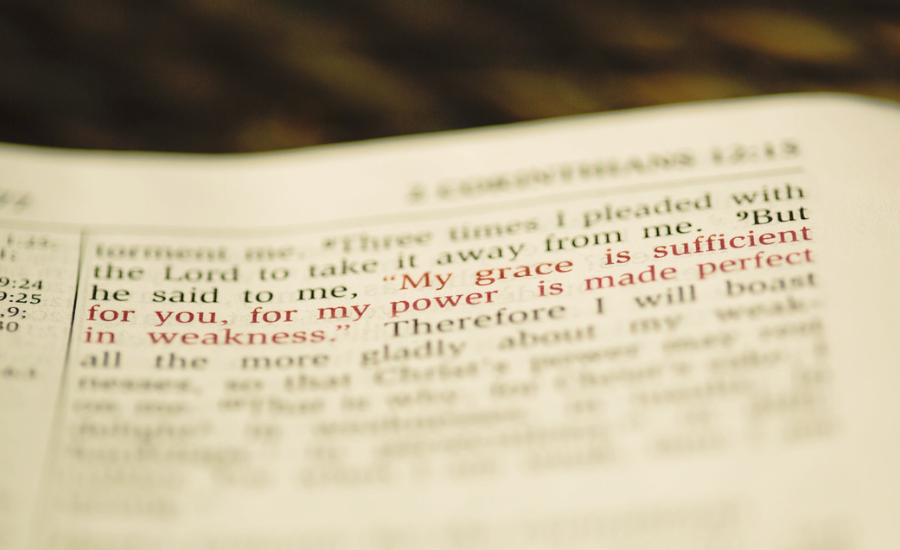
And God's refusal to remove suffering is never proof that the suffering is pointless. All through Scripture He works through affliction to shape character, deepen dependence, and accomplish purposes the sufferer cannot yet see. He told Paul why the thorn stayed: "My grace is sufficient for thee: for my strength is made perfect in weakness" (2 Corinthians 12:9). The thorn was not abandonment. It was the place where grace proved itself.
Then there is the great Hall of Faith in Hebrews 11, the chapter the church loves to preach. Abraham, Sarah, Isaac, Jacob, Moses. The giants. We hold them up as proof that faith moves mountains. But read what the chapter actually says about how their lives ended. "These all died in faith, not having received the promises, but having seen them afar off were assured of them, embraced them, and confessed that they were strangers and pilgrims on the earth" (Hebrews 11:13).
They died still waiting. God answered many of their prayers in their lifetimes, some of them miraculously. Abraham held Isaac, the son promised to him and Sarah when both were long past the age of bearing children. What none of them received before they died was the great promise every other promise pointed to, the coming of the Messiah and the eternal home His coming would open.
They saw that day from a distance, believed it anyway, and held it close to their chests until their final breath. Their faith was never lacking. Faith was simply never a guarantee that you receive the fullness of the promise inside your own lifetime. And if these giants died still waiting on the greatest promise of all, then waiting is not the mark of a failing Christian. It is sometimes the mark of a faithful one.
This is the turn many believers never get told. The deepest promise of the Gospel was never that God would keep suffering away from you. It is that God would enter it with you, and carry you to a homeland this world was never able to give. Jesus did not stand at a safe distance from human pain and offer advice. He took on flesh, was despised and rejected, became a man of sorrows acquainted with grief (Isaiah 53:3), and went to a cross. When you cry out from inside your suffering, you are not crying to a God who cannot relate.
You are crying to One who entered the deepest depths of it, who cried out from the cross, "My God, my God, why hast thou forsaken me?"

Do not rush past those words, because Jesus was doing more than lamenting.
He was quoting Scripture.
That cry is the opening line of Psalm 22, written by David a thousand years earlier. In His worst agony, the Living Word reached for the written Word, and He reached for a particular one. Psalm 22 begins in the dark, with a man who feels utterly abandoned by God. But it does not stay there. It travels, verse by verse, from that raw cry to a place of deliverance and praise, ending on a God who "hath not despised nor abhorred the affliction of the afflicted" (Psalm 22:24).
When Jesus spoke its first line, He was pointing to the whole psalm, and to the whole arc of suffering itself. It starts in forsakenness. It does not end there.
This is why a believer can endure what should break them. Not because the pain is small, and not because they have manufactured enough positivity to rise above it. They endure because they are not alone in it, and because they know how the story ends.
That ending is the anchor. The resurrection is God's promise that suffering does not get the final word. Paul, the same man God refused to heal, wrote that the sufferings of this present time are not worth comparing with the glory that will be revealed (Romans 8:18). He had been beaten, shipwrecked, and imprisoned, and he was not minimizing any of it. He was measuring it against eternity and telling the truth about the scale. Some things will not be fixed in this life. They will be redeemed in the next, when God wipes away every tear and death itself is undone (Revelation 21:4).
The saints of Hebrews 11 understood this. They called themselves strangers and pilgrims here, because they knew the promise was never meant to be kept in full on this side. That word, pilgrim, is the key to surviving suffering with your faith intact. A pilgrim is a person passing through, headed somewhere else, who does not expect the road to be the destination. When you know you are a pilgrim, the unfixed thing does not undo you, because you were never told this country was where everything would be made right.
None of this makes the waiting easy. It is not meant to. But it changes what the waiting means. You are not waiting on a God who forgot you or a formula you failed to work. You are walking through a hard country with a Savior who walked it first, toward a home where the promise is finally kept. That is not relief on demand. It is something sturdier. It will hold when relief does not come.
If you are in that place right now, having prayed the prayer that has not been answered, hear this plainly. Your faith is not failing because your circumstances have not changed. Some of the most faithful people who ever lived died still waiting, and God counted them among the heroes of the faith for it.
The God who did not remove their thorn did not abandon them in it, and He has not abandoned you. He is nearer to the brokenhearted than to anyone else (Psalm 34:18).
Hold on to Him, not to the outcome you are demanding. He is the one thing your suffering cannot take, and He is leading you home.
More on EEW Magazine Online:






Ephesians 5 calls believers to redeem the time. Learn to recognize the opportunities God places in ordinary moments, even when the days are evil.