

Two years after Americans were warned they might never vote again, judges, election officials and ordinary voters gave a better answer than any prophecy could.
By EEW Magazine Online Editors | Opinion
President Donald Trump, who has spent years claiming American elections are rigged, told The New York Times on election night that he was “absolutely willing to accept” the midterm results. (Getty Images/Illustration by EEW Magazine Online)
I keep wondering what Oprah Winfrey is thinking today. Two years ago tonight, on the eve of the 2024 presidential election, she stood on the Rocky Steps of the Philadelphia Museum of Art at Kamala Harris’s final rally and gave a warning that went far beyond ordinary campaign urgency. “If we don’t show up tomorrow,” she told the crowd, “it is entirely possible that we will not have the opportunity to ever cast a ballot again.”
She offered it as a genuine possibility. The fear on that stage went past a Republican victory, all the way to losing the vote itself.
Oprah Winfrey warned on the eve of the 2024 election that “it is entirely possible that we will not have the opportunity to ever cast a ballot again.” (Getty Images/Illustration by EEW Magazine Online)
On Tuesday, Americans voted. Democrats won control of both the House and the Senate in a rout, according to projections by NBC News and other networks. They flipped at least seven Senate seats, including one in Kansas, a state that has not elected a Democratic senator in nearly a century. NBC projects Democrats will hold about 258 House seats, their largest majority since 1993. A few races, including Senate contests in Alaska and Mississippi, are still being counted.
It seems somebody forgot to cancel democracy.
I confess the irony amuses me. It also deserves an honest accounting, and that accounting has to include the parts that make both sides uncomfortable.
Winfrey had plenty of company. In May 2023, Hillary Clinton told a Financial Times audience in Washington that a Trump victory would mean “the end of democracy” in the United States. A year later, Robert De Niro spoke at a Biden campaign event outside Trump’s criminal trial in Manhattan and predicted that elections would be finished.
“If he gets in, I can tell you right now, he will never leave,” he said. President Joe Biden built his reelection campaign around defending democracy. Harris closed hers at the Ellipse by describing Trump as a man “out for unchecked power.”
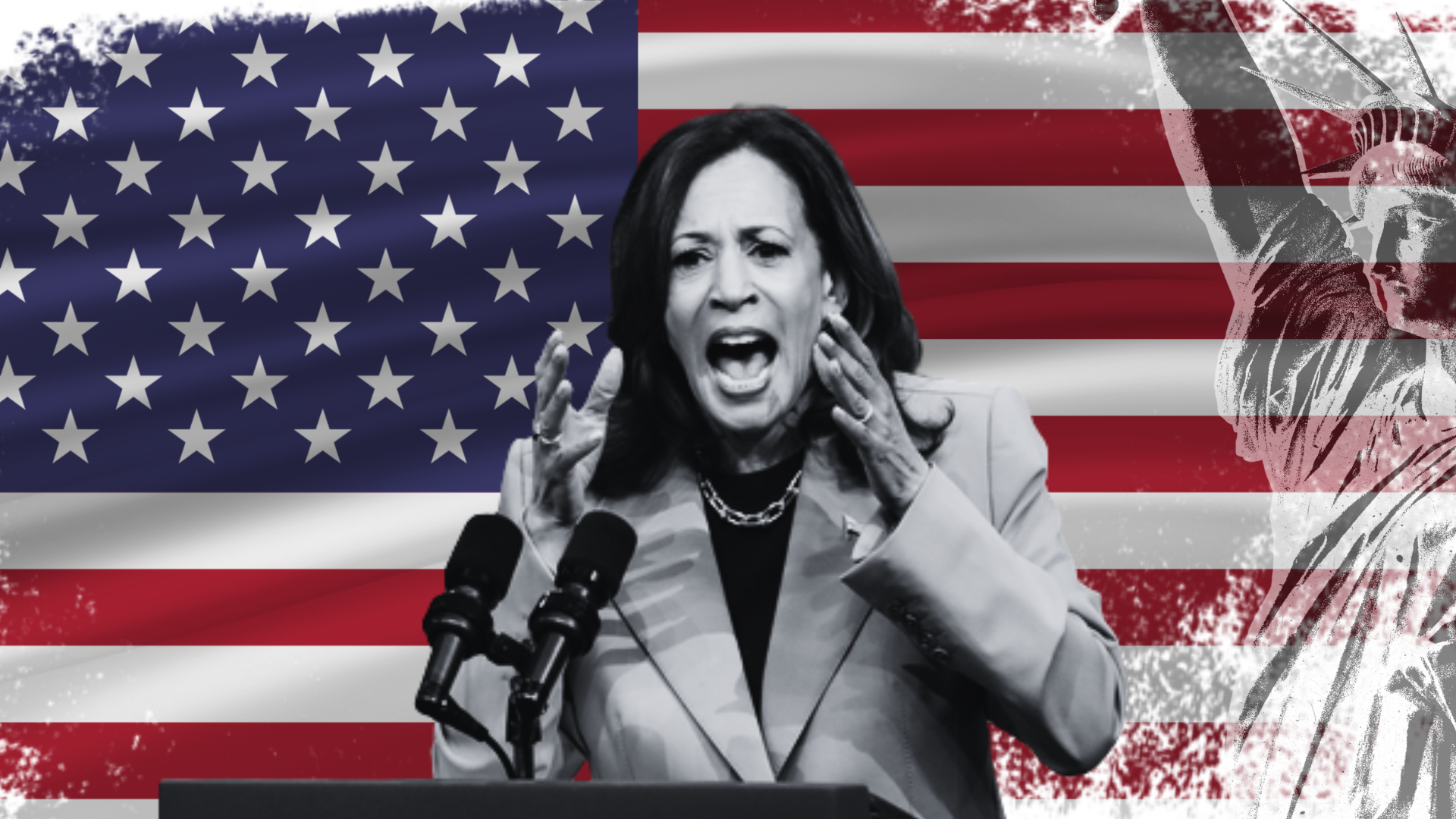
Kamala Harris closed her 2024 presidential campaign at the Ellipse in Washington by describing Donald Trump as “out for unchecked power.” (Getty Images/Illustration by EEW Magazine Online)
Those predictions failed on their own terms. Trump returned to the White House. Republicans controlled both chambers of Congress for nearly two years. Americans still went to the polls, and they voted the president’s party out of power on Capitol Hill.
The president himself told The New York Times on election night that he was “absolutely willing to accept those results.” Before the vote, he had told NBC News he would trust the outcome “if the elections are honest.” On Tuesday night, at least, he did not reach for that escape hatch.
The warnings did not come from nowhere, and Trump supplied much of the material himself. In July 2024, he told a Christian audience in West Palm Beach, Florida, to vote “just this time,” adding, “You won’t have to do it anymore.” His campaign later said he was talking about uniting the country. In January, he told Reuters that “we shouldn’t even have an election,” and his press secretary said he was joking. In February, he said on Dan Bongino’s podcast that Republicans “ought to nationalize the voting.”
His administration acted on that instinct. An Oct. 20 report by the Brennan Center for Justice, which has joined several of the lawsuits, counts at least 34 federal district court decisions that halted or blocked administration efforts involving elections. The challenged actions range from executive orders on how elections are run to Justice Department demands for statewide voter registration lists. Twelve of those rulings came from judges appointed by Republican presidents. Eight of those judges were appointed by Trump.
The pressure lasted until the eve of the vote. On Oct. 30, a federal judge barred the administration from threatening or intimidating election officials. Days earlier, a federal appeals court had concluded that the federal government has no power to dictate how states run their elections. On Nov. 2, the Supreme Court rejected the administration’s bid to segregate certain California ballots, without even asking California for a written response. The administration won some rounds, too. The justices allowed one of its efforts involving a federal citizenship database to go forward.
This is where the prophecy and the record part ways. A president reached for power over elections that the Constitution does not give him. Judges appointed by both parties, including his own, told him no. States ran their elections. Voters showed up and delivered a verdict he did not want, and he said he would accept it.
The system held because people held the line. Clerks, poll workers, judges and voters did the unglamorous work of self-government, and the Constitution did what it was written to do.
On Nov. 2, the Supreme Court rejected the Trump administration’s bid to segregate certain California ballots. It was one of a string of court rulings against the administration’s election actions before the midterms. (Illustration by EEW Magazine Online)
That is also why the apocalyptic version of the warning did so much harm. Winfrey staked her argument on an outcome that never arrived. In doing so, she handed every skeptic an easy reason to wave away the legitimate concerns that came with it. Overstatement spends credibility that vigilance will need later.
Neither party has clean hands. Eight months before Winfrey spoke, Trump told a rally near Dayton, Ohio, that if he lost, “I don’t think you’re going to have another election in this country.” He has spent years claiming, without evidence, that American elections are rigged. Both camps sold voters the same apocalypse, aimed in opposite directions.
It is exhausting. Worse, it crowds out the problems Americans live with every day.
Voters said so on Tuesday. In CBS News exit polling, 89% said the cost of living was a major or crucial factor in their vote. Trump’s approval rating stood at 38%, historically low for a president in a midterm year. Families are still stretching paychecks across groceries, rent, utilities and health care, and they want to know whether their wages will ever catch up.
Then there is the war with Iran. The United States and Israel attacked Iran in February. A ceasefire and a June agreement slowed the fighting, yet the two sides have traded strikes since, including new U.S. strikes on the eve of the election. Analysts have tied the Democratic wave to the war and to the gas prices that rose with it. Even Vice President JD Vance blamed the war for Republican losses, NBC reported.
Our immigration system still needs a lawful, humane and workable fix. It should protect national security, clear a path through the legal process and confront a dysfunction neither party has solved.
These problems are immediate, and voters just handed them to a new Congress. In January, Democrats will hold the committee gavels and subpoena power. Hakeem Jeffries, who won reelection Tuesday, is in line to become the first Black speaker of the House. Democrats will have every tool they need to check this administration. They will also be judged by the standard voters just applied to Republicans: Did you make life better?
The next time a politician or a celebrity tells us one election could spell the end of America, we should ask for something more useful than a prophecy.
Ask for a plan.
Ask how they intend to lower the cost of living, repair the immigration system, protect constitutional freedoms and bring the war with Iran to an end.
Two years ago, Americans were told they might never vote again. On Tuesday, they voted, and power in Washington changed hands. The people still have the final say at the ballot box.
Now, can we please get back to the business of governing?
