
The Real Cost of the DHS Shutdown Isn’t Political. It’s Personal.
The shutdown of the Department of Homeland Security (DHS), the fourth-largest agency in the US government, has become the longest partial shutdown in US history.
By EEW Magazine News Desk
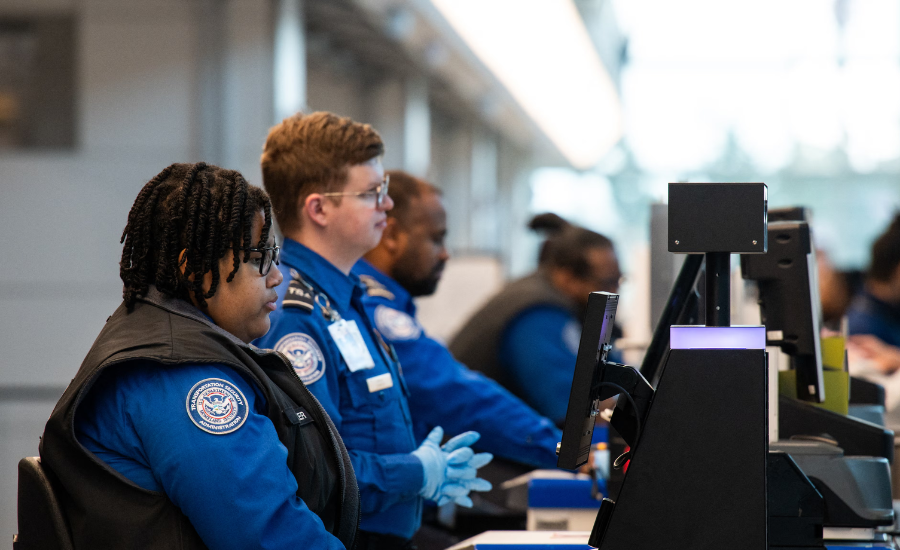
Travelers move through a TSA security checkpoint at Ronald Reagan Washington National Airport in Arlington, Virginia, March 13, 2025. (Annabelle Gordon/AFP/Getty Images)
Six weeks into the shutdown, the Senate remains deadlocked. Democrats have withheld support for a GOP-backed funding bill, tying their votes to demands for changes in immigration enforcement following the fatal shootings of two U.S. citizens in Minnesota earlier this year.
Before the president’s intervention, travelers were already dealing with longer lines and missed flights. Workers faced delayed paychecks and mounting financial pressure. In some areas, community groups stepped in to support federal employees still required to report to work.
The broader strategy, however, raises questions about effectiveness.
Democratic leaders argue the shutdown is necessary to force accountability and reshape immigration enforcement practices.
House Minority Leader Hakeem Jeffries framed the standoff in stark terms, saying it exists “because Donald Trump and Republican extremists refuse to get ICE under control.” He described current enforcement as “an extreme Republican policy of mass deportation” that has “resulted in the cold-blooded killing of two American citizens.”
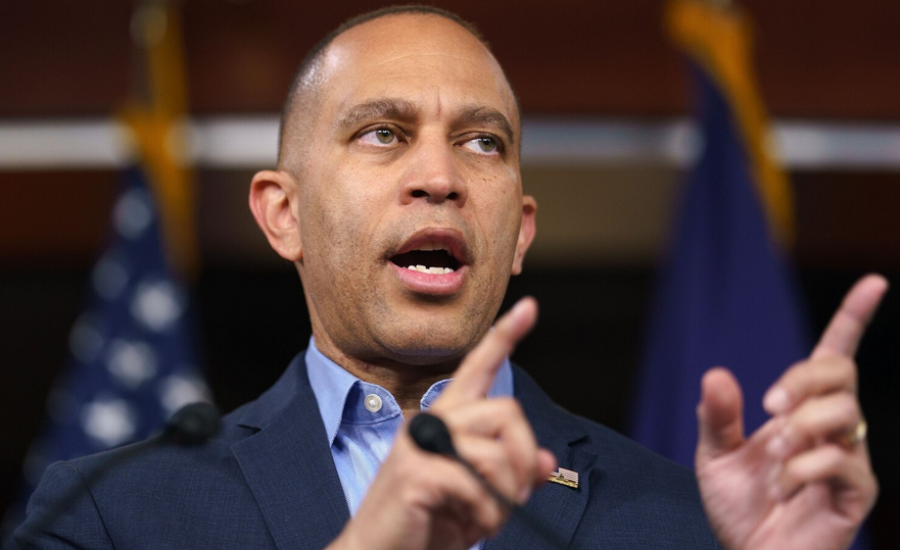
Hakeem Jeffries speaks during a press conference at the U.S. Capitol in Washington, March 14, 2025. (Will Oliver/EPA-EFE/Shutterstock)
He has also called for restrictions on Immigration and Customs Enforcement (ICE), including limiting operations in schools, hospitals, houses of worship, and polling sites.
That argument stands on its own. Serious incidents demand scrutiny.
The question is whether this approach delivers it.
Restricting funding for ICE may not have the immediate impact many assume. The agency and related enforcement operations have already received substantial multi-year funding through prior legislation, allowing core functions to continue despite the shutdown.
The intended pressure point remains largely intact.
The impact is showing up elsewhere.
Airport security, disaster response, and other public-facing services are absorbing the strain.
Republicans, meanwhile, have placed responsibility on Democrats and pointed to the consequences already unfolding.
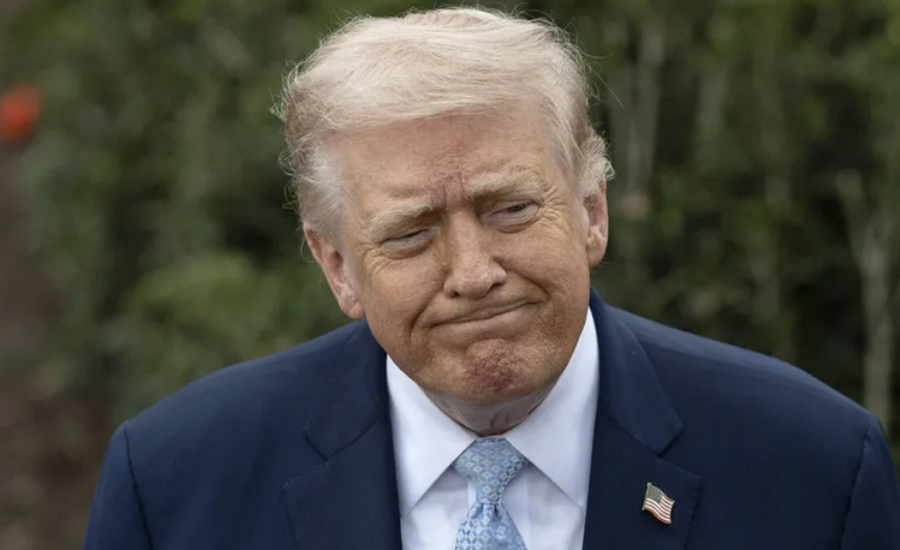
Donald Trump signed an executive order directing partial pay for TSA workers during the prolonged DHS shutdown after criticizing lawmakers for failing to finalize a deal. (Getty Images)
Sen. Ted Cruz cited both national security concerns and travel disruptions, saying, “The agency charged with preventing terror attacks has been defunded,” while “millions of Americans right now are facing two, three, four-hour waits at airports.”
Senate Majority Leader John Thune rejected Democratic proposals to fund agencies like the Transportation Security Administration (TSA) while excluding immigration enforcement, arguing that approach amounts to an effort to “defund law enforcement.”
At the same time, not all Republicans are aligned. Sen. Lisa Murkowski described efforts to separately fund critical agencies like TSA as a “viable proposal,” reflecting concern within the GOP about how long the disruption can continue.
There is no agreement, and no clear path to one.
What remains is a standoff built on leverage from both sides, with no mechanism in place to shield the public from its effects.
And those effects are accumulating.
This is the third major funding disruption tied to immigration policy in a matter of months. Repetition changes how these moments are understood. What once might have been viewed as a temporary impasse begins to look like a pattern.
That is where the concern deepens.
Voters may understand policy disagreements. What they are less likely to accept is a system that repeatedly allows those disagreements to disrupt basic services and destabilize everyday life.
Politics is meant to serve the public.
When it begins to take precedence over them, the consequences are no longer abstract. They appear in daily routines, in missed paychecks, and in systems people rely on beginning to strain.
That is the cost.
This is not an isolated breakdown. A separate shutdown in January temporarily halted parts of the federal government before lawmakers reached a short-term agreement. That deal postponed the larger dispute over DHS funding, which resurfaced weeks later. It also follows a record-setting shutdown in late 2025.
The pattern is becoming harder to ignore.
Shutdowns are no longer rare, last-resort measures. They have become part of the negotiating playbook. And each time it happens, the consequences land in the same place.
Not on lawmakers, but on the people they serve.
Roughly 60,000 TSA officers had been working without pay since Feb. 14. More than 300 resigned during the shutdown, according to reporting from Reuters and the Associated Press. During the last prolonged shutdown, nearly 1,100 officers left the workforce over time.
On Monday, March 30, TSA employees said they began receiving paychecks covering part of the work they performed during the shutdown, following an executive order by Donald Trump.





The EEW Weekly Digest
Get EEW in Your Inbox
Our weekly digest brings the latest reporting on faith, culture, health, and the news that matters to Black Christian women straight to your inbox.
Subscribe FreeFree to join. Unsubscribe anytime.
Reader-Supported Journalism
Help Keep EEW Free and Growing
EEW Magazine Online is free for every reader, and we plan to keep it that way. Your support helps us expand our reporting on faith, culture, health, and the news that matters to Black Christian women. Become a monthly supporter today.
Support EEWGive once or monthly through PayPal. Gifts are tax-deductible to the extent allowed by law.
Waiting on God can be painful, but Scripture reveals purpose in the delay.