

The U.S. Supreme Court struck down a Colorado law restricting certain therapy practices for minors, citing First Amendment protections.
By EEW Magazine Newswire
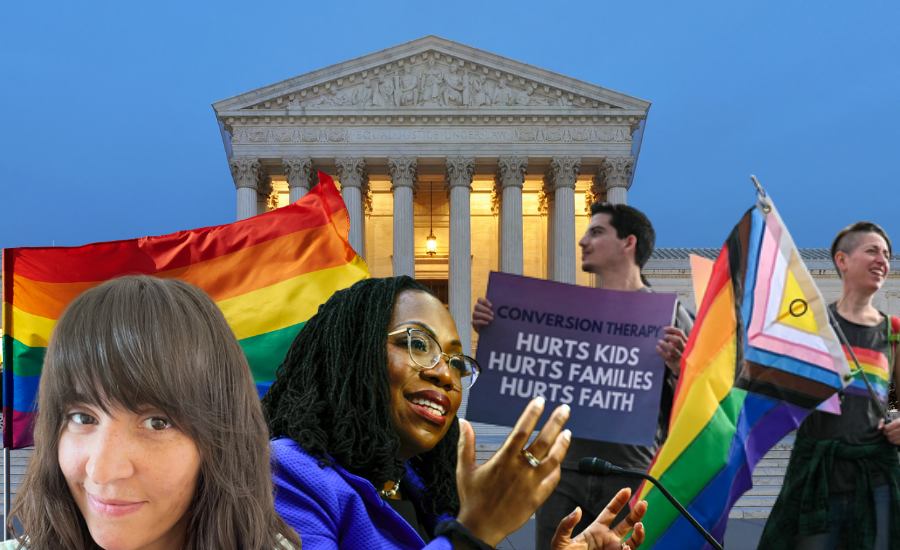
The U.S. Supreme Court struck down a Colorado law restricting conversion therapy for minors, ruling it violates First Amendment free speech protections. (Credit: EEW)
WASHINGTON (EEW News) — The U.S. Supreme Court ruled Tuesday that a Colorado law restricting certain forms of therapy for minors violates the First Amendment, siding with a licensed counselor who challenged the statute on free speech grounds.
The decision invalidates a 2019 Colorado law that prohibited mental health professionals from engaging in practices aimed at changing a minor’s sexual orientation or gender identity. Similar laws exist in more than 20 states.
In an opinion written by Neil Gorsuch and joined by seven other justices, the court found that the law impermissibly restricted speech.

People hold rainbow flags at a public gathering, as legal debates continue over policies affecting LGBTQ minors.
The majority held that the statute targeted the content of conversations between therapists and clients, rather than regulating conduct. The ruling stated that the First Amendment protects against government efforts to limit speech based on viewpoint.
Only Ketanji Brown Jackson dissented. In her written opinion, she warned the decision could limit the ability of states to regulate professional conduct involving speech, including aspects of medical and mental health treatment.
The case was brought by Kaley Chiles, a licensed counselor and Christian therapist in Colorado, who filed suit in 2022. She argued that the law restricted her ability to counsel clients seeking guidance aligned with their religious beliefs.
According to court filings, Chiles stated she does not attempt to “change” a client’s sexual orientation, but works with individuals who request help aligning their behavior with their faith.
Colorado officials defended the law as a public health measure. Attorney General Phil Weiser argued that states have long regulated professional practices, including therapies delivered through speech, to protect patients from harm.
The law included penalties of up to $5,000 per violation and potential disciplinary action against a therapist’s license. It also contained an exemption for individuals engaged in religious ministry.
State officials noted the law had not been enforced.
At the center of the case was whether talk therapy constitutes protected speech or regulated professional conduct.
Colorado argued the law governed medical treatment and only incidentally affected speech. The court rejected that position, concluding the statute directly regulated what therapists could say.
The majority opinion emphasized that the Constitution prohibits the government from restricting speech based on its content or viewpoint, even in professional settings.
The ruling could affect similar laws in other states that regulate therapy practices related to sexual orientation and gender identity for minors.
The decision also adds to a series of recent rulings in which the Supreme Court has expanded protections for speech and religious expression.
In her dissent, Justice Jackson said the ruling may limit states’ ability to oversee licensed professionals and warned of potential consequences for broader medical regulation.
The case comes amid continued legal disputes involving gender identity, medical treatment for minors, and the scope of First Amendment protections.
The Supreme Court is also considering other cases related to transgender rights, including participation in school sports and access to certain medical treatments. Rulings in those cases are expected later this year.





Six powerful Bible stories for women facing impossible odds. From the walls of Jericho to the empty tomb, Scripture proves that God specializes in situations that look finished.