
Juneteenth: The Day Freedom Finally Arrived — And Why It Still Matters
On June 19, 1865, freedom finally reached Texas 900 days after emancipation was declared. Here's the history of Juneteenth, its faith roots, and why its message is urgent in 2026.
By EEW Magazine Online Culture Editors
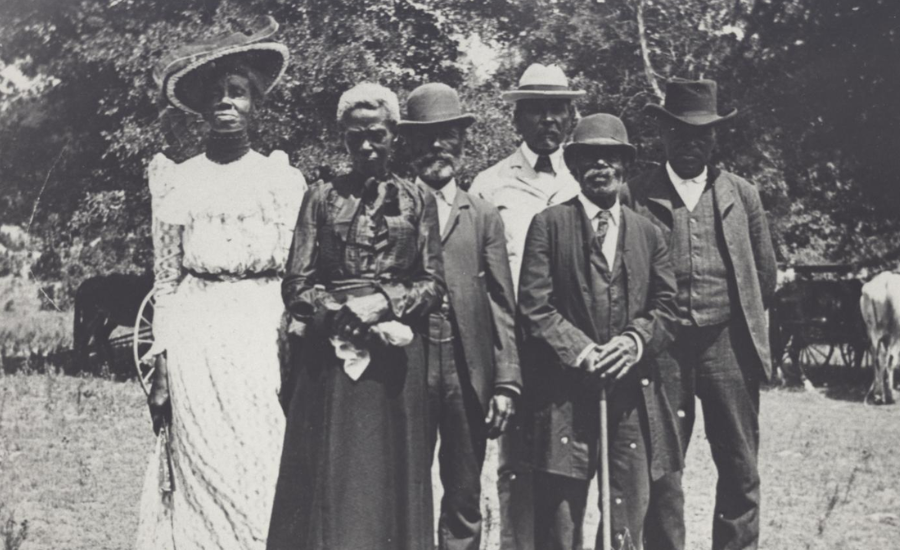
Attendees at an Emancipation Day celebration in Austin, Texas, June 19, 1900 — 35 years after Major General Gordon Granger's announcement of freedom in Galveston. (Photo Credit: Austin History Center, Austin Public Library / The Portal to Texas History, UNT Libraries)
On June 19, 1865, a Union general rode into Galveston, Texas, and read four sentences that changed the lives of more than 250,000 people who had not yet been told they were free.
Major General Gordon Granger's General Order No. 3 declared that formerly enslaved people in Texas were free, effective immediately. What the order could not account for was the two and a half years that had already passed since President Abraham Lincoln signed the Emancipation Proclamation on January 1, 1863.
The men, women, and children working Texas fields and plantations had been legally free for nearly 900 days before anyone with authority told them so.
General Orders No. 3, issued from Galveston, Texas, on June 19, 1865, the document Major General Gordon Granger read aloud to declare the freedom of more than 250,000 enslaved people in Texas. (Credit: Texas State Library and Archives Commission)
Historians have long examined why the news arrived so late. The remoteness of Texas from Union troop presence played a role. So did the deliberate actions of slaveholders who withheld the information, intent on extracting one final harvest before the institution collapsed. Whatever the cause, freedom existed in law while bondage continued in daily life.
That distance between declared freedom and lived experience is the defining reality at the center of Juneteenth.
The formerly enslaved did not wait for an invitation to commemorate.
Celebrations began in Texas in 1866 and spread as Black Americans migrated across the country, carrying the tradition with them.
Black women helped preserve those traditions through churches, families, community gatherings, and oral storytelling, ensuring the history survived long before it entered textbooks.
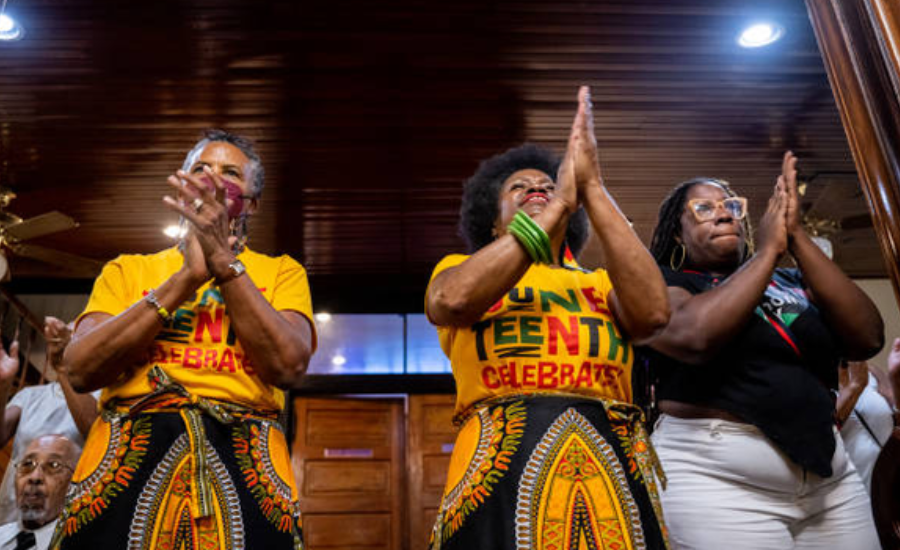
Worshippers celebrate at Reedy Chapel A.M.E. Church in Galveston, Texas, on June 19, 2022, the birthplace of Juneteenth and a living symbol of the Black church's role at the center of the holiday's observance for more than 150 years. (Credit: Brandon Bell/Getty Images)
For generations, Juneteenth was a community observance before any government recognized it, marked by cookouts, church services, prayer, music, and readings of the Emancipation Proclamation.
Congress passed the Juneteenth National Independence Day Act in June 2021, and President Biden signed it into law, establishing June 19 as a federal holiday. For many in the Black community, the recognition was overdue.
Juneteenth has never been merely a historical observance. From its earliest celebrations, it has carried an implicit question about what freedom looks like in practice and whether legal declarations translate into equal opportunity and full participation in society.
That question has intensified in 2026.
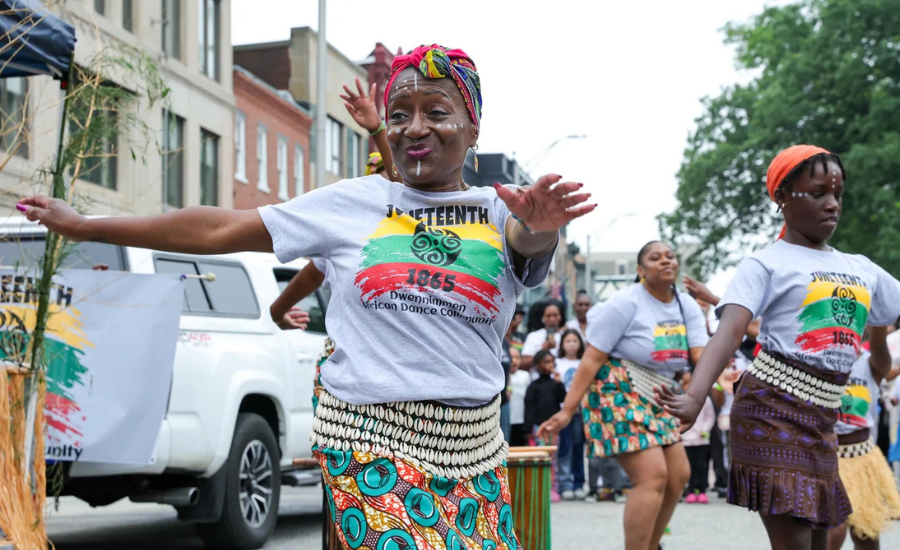
The Dwennimmen African Dance Community performs during the Harrisburg, Pennsylvania, Juneteenth parade in June 2025, one of hundreds of community celebrations held annually across a country where Black women have long kept the tradition alive through exactly these gatherings. (Credit: Paul Weaver/SOPA Images/LightRocket via Getty Images)
Diversity, equity, and inclusion programs have been dismantled across federal agencies and major institutions. Black history curriculum remains under legislative challenge in multiple states. The conditions Juneteenth implicitly confronts have not resolved. They have taken new forms.
For many Black Christian women, the holiday has always held meaning beyond the civic calendar. The account of people kept in bondage after their freedom had already been secured mirrors the Exodus story, a people God had already delivered while the systems around them continued to resist the truth. Like Israel departing Egypt, liberation was declared before every obstacle disappeared.
Freedom arrived first as a proclamation, then as a process.
It explains why the Black church has remained central to Juneteenth observances across generations.
Juneteenth reminds us that a truth withheld is no less true, and that justice delayed is still justice worth pursuing. The people in Galveston were free before they knew it. June 19 marks the day that reality finally reached them.
For Black women in 2026, with so much of what was hard-won now openly contested, that reality is not simply history. It is the ground on which they stand.
More on EEW Magazine Online:





Why do some confrontations end with the wronged person apologizing? Learn how DARVO works and how biblical discernment helps believers recognize manipulation and pursue truth.