
U.S.-Iran Peace Talks Collapse as Israel Strikes Lebanon
Planned ceasefire negotiations between the U.S. and Iran fell apart Friday after Israeli strikes killed 18 in Lebanon, JD Vance canceled his Switzerland trip, and President Trump declared Iran "FINISHED" on Truth Social.
By EEW Magazine Global News Editors
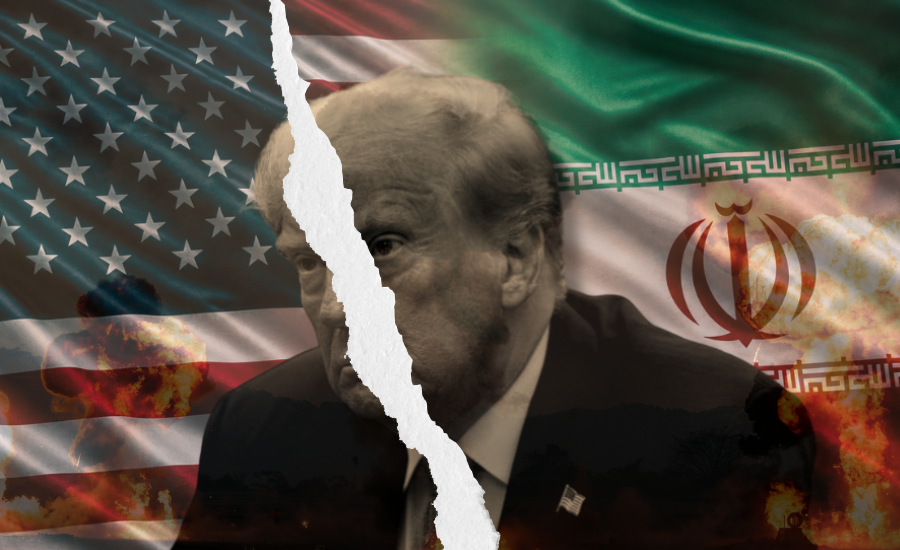
A torn divide between the U.S. and Iranian flags reflects the fractured diplomacy that collapsed Friday, when Israeli strikes in southern Lebanon killed at least 18 people and prompted Tehran to withdraw its delegation from planned ceasefire talks in Switzerland. (Photo illustration: EEW Magazine)
Planned negotiations between the United States and Iran to finalize the terms of their ceasefire agreement fell apart Friday before they began, as Israeli military strikes in southern Lebanon killed at least 18 people overnight and prompted Tehran to pull its delegation from the Swiss Alps.
The Swiss Foreign Ministry confirmed early Friday that talks scheduled at the Burgenstock Resort overlooking Lake Lucerne would not go forward. Switzerland said it remains ready to host the negotiations but offered no new date.
Vice President JD Vance also canceled his planned travel to Switzerland, as the escalation in Lebanon cast fresh doubt on the deal signed just days earlier.
President Trump responded on Truth Social with a pointed message that appeared to reframe the day's breakdown as leverage rather than setback.
"We didn't meet out of desperation, Iran did. They are FINISHED! We'll play out the 60 days. They get no money, not ten cents!" he wrote.
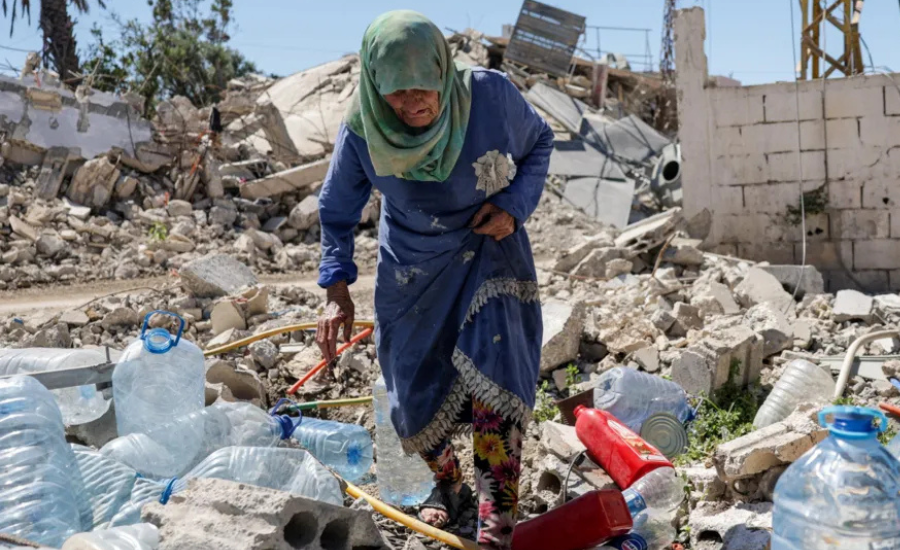
A Lebanese woman picks through rubble and scattered debris in the aftermath of Israeli strikes that hit more than 80 targets in southern Lebanon overnight into Friday, killing at least 18 people and triggering the postponement of U.S.-Iran ceasefire talks in Switzerland. Credit: Reuters)
Israel struck more than 80 targets throughout southern Lebanon overnight into Friday and reported killing dozens of Hezbollah fighters. Four Israeli soldiers died, including a battalion commander, in what Prime Minister Benjamin Netanyahu called a "blatant violation of the ceasefire." Netanyahu ordered the military to respond "with force" and stated that Israel would remain in a security zone in southern Lebanon "for as long as necessary."
Iran asked for guarantees that hostilities in Lebanon would end before sending its delegation to Switzerland, according to a regional diplomat with knowledge of the situation.
The breakdown came on the same day the U.S.-Iran memorandum of understanding was set to move into its implementation phase. Neither Israel nor Hezbollah signed the agreement, but the deal was structured to end their fighting as well. Iran has signaled that its interests in Lebanon, and its relationship with Hezbollah as its most critical regional ally, remain central to any lasting arrangement.
The interim agreement had already produced one concrete result: the reopening of the Strait of Hormuz to international shipping, after Iranian attacks had all but halted the flow of oil and natural gas through the waterway. President Trump said he signed the deal to prevent "economic catastrophe" in the United States.
The Lebanon conflict has been the clearest obstacle to a durable peace. Since the ceasefire in early April, renewed Israeli strikes on Beirut and surrounding areas have repeatedly triggered Iranian responses, nearly unraveling the diplomatic track multiple times before the MOU was finalized.
Whether today's postponement becomes a permanent collapse depends, in large part, on whether Washington can persuade Israel to scale back its Lebanon operations, a pressure campaign that has shown limited results.
More on EEW Magazine Online:





Scripture holds two truths without strain. God reigns completely. Man chooses freely. A study through Samson, Joseph, Pharaoh, the Cross, and the Potter and the Clay.