
The Anthony Fauci Diaries: What the Entries Actually Reveal
Anthony Fauci's diary is now public record. EEW reviewed the full document set released by the Senate directly, comparing his private diary entries against his public statements on COVID-19's origins, school closures and more.
By EEW Magazine Online Editors
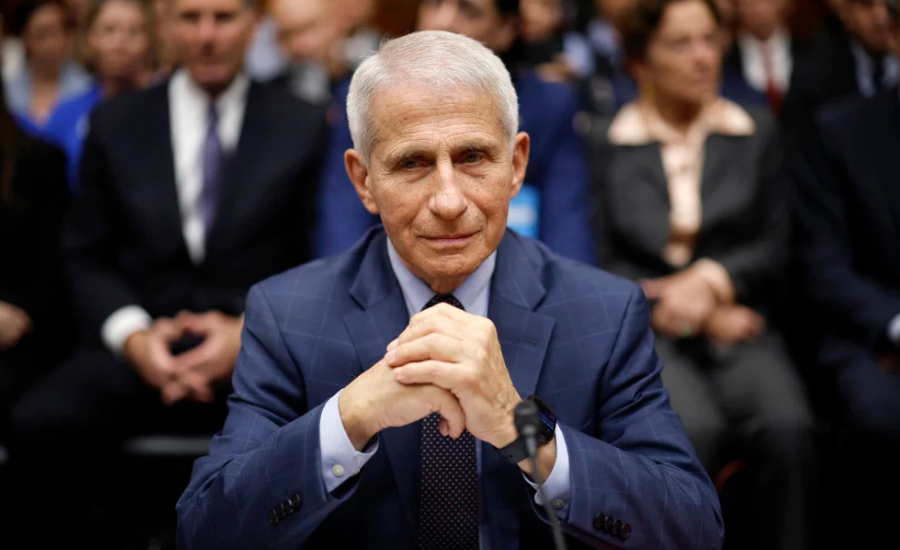
Dr. Anthony Fauci listens during Senate testimony on Capitol Hill. (Chip Somodevilla/Getty Images)
For most people following the news this week, Dr. Anthony Fauci's name was everywhere. The 85-year-old, who led the National Institute of Allergy and Infectious Diseases (NIAID), the federal government's infectious disease research agency, for nearly 40 years, was back in the spotlight after entries from his diary became public.
Fauci became the face of the U.S. government's COVID-19 response in 2020, serving under both the Trump and Biden administrations before retiring in 2022. Years after leaving government, his own contemporaneous writings are now being weighed against what he said publicly at the time.
Depending on which outlet a person reads, Fauci is either a man finally caught in his own words or a scientist being dragged through a political circus by a senator who has wanted him prosecuted for years. Either framing hands the reader a conclusion before the evidence has been examined.
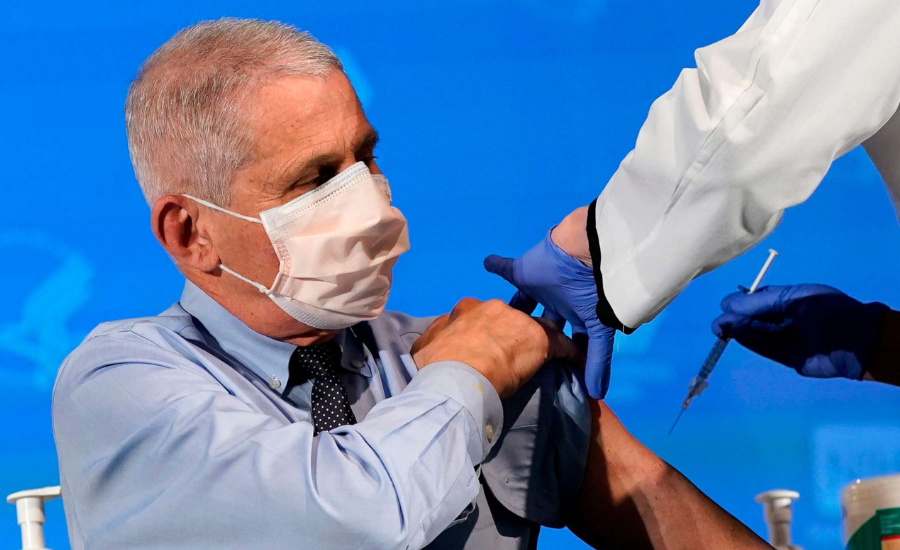
Dr. Anthony Fauci, then director of the National Institute of Allergy and Infectious Diseases, prepares to receive his first dose of the COVID-19 vaccine at the National Institutes of Health on Dec. 22, 2020, in Bethesda, Maryland. (Patrick Semansky/Pool/AFP via Getty Images)
EEW Magazine read the underlying documents directly, including Fauci's diary, internal government emails, a transcribed committee interview, and records from federal agencies, all released by Sen. Rand Paul, chairman of the Senate Homeland Security and Governmental Affairs Committee's Reading Room.
The question guiding this review was specific: can something Fauci said publicly, on the record, be tested directly against something he wrote privately, in his own hand, at the time?
Where a claim required interpretation, speculation, or a particular political lens to make sense, it was set aside rather than forced into a contradiction the evidence doesn't actually prove.
The diary itself runs more than 1,100 pages. Fauci described it as a personal record he kept during his time helping lead the federal government's COVID-19 response. It was reportedly stored on government systems while he was a federal employee. The entries were released alongside a separate collection of Fauci's older career records, internal NIH emails, a Senate committee interview with virologist Ralph Baric, and other federal records.
Health Secretary Robert F. Kennedy Jr. has said the diary was recovered from government servers.
Fauci has objected sharply to the release. During his July 29 Senate testimony, he accused Paul of "publicly releasing my unredacted personal diary aimed at embarrassing and intimidating me."
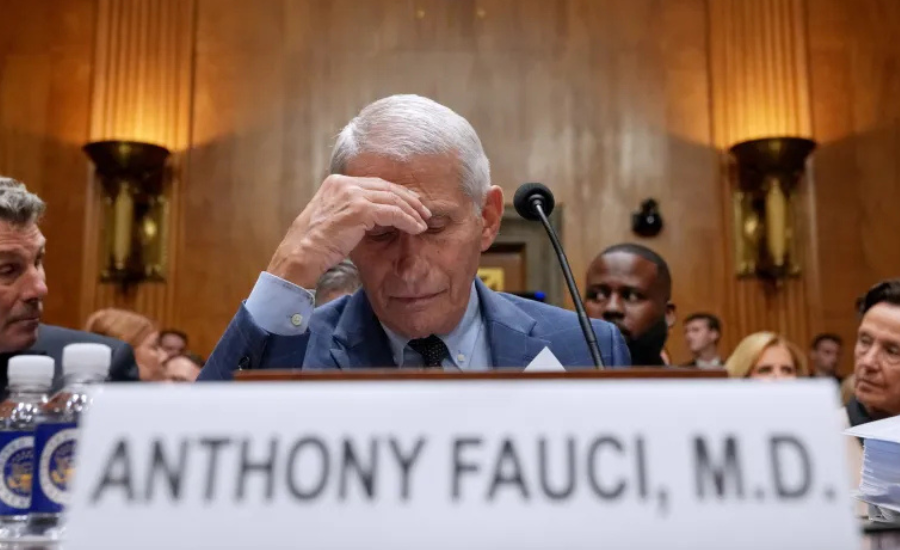
Dr. Anthony Fauci pauses during questioning before the Senate Homeland Security and Governmental Affairs Committee at the Capitol on July 29, 2026. (Allison Robbert/AP)
The diary revealed a handful of specific tensions between what Fauci said publicly and what he recorded privately at the time.
In a 2022 interview,Fauci said he had "nothing to do" with the school shutdowns that kept children out of classrooms during the pandemic. In an interview with the New York Times Magazine, he said, "Show me a school that I shut down and show me a factory that I shut down. Never. I never did," clarifying that local officials made the actual decisions.
Under oath before a House subcommittee in January 2024, he again said he was not personally involved in local and state decisions to close schools, adding, "I have often said we need to open up the schools as quickly and as safely as possible, and I must have said that 500 times on TV."
But in a diary entry dated March 15, 2020, Fauci wrote that he spoke with New York City Mayor Bill de Blasio and, based on what he had already said publicly and in that conversation, "convinced him... to close the NYC schools." The same entry says he also told the mayor he should close the city's bars and restaurants.
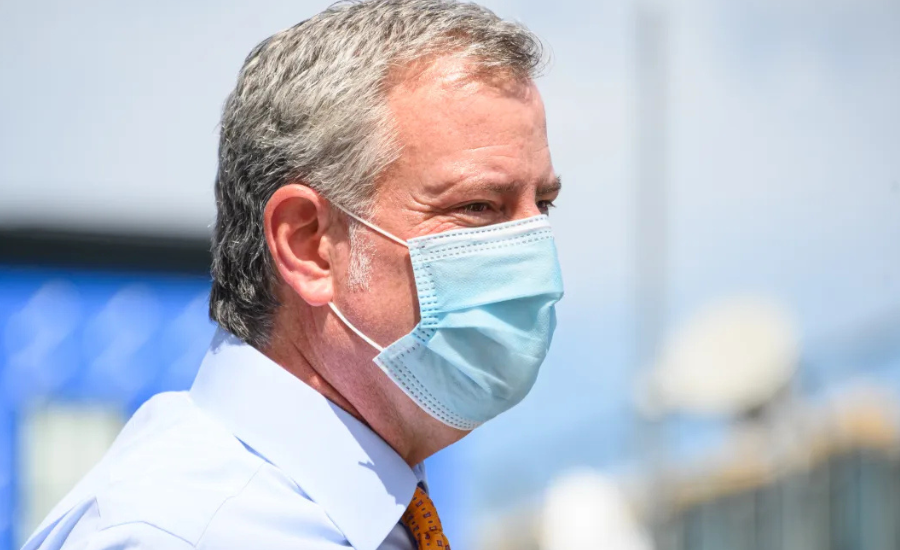
Then-New York City Mayor Bill de Blasio, who ordered extensive shutdowns and restrictions across the city beginning in March 2020. (Noam Galai/Getty Images)
Granted, Fauci had no legal authority to close a school himself. What his own diary raises is a more pointed question: whether he believed, at the time, that his recommendation was what convinced a mayor to act, after later saying repeatedly that he had "nothing to do" with such closures.
A separate tension involves the virus's origins.
For years, Fauci pointed to a March 2020 scientific paper, "The Proximal Origin of SARS-CoV-2," as the basis for his public position. That paper's conclusion, in its authors' words, was that "we do not believe that any type of laboratory-based scenario is plausible" for how the virus emerged.
Yet on Jan. 31, 2020, weeks before that paper was written, Fauci's diary records a phone call in which virologist Kristian Andersen told him the mutations around the virus's furin cleavage site, a feature on the virus's surface that helps it enter human cells, looked like something that "could not have occurred naturally."
Fauci wrote that he advised the scientists to convene a larger group of experts to examine the concern and, if it was validated, to report it to the FBI and, in the United Kingdom, to MI5.
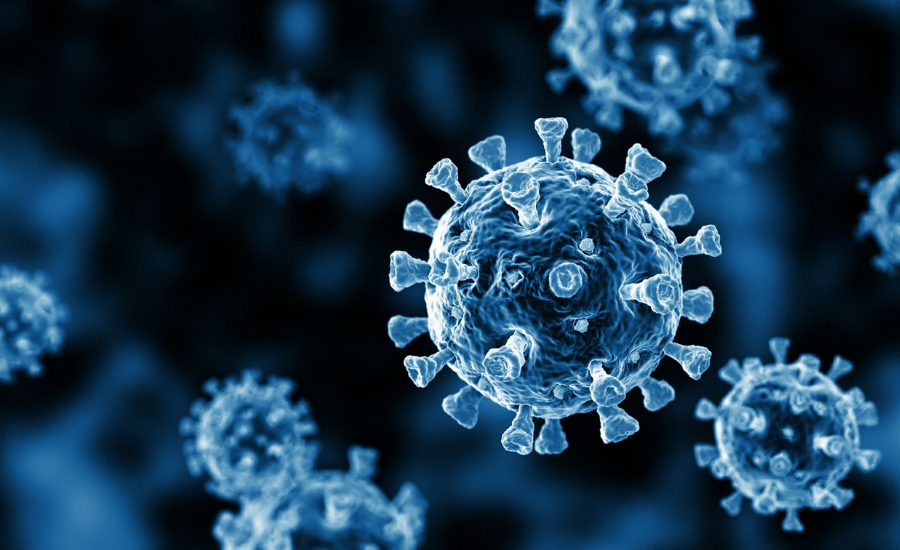
A 3D illustration of the novel coronavirus, the virus that causes COVID-19. (Getty Images)
Days later, that same small group of scientists, including Andersen, began the work that would become the Proximal Origin paper. Fauci went on to cite it repeatedly in support of his public position that a laboratory origin was implausible.
"Publicly, Anthony Fauci promoted the theory that the virus arose naturally, while privately, he was well aware of a mountain of evidence suggesting the virus originated in the lab. The American people deserve answers," Paul said during this week’s Senate hearing.
What the diary establishes with certainty is that Fauci was told, in specific and serious terms, that credentialed virologists were concerned enough about a possible laboratory origin to warrant referral to federal and foreign intelligence agencies if the concern held up. It does not say what Fauci privately believed about the question in the months and years that followed.
Other entries reveal nothing that contradicts a specific public statement, but they do open a window into interactions that were largely invisible during Fauci's public tenure.
His diary records ongoing relationships with several prominent journalists, including phone calls and dinners with CNN's Jake Tapper and his wife, some of which Fauci described as "friendship building." It also documents multiple lengthy "deep background" conversations with journalist Bob Woodward, held while Woodward was researching a book on President Trump's handling of the pandemic.
Background conversations between government officials and reporters are routine in Washington. What the diary adds is Fauci's own account of how frequent, personal and access-driven some of those relationships were.
The diary is similarly candid, in private, about Trump himself. Fauci repeatedly describes the president's public briefings in blunt terms, using words like "rambling" and "disorganized" across dozens of entries in 2020, a private assessment sharply out of step with the deference he maintained in public.
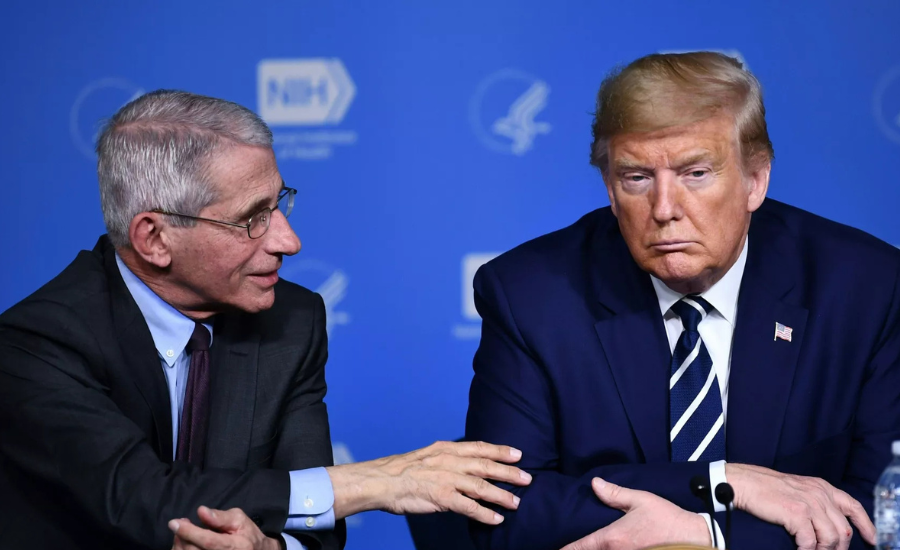
President Trump listens to Dr. Anthony Fauci, director of the National Institute of Allergy and Infectious Diseases, following a tour of the National Institutes of Health in 2020. (Brendan Smialowski/AFP via Getty Images)
Another revelation involves money. NIH's own ethics office denied Fauci a $40,000 cash award tied to the National Academy of Medicine's Lienhard Award, concluding that accepting it would create a conflict of interest.
His staff appealed, and the denial stood.
Separately, Fauci's emails show him supplying materials for his own award nominations elsewhere, including telling Dr. Barton Haynes of Duke University in 2018, regarding the $1 million Dan David Prize, "As usual, I will supply all of the material."
He won that award in 2021.
The ethics ruling is a documented institutional check, while the nomination emails show Fauci was an active participant in his own recognition rather than a passive recipient of it.
The diary also closely tracks Fauci's exploding celebrity status throughout 2020. He mentioned merchandise bearing his name, such as bottle openers and mugs, and a declined invitation to appear on "Dancing with the Stars." In one May 2020 entry, he described his own "national and international fame" as "explosive and really unimaginable."
On July 29, 2026, called before the Senate Homeland Security and Governmental Affairs Committee to answer questions about the diary, Fauci declined to answer.
Over roughly three hours, he invoked his Fifth Amendment right against self-incrimination, by multiple outlets' count, 111 times. He responded in this manner to deliberately basic questions from Sen. Josh Hawley, such as what day of the week it was and what color tie he was wearing.
Fauci had already stated at the outset of the hearing that he would decline to answer any question on the advice of counsel. Hawley's questions read less as genuine incrimination concerns than as a test of how far Fauci intended to carry that posture.
The repeated refusals to speak up marked a sharp reversal.
In June 2024, Fauci voluntarily appeared before a House subcommittee, a hearing the committee's chairman had said beforehand he expected to be "forthcoming and honest testimony.” Fauci answered questions under oath for hours. Two years later, subpoenaed by the Senate committee, he answered none.
President Biden pardoned Fauci on Jan. 19, 2025, his last full day in office. That pardon covers offenses "arising from or in any manner related to" Fauci's government work between 2014 and that date.
As a general matter of legal reasoning, a pardon covering conduct through a specific date would not protect a person against a new offense, such as a false statement, committed after that date. This is the exposure Fauci's Fifth Amendment invocation was built to guard against.
Whether the pardon eliminated every legal basis for invoking the Fifth is a more complicated question, one Paul has raised publicly and has himself acknowledged has "probably never been tested" in court.
Under the law, invoking that right is not an admission of guilt, whatever conclusion the public draws from the distance between Fauci’s 2024 testimony and his 2026 silence.
On Wednesday, facing more than two hours of questioning and the threat of prosecution, Fauci said only one thing, again and again: "Under the advice of my attorneys, I will invoke my right under the Fifth Amendment of the Constitution to refrain from answering your questions."
Twenty-four words, repeated 111 times, and nothing else.
More on EEW Magazine Online:



Why do some confrontations end with the wronged person apologizing? Learn how DARVO works and how biblical discernment helps believers recognize manipulation and pursue truth.