
As the Obama Presidential Center Opens, the South Side Counts the Cost
The $850 million campus opens on Juneteenth with a $30 admission ticket, a $1 million endowment balance, rising rents in the surrounding neighborhoods, and Black-owned subcontractors still waiting to be paid.
By EEW Magazine News Editors
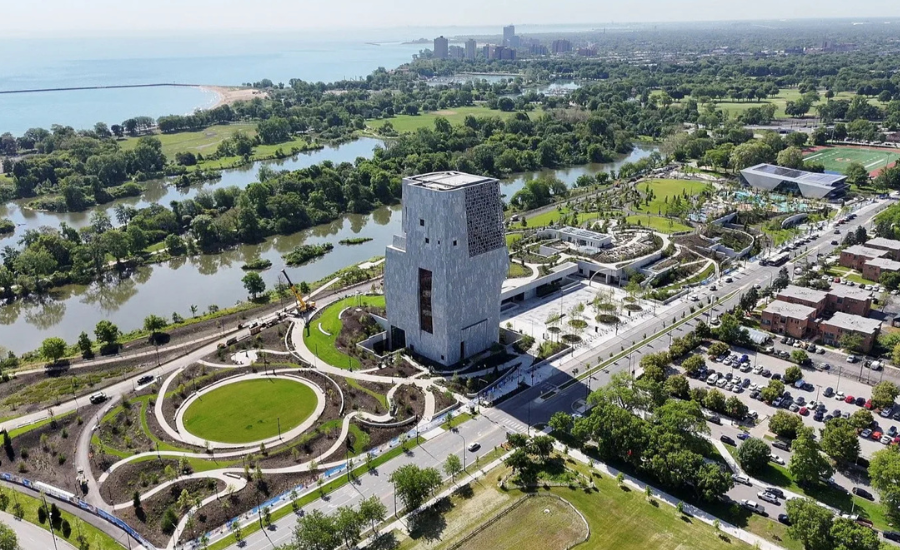
An aerial view of the Obama Presidential Center and its 19.3-acre campus in Jackson Park on Chicago's South Side, June 3, 2026. The city leased the publicly owned parkland to the Obama Foundation for $10 over 99 years. (Photo: Eric Cox/Reuters)
The Obama Presidential Center opens to the public on Chicago's South Side on June 19, the Juneteenth holiday, with a grand opening ceremony the night before. The 19.3-acre campus in Jackson Park houses a 225-foot museum tower, a digital library, an athletic facility, a café, conference space, a branch of the Chicago Public Library, and offices for the Obama Foundation, which will run the center as a private nonprofit.
The center cost roughly $850 million to build, nearly triple the original $300 million projection. Public infrastructure spending tied to the project has crossed $350 million by state and city transportation department figures alone, with no agency producing a final consolidated total.
A $470 million reserve fund the Obama Foundation pledged to seed for the center's long-term operations stands at roughly $1 million. Median rents in the neighborhoods near the campus have risen 43 percent and home values 130 percent since the center was first announced in 2015. Days before the opening, several Black-owned subcontractors who built the campus say they are owed millions and are fighting to keep their businesses open.
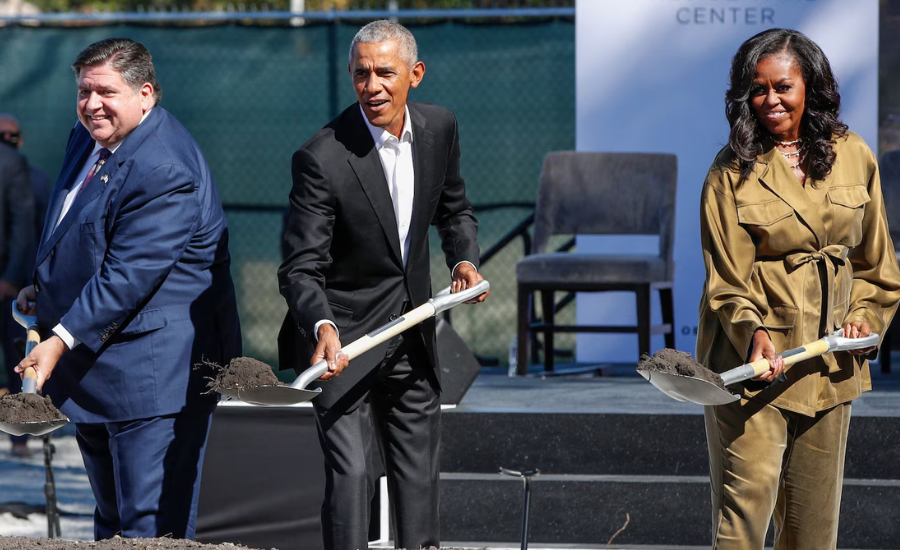
Illinois Gov. J.B. Pritzker, former President Barack Obama, and former first lady Michelle Obama participate in the groundbreaking ceremony for the Obama Presidential Center in Jackson Park, Chicago, Sept. 28, 2021. Construction on the $850 million campus took nearly five years to complete. (Photo: Kamil Krzaczynski/AFP via Getty Images)
The center was first proposed in 2014 as a museum and civic engagement campus honoring the nation's first Black president, with planners promising economic uplift for the South Side. Construction broke ground in September 2021 after a five-year legal battle over the use of a section of the Frederick Law Olmsted-designed Jackson Park. Under the foundation's agreement with the city, it took control of the publicly owned 19.3-acre site for a one-time payment of $10 over a 99-year lease.
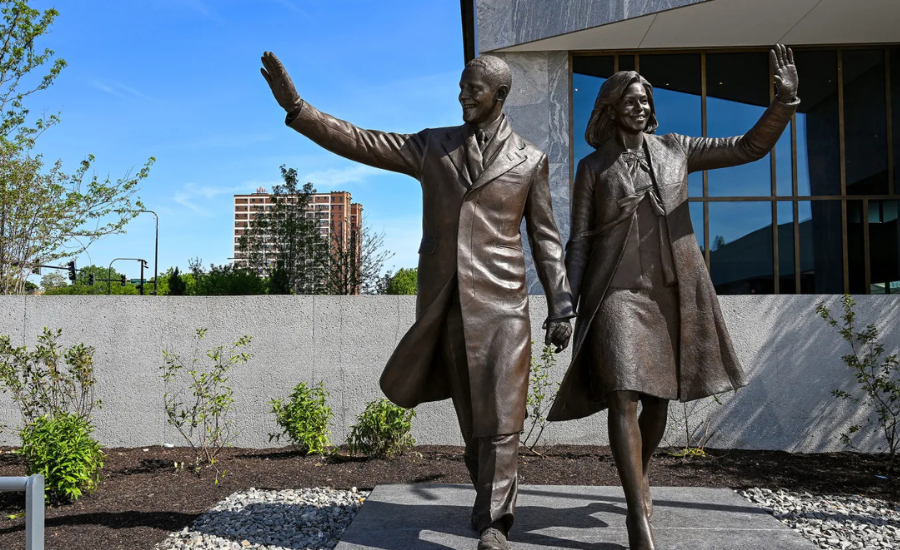
A bronze statue of former President Barack Obama and former first lady Michelle Obama stands outside the Obama Presidential Center in Chicago's Hyde Park neighborhood, May 29, 2026. (Photo: Joshua Lott/The Washington Post via Getty Images)
When the city approved the lease, the Obama Foundation pledged to build a reserve fund. Its 2020 annual report stated that $470 million of its overall fundraising goal would seed an endowment to cover Obama Foundation activities and the operations of the Obama Presidential Center for generations. The foundation has estimated annual operating costs at roughly $40 million.
Fox News Digital reported that the foundation deposited $1 million into the reserve fund in 2021 and that the balance has remained largely unchanged in its most recent publicly available filings. The Obama Foundation said the center is "fully funded with generous private contributions" and that it plans to make "significant investments" in the endowment in the coming years. The foundation said it is in compliance with its city agreement, noting that the pact required the creation of an endowment but did not specify a dollar target.
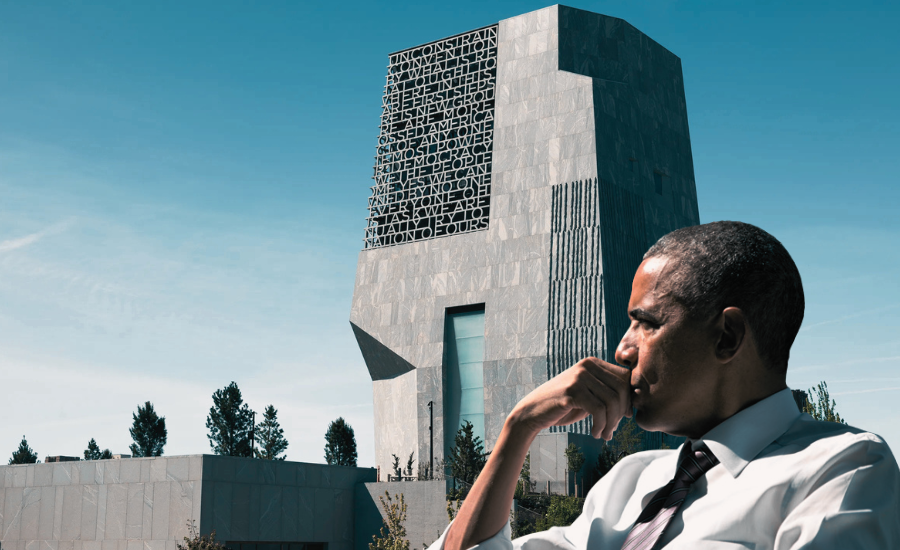
The Obama Presidential Center museum tower rises 225 feet over Jackson Park on Chicago's South Side. The center opens to the public on Juneteenth, June 19, 2026. (Photo illustration: EEW Magazine)
Richard Epstein, a New York University law professor who has challenged the project in court, said the gap leaves the question of long-term operating costs unresolved. "The whole point of an endowment is to fund future expenses," Epstein told Fox News Digital. "If the endowment hasn't been filled, the building [could] fall into neglect, it then becomes a safety risk, and it turns out that nobody's going to pay the bill."
The $850 million construction price tag does not include the public infrastructure work the city and state have funded around the site. The Chicago Department of Transportation has spent $123.3 million since 2022 on capital projects to remake roadways and green space in and around Jackson Park, the agency told the Chicago Sun-Times.
The Illinois Department of Transportation has spent approximately $229 million on state-managed infrastructure tied to the project, up from a 2017 preliminary estimate of $174 million. Chicago's 2024-2028 Capital Improvement Plan separately lists more than $206 million for roadway and utility work surrounding the project. The overlap with CDOT's reported spending is unclear. Fox News Digital, which filed records requests with multiple agencies in 2025, was unable to obtain a consolidated public accounting.
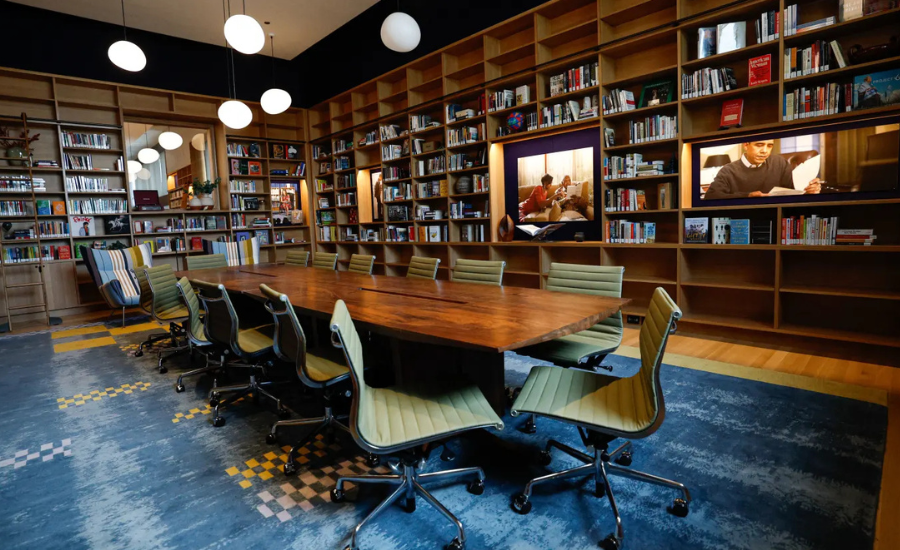
The Obama Presidential Center branch of the Chicago Public Library, housed within the 19.3-acre campus in Jackson Park. The center is operated by the Obama Foundation as a private nonprofit, making it the only modern presidential center not run by the National Archives and Records Administration. (Photo: Kamil Krzaczynski/AFP via Getty Images)
Brenda Nelms, co-founder of Jackson Park Watch, a nonprofit that has opposed the construction since the start, told the Sun-Times that the widened and reconfigured roads risk "slicing and dicing" the park. CDOT said additional work is planned south of 64th Street, including a pedestrian underpass at Jeffery Boulevard and South Shore Drive, though the agency does not yet have funding for it.
In the neighborhoods around the campus, rents and home prices have climbed sharply. In the area covered by the city's Jackson Park Housing Pilot, median rents have increased 43 percent since 2015 and home values have spiked 130 percent, according to the Chicago mayor's office and South Shore Ald. Desmon Yancy, the pilot's chief sponsor.
In 2018, when South Side residents pressed Obama at a community meeting about the project fueling displacement, he said, "We've got such a long way to go in terms of economic development before you're even going to start seeing the prospect of significant gentrification."
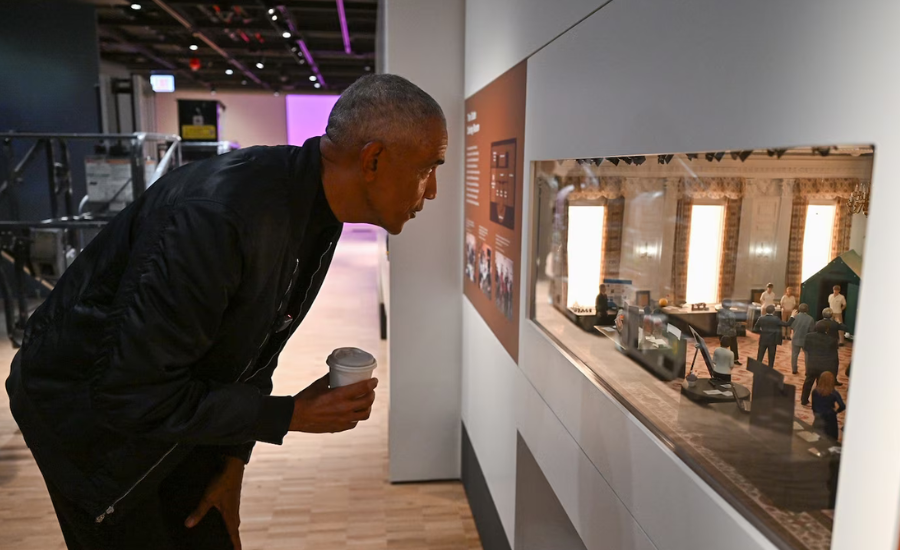
Former President Barack Obama examines an exhibit inside the Obama Presidential Center museum in Chicago in an undated photo. The center opens to the public on Juneteenth, June 19, 2026. (Photo: The Obama Foundation)
Investors have continued buying up properties in Woodlawn, the historically Black neighborhood west of the center. In March, tenants at the Chaney Braggs Apartments at 65th Street and Stony Island Avenue, less than a mile from the campus, formed a union after learning the foreclosed building could be sold to a California investor with plans to gut-rehab it. Residents said the prospective owner offered low-income renters $2,000 to move out.
Several of the tenants are longtime residents whose families have lived in the building for decades. The property was formerly owned by the Woodlawn East Community and Neighbors organization, founded by the late housing activist Mattie Butler, before going into foreclosure in 2023.
City officials have tried, with limited success, to slow the displacement. The Woodlawn Housing Preservation Ordinance, passed in 2020 and spearheaded by 20th Ward Ald. Jeanette Taylor, was meant to preserve affordable housing in the area. The Illinois Answers Project published a report in May 2026 saying the city's efforts to curb displacement in Woodlawn have been largely ineffective. In September 2025, the City Council passed Yancy's $6 million Jackson Park Housing Pilot, which reserves 30 city-owned vacant lots for affordable housing, requires 120-day notice for lease nonrenewals in the pilot area, and offers grants of up to $5,000 to help longtime homeowners pay off property tax debt.
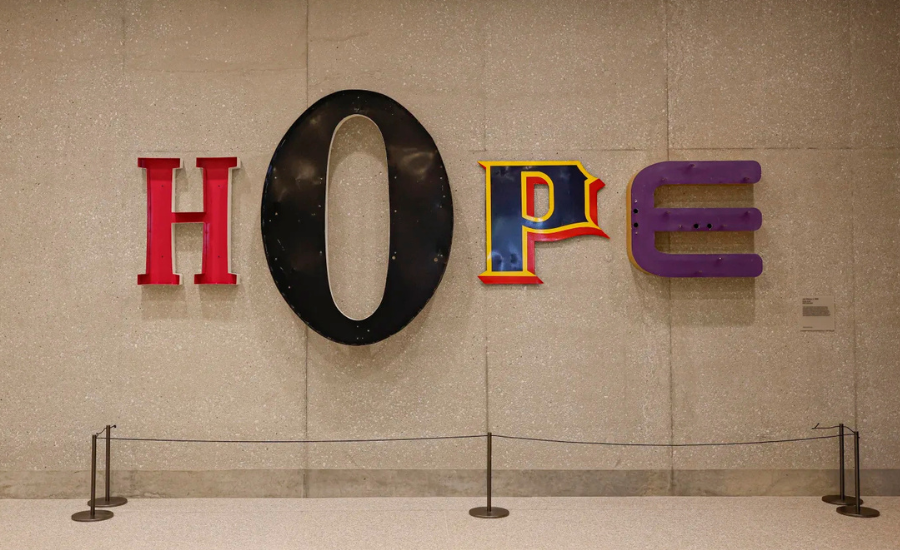
An art installation spelling "HOPE" on the interior wall of the museum tower at the Obama Presidential Center in Chicago. The center cost roughly $850 million to build, nearly triple the original $300 million estimate. (Photo: Kamil Krzaczynski/AFP via Getty Images)
Several broader tenant protections in the original draft, including a city-run tenant advocacy office and a rental registry, were stripped before passage.
Short-term rental activity has added to the pressure on the housing supply. A June Chicago Sun-Times investigation found that the Obama Foundation partnered with Airbnb on "Community Tourism Prep Sessions" encouraging South Side residents to rent out rooms to center visitors. Some hosts in Woodlawn now operate multiple short-term rental units that are not owner-occupied, which housing advocates say drains the long-term rental stock and pushes rents higher. The Johnson administration told the Sun-Times it "shares concerns on the impact Airbnbs and other supply pressures have on housing affordability."
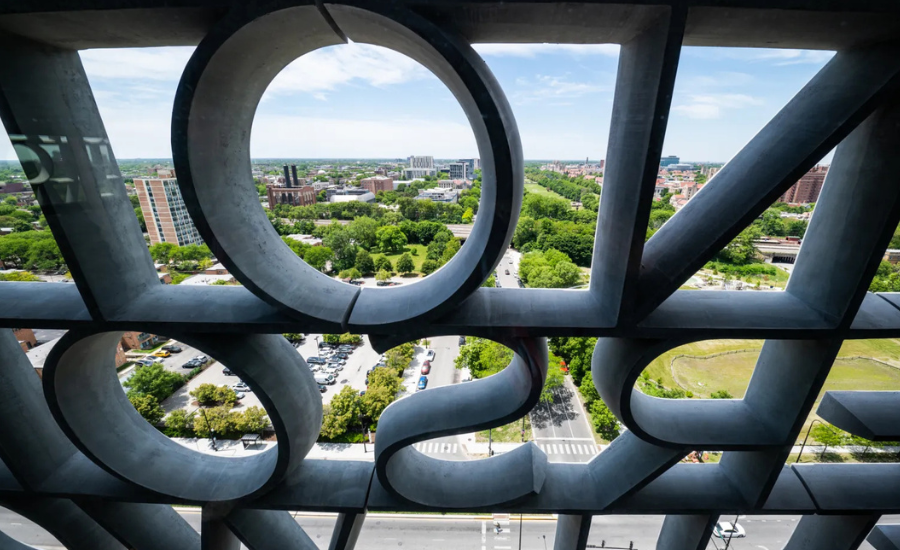
A view west toward the University of Chicago and Hyde Park from inside the Obama Presidential Center museum tower in Woodlawn, June 3, 2026. Median rents in the neighborhoods surrounding the campus have risen 43 percent since the project was announced in 2015. (Photo: Colin Boyle/Block Club Chicago)
For longtime residents, the math has been blunt. One Woodlawn renter told Block Club Chicago that her one-bedroom apartment cost $1,200 a month and that comparable units in the neighborhood now run about $1,800.
Other voices in the neighborhood see a more measured picture. Bill Eager, senior vice president at the nonprofit developer Preservation of Affordable Housing, told WBEZ he has heard of no dramatic rent increases in Woodlawn and South Shore. Lifelong South Shore resident Robert Brown, a former Realtor quoted in the same piece, said, "The South Side has been going up since 2006."
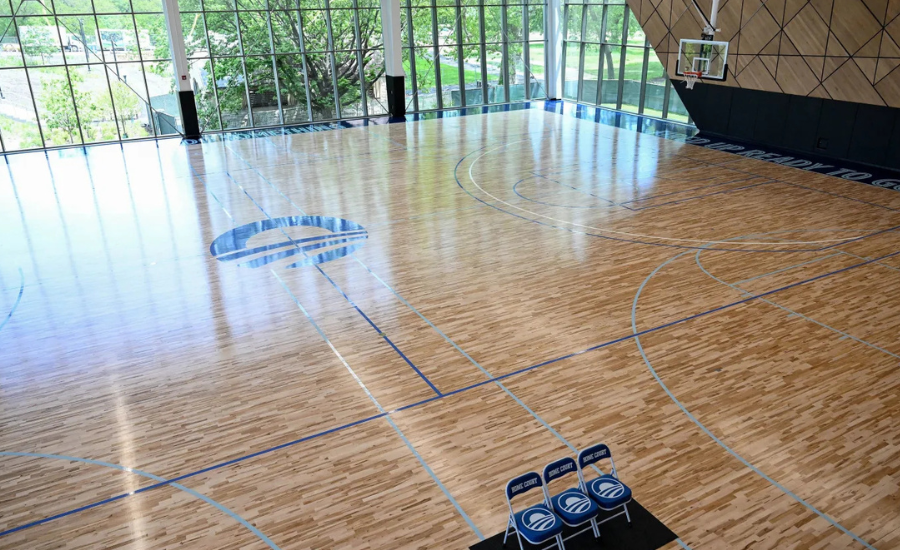
The basketball court inside the Home Court athletic facility at the Obama Presidential Center in Chicago. The 19.3-acre campus also houses a museum tower, a branch of the Chicago Public Library, a café, and conference space. (Photo: Joshua Lott/Reuters)
About 475 subcontractors worked on the project through Lakeside Alliance, a joint venture led by Turner Construction Co. with four Black-owned Chicago firms: Powers & Sons Construction Co., Brown & Momen, UJAMAA Construction, and Safeway Construction. The foundation said the partnership was meant to expand opportunities for diverse and local businesses while building on the South Side.
Omar Shareef, president of the African American Contractors Association, told Crain's Chicago Business on June 12 that seven subcontractors on the project have come to him for help recovering missing payments in recent months. Some are owed seven figures. They are willing to settle for less to stay in business. "It's to the point that they wished they had never done [the project]," Shareef said.
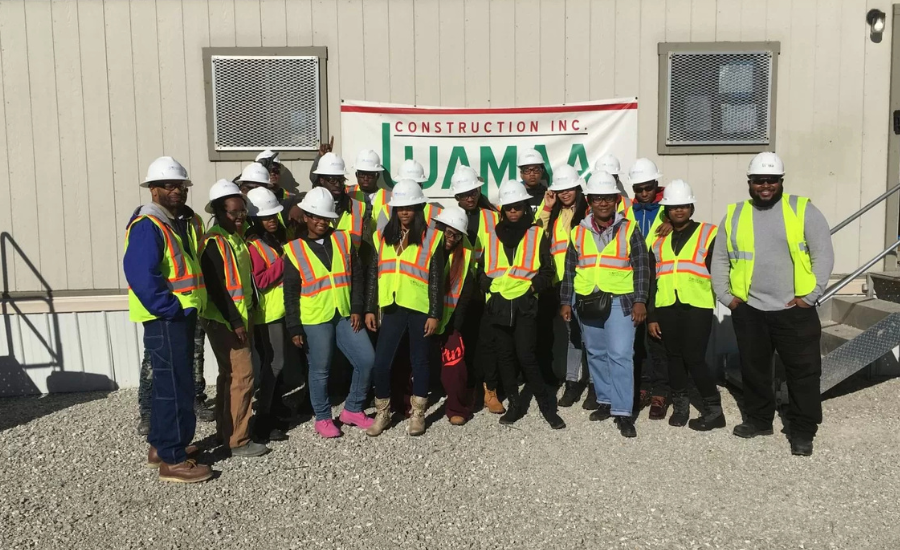
Members of the UJAMAA Construction team at a job site. UJAMAA was one of four Black-owned Chicago firms in the Lakeside Alliance joint venture that built the Obama Presidential Center. Several subcontractors on the project say they are still owed millions in unpaid invoices. (Photo: UJAMAA Construction Inc.)
The most public dispute is a $40 million federal lawsuit filed in January 2025 by II in One Concrete, a Black-owned Chicago subcontractor whose past projects include Millennium Park, the Harold Washington Cultural Center, and the American Airlines terminal at O'Hare. The firm's owner, Robert McGee, alleges that Thornton Tomasetti, the New York firm overseeing structural engineering on the project, imposed rebar spacing and tolerance requirements that exceeded American Concrete Institute standards, then subjected his company to inspections and paperwork that non-minority contractors were not required to meet. The complaint says the changes left II in One and its joint venture partner, Concrete Collective, absorbing roughly $40.75 million in unreimbursed costs and pushed the firm to "the brink of forced closure" because of "racial animus."
Thornton Tomasetti denies the allegations. In a memo cited in court filings, the firm said delays and cost overruns stemmed from the subcontractor's inexperience and quality issues, attaching photographs of cracked slabs and exposed rebar. The Obama Foundation, which is not a defendant, told Newsweek it had "no reason to believe that Thornton Tomasetti acted with racist intent" and would take action if any vendor were found to be doing so.
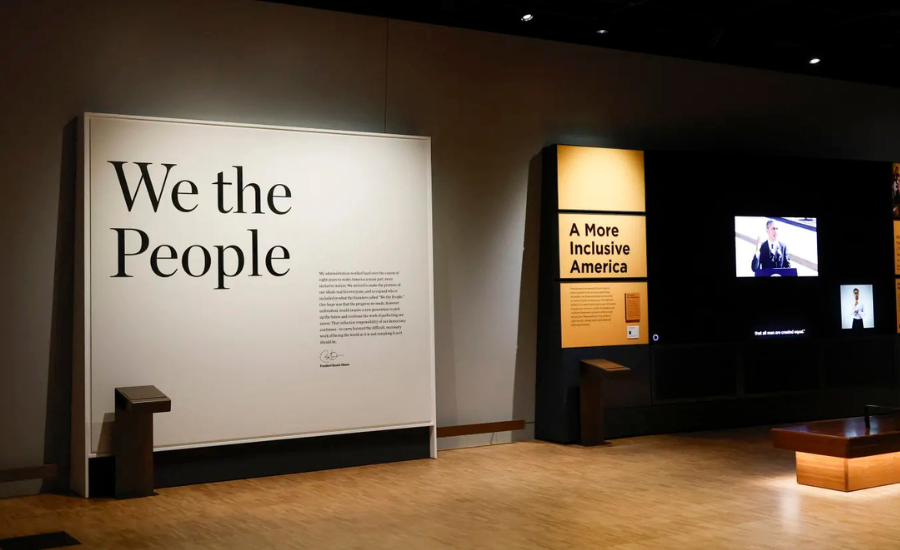
Inside the museum tower at the Obama Presidential Center, where exhibits include a "We the People" display and multimedia installations. General admission to the museum is $30, the highest ticket price of any presidential museum or library in the country. (Photo: Kamil Krzaczynski/AFP via Getty Images)
Mike Owen, president of Adamson Plumbing, told Fox News Digital his company is owed nearly $4 million, citing more than 100 change-order requests, rework, and delays.
Lakeside Alliance said in a statement to Crain's that the project's size and complexity make the disputes a routine part of closeout. The "contractual closeout, including the review and resolution of outstanding invoices, change orders and other project matters," the firm said, "continues long after the doors open."
The center will hold its grand opening ceremony on June 18 and open to the public on Juneteenth, June 19. General admission to the museum will cost $30, the highest admission price of any presidential museum or library in the country. The Obama Foundation will run the center privately. Every other modern presidential library is operated by the National Archives and Records Administration.
Shareef told Crain's that several of the subcontractors he is working with are now consulting attorneys. Tenants at the Chaney Braggs Apartments are still waiting for word on whether their building will be sold. The city has yet to produce a final accounting of public infrastructure spending. The endowment that was meant to sustain the center for generations sits at less than one percent of its target.
More on EEW Magazine Online:





Scripture holds two truths without strain. God reigns completely. Man chooses freely. A study through Samson, Joseph, Pharaoh, the Cross, and the Potter and the Clay.