
What Did America Get? The Questions Hanging Over the U.S.-Iran Peace Deal
By EEW Magazine Staff

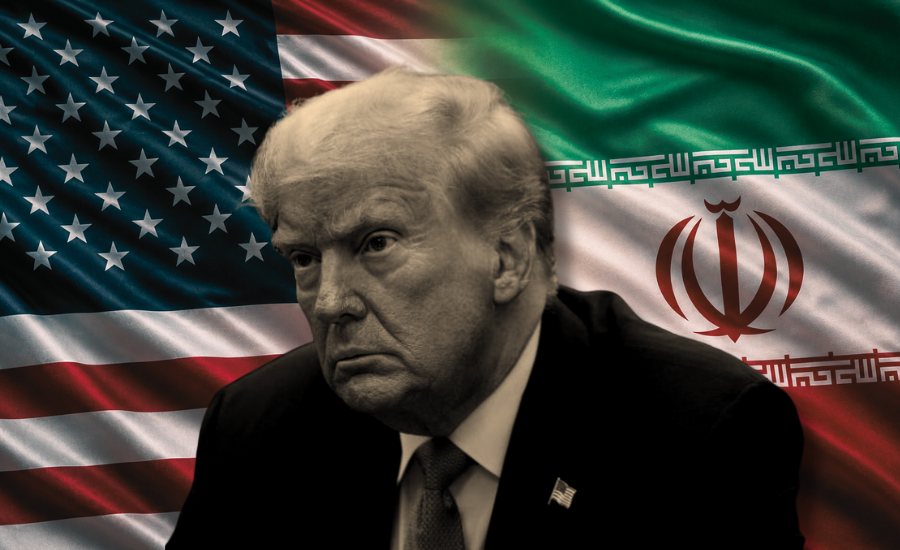
An illustration depicts President Donald Trump before U.S. and Iranian flags as Washington and Tehran enter a 60-day negotiating period following a new peace agreement. (Credit: EEW Magazine)
Key Points
The 14-point U.S.-Iran agreement ends active fighting and opens a 60-day window to negotiate final nuclear terms, but key questions about uranium enrichment and inspections remain unresolved.
Iran's existing enrichment activities appear set to continue during negotiations, while economic relief and the release of frozen assets may begin before a final nuclear agreement is reached.
The agreement includes Iran's renewed pledge not to develop nuclear weapons, a position Tehran has publicly maintained for decades, though critics point to Iran's documented history of expanding enrichment beyond agreed limits as reason for skepticism.
Israel is not a party to the agreement, and ongoing disputes over Lebanon could test the deal's durability before the 60-day negotiating period ends.
WASHINGTON — The United States and Iran are set to formally sign a 14-point Memorandum of Understanding this Friday in Geneva, Switzerland, bringing to a close a conflict that escalated dramatically on February 28, 2026, when U.S. and Israeli forces launched coordinated military strikes on Iranian targets.
What the war cost is not in dispute. According to U.S. Central Command, 13 American service members were killed and more than 373 were wounded. Oil prices surged past $120 per barrel after Iran moved to restrict the Strait of Hormuz on March 4, a narrow waterway through which roughly 20 percent of the world's oil supply passes, triggering spikes at gas pumps across the country and pushing U.S. inflation measurably higher. The global economic toll, by some estimates, exceeded $1.3 trillion.
What the war accomplished is a harder question. On Capitol Hill and beyond, the answers are not encouraging.
What the MOU Says
The agreement, drafted in 14 points, was obtained by Bloomberg News ahead of Friday's signing. The full text has not been officially released by either government. Officials on both sides have offered sometimes contradictory interpretations of its contents, and the version circulating publicly has not been independently verified by all major outlets. What follows reflects what Bloomberg, Reuters, and Iranian state media have each reported, with conflicts noted where they exist.
As published, the agreement establishes an immediate and permanent end to fighting on all fronts, including Lebanon, and opens a 60-day negotiating window aimed at producing a final agreement on Iran's nuclear program and sanctions relief.
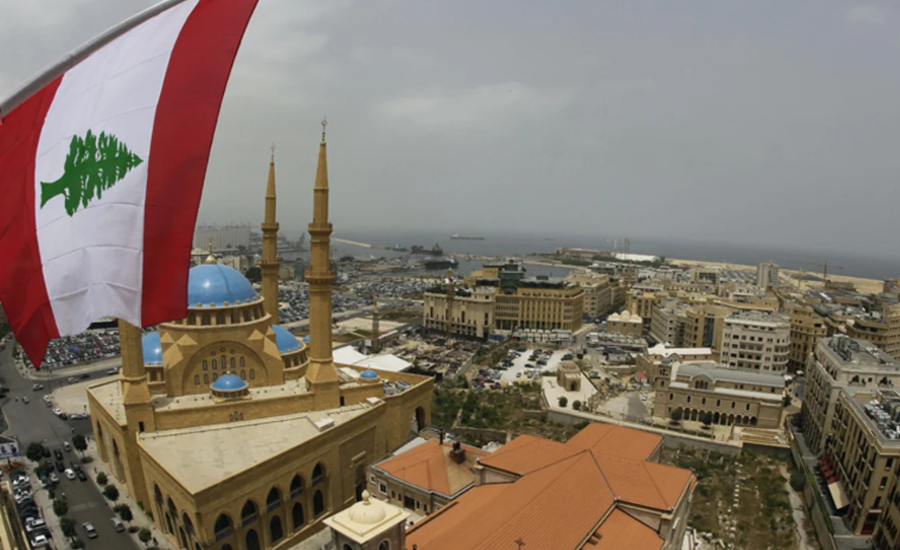
The Lebanese flag overlooks downtown Beirut. Lebanon remains a key point of contention in the implementation of the newly announced U.S.-Iran agreement. (Credit: Getty Images)
Key provisions include the lifting of the U.S. naval blockade of Iranian ports, the restoration of shipping through the Strait of Hormuz to pre-war volumes within 30 days, and a pledge that both nations will respect each other's sovereignty and refrain from interfering in each other's internal affairs.
Article 9 states that Iran "maintains the status quo on its nuclear program" for the duration of the 60-day talks, meaning existing enrichment continues. The final nuclear terms will be negotiated during that window, not before. Article 8 includes Iran's reiteration that it will never produce nuclear weapons. That has been Iran's stated position for decades.
The Money Question
Two separate financial components in the deal have generated the loudest public reaction. Conflating them produces a distorted picture.
The first is the $300 billion reconstruction figure in Article 6. Despite widespread reporting that the U.S. is handing Iran $300 billion, that framing is not accurate. According to Reuters, citing a source familiar with the negotiations, the Reconstruction and Development Fund is a private investment vehicle, not a government grant or reparations program.
It is to be financed by companies from the United States, Gulf Arab states, Asia, South America, and Africa. The fund is designed to rebuild infrastructure damaged during the conflict, including steel facilities, refineries, and airports. Iran had originally sought $400 billion in direct compensation from the U.S. government. Washington declined. The investment fund concept emerged from that impasse.
Vice President JD Vance was direct on Fox News. "The agreement says they are not getting a single dime of American money," he said. "What the agreement does say is, if the Iranians behave, and if there are sanctions relief, and if the Iranians are integrated into the world economy, we would invite other countries, not us, but other countries, to invest in their country. That's fine. But only if they comply with the terms of the agreement." Trump called the $300 billion characterization "Fake News" on Truth Social.
The second financial component is more straightforward and more directly comparable to past controversy. Article 11 of the MOU commits the U.S. to releasing frozen Iranian sovereign assets, funds that belonged to Iran and had been seized. Iran has reported that figure to be $25 billion, though the version seen by Bloomberg did not include a specific dollar amount.
This is the component that carries the closest parallel to the Obama-era debate.
The Obama Comparison
The 2015 Joint Comprehensive Plan of Action, known as the JCPOA, involved the United States lifting sanctions on Iran and settling decades-old debt obligations with a $1.7 billion cash payment, the "pallets of cash" that Trump repeatedly invoked on the campaign trail. The broader JCPOA also involved unfreezing Iranian assets; critics placed the total value of those unlocked assets between $100 billion and $150 billion. On those terms, the frozen asset component of the current deal appears smaller than the total releases the JCPOA generated, but significantly larger than the cash payment that drew the sharpest criticism of Obama.
The deeper comparison is more uncomfortable for the current administration.
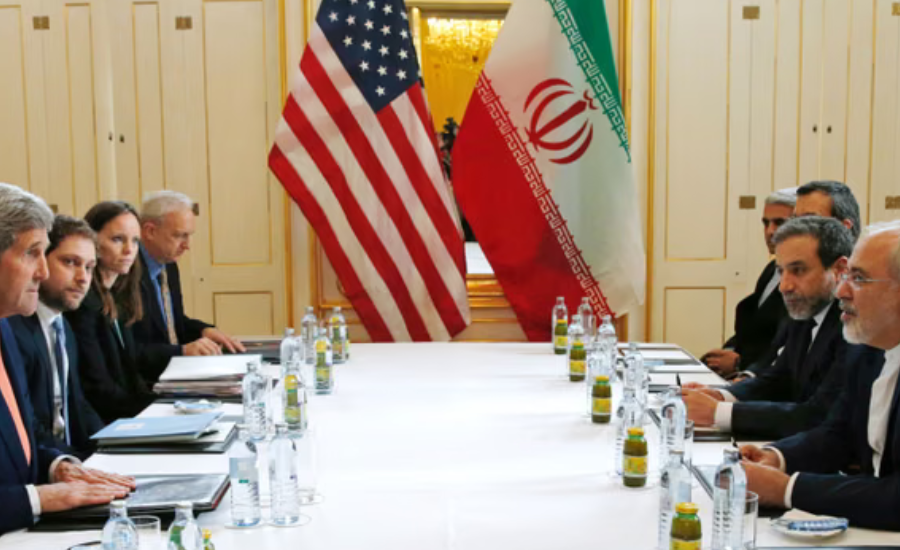
Then-U.S. Secretary of State John Kerry, left, and Iranian Foreign Minister Javad Zarif meet during nuclear talks in Vienna. The JCPOA imposed restrictions on Iran's nuclear program in exchange for sanctions relief before the U.S. withdrew from the agreement in 2018. (Credit: Kevin Lamarque/AFP via Getty Images)
Obama's 2015 deal was a 160-page multilateral agreement negotiated over two years with six world powers. In exchange for sanctions relief and asset access, Iran dismantled centrifuges, reduced its uranium stockpile, and submitted to an expanded inspection regime, with more cameras installed and more inspectors on the ground. International monitors verified Iran's compliance in real time.
Trump called it the worst deal in American history. He withdrew the United States from it in 2018. Iran, freed from its commitments, resumed and escalated uranium enrichment. By the time the current war began, Iran had accumulated 972 pounds of uranium enriched to 60 percent purity, according to the International Atomic Energy Agency. While 60 percent enriched uranium is not weapons-grade, experts note it is a short technical step from the 90 percent threshold required for nuclear weapons, and far above the low-enriched uranium used in civilian energy programs. Critics of Iran also note that its regional influence extends beyond its own borders through allied groups including Hezbollah, Hamas, Iraqi militias, and the Houthis, a network that neither the MOU nor any announced framework directly addresses.
Under the current MOU, enrichment continues under the status quo described in Article 9 while the 60-day window unfolds. The nuclear terms that were the foundation of the original JCPOA have yet to be negotiated.
Dan Shapiro, who served as President Obama's ambassador to Israel, did not pull his punches in an assessment published by The Bulwark. "I can unequivocally say that, from the U.S. perspective, this is a very weak deal," he wrote. "But it is also a necessary deal, and, more importantly, it was the least bad available alternative. This war was a mistake from day one, and it needed to end."
Obama said this week that "it is doubtful that any agreement that arises is going to be significantly different or a significant improvement from the deal that we had in the first place."
What Critics Are Saying
The criticism has landed on both sides of the aisle.
Senate Democratic leader Chuck Schumer called on the administration to release the full text of the agreement and brief Congress, questioning what the U.S. had gained from the conflict.
Georgia Sen. Raphael Warnock put the central question more plainly in a CBS News interview Tuesday. "The Strait of Hormuz, they're saying, will be reopened," Warnock said. "Well, it was open before he started the war. I hope the war is over, but the question is, why were we in the war in the first place?"
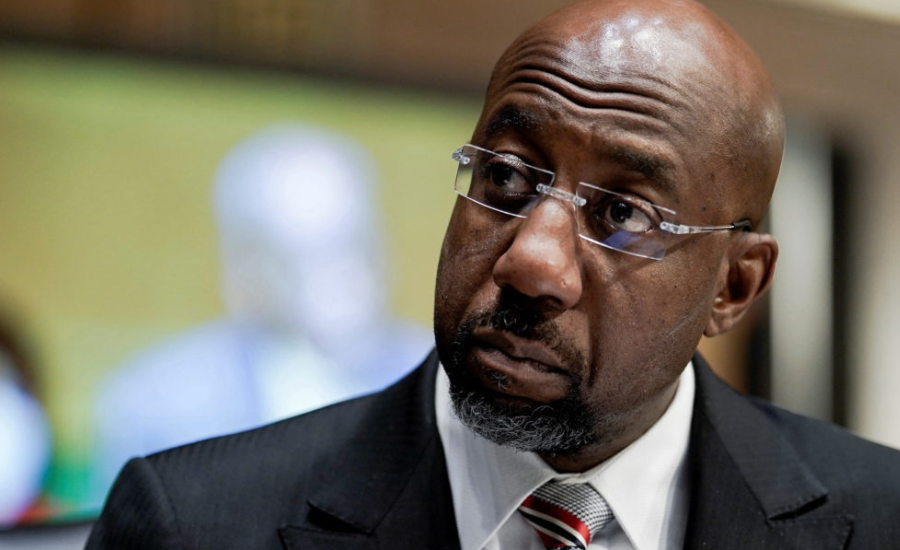
Sen. Raphael Warnock, a Georgia Democrat, has called for greater congressional scrutiny of U.S. foreign policy and military engagements in the Middle East. (Credit: Ken Cedeno/Reuters)
Warnock said the country remains "a long way from what Donald Trump promised and what it looks like he's going to deliver," and that the conflict "has not been good for America or its credibility." Asked directly whether he believes the country is safer coming out of it, his answer was brief. "I don't think so," he said.
Republican Sen. Lindsey Graham said he was "pleased" a deal had been reached but expressed concern that Iran's interpretation of the agreement appeared to differ from what American negotiators were claiming.
The Associated Press obtained White House talking points sent to Trump supporters and Republican members of Congress this week, claiming major victories, including Iran's pledge never to develop nuclear weapons and the reopening of the Strait of Hormuz. But Iran's stated policy against nuclear weapons has been in place for decades. The Strait was open before the war began. It was effectively cut off because the war began.
The Israel Problem
Israel is not a party to the MOU. That fact is becoming one of the agreement's most combustible fault lines.
Israel joined the United States in launching the initial strikes on Iran on February 28, providing critical military support throughout Operation Epic Fury. Yet when the U.S. negotiated the terms of the peace agreement, Israel was excluded from the process. Israeli officials and the Israeli public are now confronting a deal shaped without their input, containing provisions that directly affect their security situation.
The central conflict is Lebanon. Iran's Foreign Minister Abbas Araghchi declared this week that any Israeli military action in Lebanon, or continued Israeli occupation of Lebanese territory, would constitute a violation of the MOU. Netanyahu rejected that framing immediately, pledging that Israel would remain in "security zones" in Lebanon "as long as necessary." Defense Minister Israel Katz was more blunt: "Trump's agreement does not bind us."
Even as Netanyahu held that position publicly, Trump was expressing his frustration privately. According to Axios, Trump called Netanyahu during the final hours of deal negotiations and said, "What the f--- are you doing?" after Israel launched strikes on Beirut on the same day Trump was trying to finalize the agreement. "I was so pissed off," Trump told Axios. "He has no f---ing judgment. I let him know."
At the G7 summit in France on Tuesday, Trump made his position public. "Bibi has to be more responsible with respect to Lebanon," Trump told reporters. He then added: "Without the U.S., there would be no Israel. Without me, there would be no Israel because no other President was willing to do what I did."
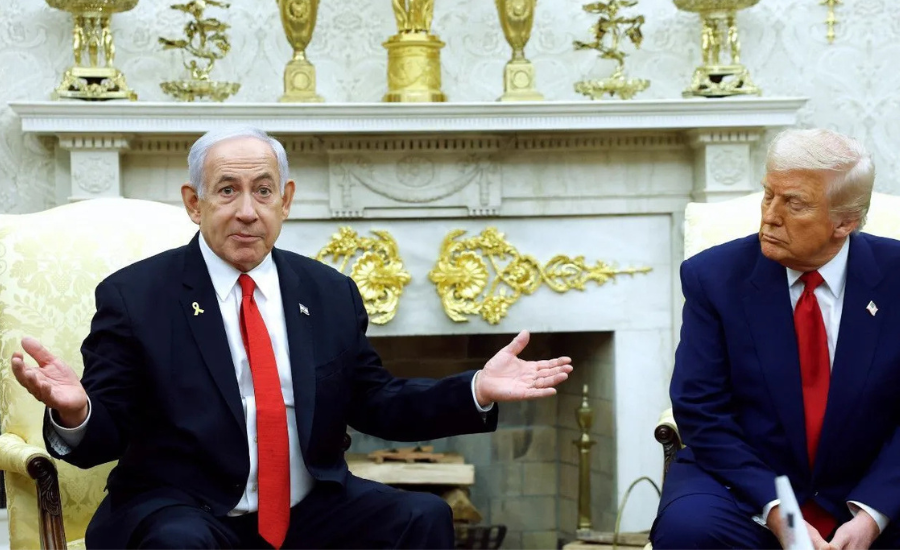
Israeli Prime Minister Benjamin Netanyahu, left, meets with President Donald Trump in the Oval Office. The U.S.-Iran agreement has prompted debate over its implications for Israel's security and regional stability. (Credit: Kevin Dietsch/Getty Images)
Critics, including the Jewish Democratic Council of America, were swift to respond. "He is framing Israel's mere existence as contingent on him," said Halie Soifer, the group's leader. "It's deeply offensive to the vast majority of Jews who care about Israel's future."
The posture has raised pointed questions about where the U.S. stands. Iran's foreign minister has declared Israel's continued presence in Lebanon a violation of a deal the U.S. just signed. Trump is publicly criticizing Israel's strikes. Critics on both left and right are asking whether, in the drive to secure a deal, the administration is applying more pressure to a longstanding ally than to the adversary it spent more than 100 days fighting.
Shapiro, the former U.S. ambassador to Israel, noted the structural fragility this creates. Writing in The Bulwark, he observed that Hezbollah now holds significant leverage over whether the deal survives at all. If a single rocket crosses into northern Israel, the political pressure on Netanyahu to resume the Lebanon campaign will intensify, regardless of what the MOU says. "That gives a lot of power to control this dynamic to Hezbollah," Shapiro wrote, "and essentially to Iran."
Israel's Finance Minister Bezalel Smotrich has already called the MOU "bad for Israel and the entire free world." Hawkish members of Netanyahu's governing coalition are pressing him to continue the Lebanon campaign regardless of pressure from Washington.
What happens if Israel strikes Lebanon again and Iran declares the MOU void? This is not a hypothetical; it is a live question with no clear answer.
What Remains Unresolved
Whether the 60-day negotiations produce a final agreement, and what it will actually require of Iran on enrichment, is the most consequential open question. Under the reported terms of the agreement, Iran could receive economic benefits before final nuclear restrictions are negotiated. The MOU commits both parties to begin final talks only after the U.S. confirms movement on the blockade, Hormuz, oil waivers, and frozen asset releases.
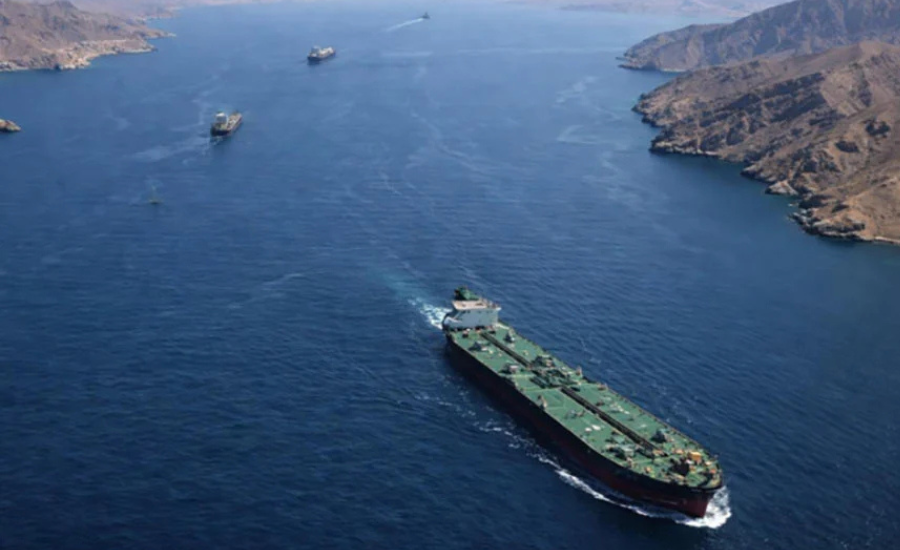
Oil tankers navigate the Strait of Hormuz, through which roughly 20 percent of the world's oil supply passes. Reopening commercial traffic through the strategic waterway is a key provision of the new U.S.-Iran agreement. (Credit: Observer Research Foundation)
Iran's semi-official Mehr News Agency reported that Tehran would not begin final negotiations until half of its frozen funds are released, oil sanctions are suspended, and the naval blockade is lifted. That is a more front-loaded interpretation than U.S. officials have publicly acknowledged.
The question of who actually verifies any agreement may be the most urgent unresolved issue of all. Article 12 of the MOU calls for "an oversight mechanism to ensure successful implementation," but provides no specifics. The IAEA stopped conducting verification activities inside Iran after the February 28 strikes, and by the end of June 2025, following earlier U.S.-Israeli strikes, had withdrawn all inspectors from the country for safety. Cameras at multiple nuclear sites were turned off in May 2025. IAEA Director General Rafael Grossi warned earlier this year that without a clear and detailed inspection regime, any agreement risks being "an illusion."
"Iran has a very ambitious, wide nuclear program," Grossi told reporters. "All of that will require the presence of IAEA inspectors. Otherwise, you will not have an agreement. You will have an illusion of an agreement."
As of this writing, the MOU provides no mechanism to restore that access.
Some foreign policy analysts have also raised the concern that the killing of Iranian leaders during the conflict may have strengthened hardliners within the new regime, giving them more incentive, rather than less, to pursue nuclear deterrence as a matter of survival.
The MOU also faces a structural question about durability. Like the JCPOA before it, the agreement appears to be an executive arrangement rather than a treaty ratified by Congress. A future president could, as Trump himself demonstrated in 2018, withdraw from it unilaterally. Unless Congress codifies portions of whatever final agreement emerges from the 60-day talks, the same cycle that produced the current crisis could begin again.
And the Lebanon dispute, if unresolved, could pull the entire framework apart before the 60-day clock even runs out.
Thirteen American service members died in this war. More than 370 were wounded. Oil prices spiked sharply, compounding an inflation burden already pressing on American families.
Traffic through the Strait of Hormuz was effectively cut off for months. It is now being reopened by the same agreement that ended the conflict that closed it. Iran's nuclear program was not halted.
According to the reported MOU text, existing enrichment continues while final nuclear terms are negotiated in the 60-day window.
The 2015 agreement that had inspectors on the ground and required centrifuges to be dismantled was withdrawn from by the United States in 2018, after which Iran resumed the enrichment that produced the current crisis.
What the current MOU will produce in the way of concrete, verifiable nuclear limits depends entirely on the next 60 days of talks, on whether Israel and Iran can coexist within the agreement's framework, and on whether the oversight mechanism Article 12 promises is actually built.
That final determination has not yet been written.
EEW Magazine will continue to cover the U.S.-Iran negotiations and the Israel-Lebanon situation as the 60-day window unfolds.
More on EEW Magazine Online:





Why do some confrontations end with the wronged person apologizing? Learn how DARVO works and how biblical discernment helps believers recognize manipulation and pursue truth.