
JD Vance Thought Faith Was for Fools. The Black Church Knew Better.
JD Vance once believed only dumb people were religious. His new book, Communion, exposes a cultural blind spot the Black church has challenged for centuries.
By EEW Magazine Online Faith Editors

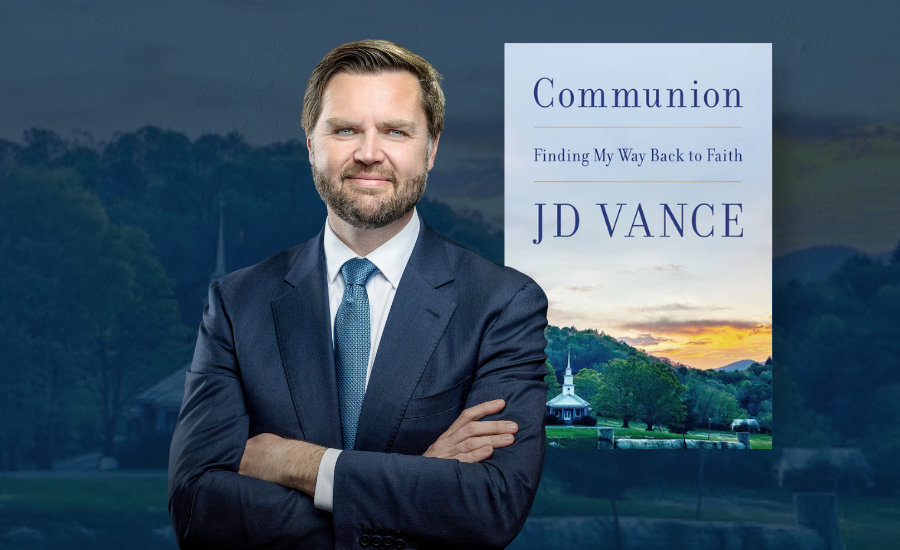
JD Vance once organized the world into a simple taxonomy. Dumb people were religious. Smart people were atheists. He carried this framework through his years at Yale Law School, through a career in finance, and into his emergence as a public intellectual, a man who had quietly concluded that education and belief occupied mutually exclusive territory.
Then he attended a lecture by Peter Thiel.
Thiel, the Stanford-educated co-founder of PayPal and one of the most consequential investors in Silicon Valley's history, spoke openly and without apology about his Christian faith. Vance writes in his new book, "Communion: Finding My Way Back to Faith," released Tuesday by HarperCollins Publishers, that Thiel was "possibly the smartest person I'd ever met.”
The encounter dismantled the taxonomy he had spent years constructing. The world, it turned out, was more complicated than Vance had allowed it to be.

Peter Thiel, the Stanford-educated co-founder of PayPal and Silicon Valley venture capitalist, whose open Christian faith cracked the framework Vice President JD Vance had built around religion and intelligence. (Getty Images)
This is a confession worth receiving carefully. Not because a vice president finding religion is unusual in American political life, and not because Vance's conversion to Catholicism is without precedent among prominent public figures. It is worth receiving carefully because the assumption he described is not an idiosyncratic error he made in isolation. It is a foundational premise of a particular strain of American intellectual culture, one that has surveyed expressions of Christian faith, especially the demonstrative and communal faith of the Black church, and concluded it was looking at the evidence of limited minds.
The cost of that presumption has fallen heaviest on a tradition that deserves far better.
For more than a century, the Black church has been the most consequential institution in African American civic life and, simultaneously, one of the most condescended to. Its theologians have been overlooked. Its preachers have been caricatured. Its worship, which has always been bodily, communal, and unashamed, has been mistaken for emotionalism by observers who confused expressiveness with the absence of thought.
The congregation on its feet, the preacher moving in what the tradition calls the anointing of the Holy Spirit, the believer yielded to glossolalia in prayer. To those who have observed the Black church only from the outside, these have registered as evidence of people who exchanged reason for feeling. What such observers missed was the theology underneath, a theology carefully constructed, rigorously inherited, and intellectually serious in ways the caricature cannot accommodate.
Modern Pentecostalism itself, with its doctrine of the Holy Spirit's active presence and its practice of speaking in tongues, emerged as a global movement most visibly through the Azusa Street Revival of 1906, in Los Angeles, under the leadership of William J. Seymour. He was a Black man and the son of formerly enslaved parents, who had been barred from attending a Bible school in Houston on the basis of his race and was required to sit outside the classroom door to receive the lectures.
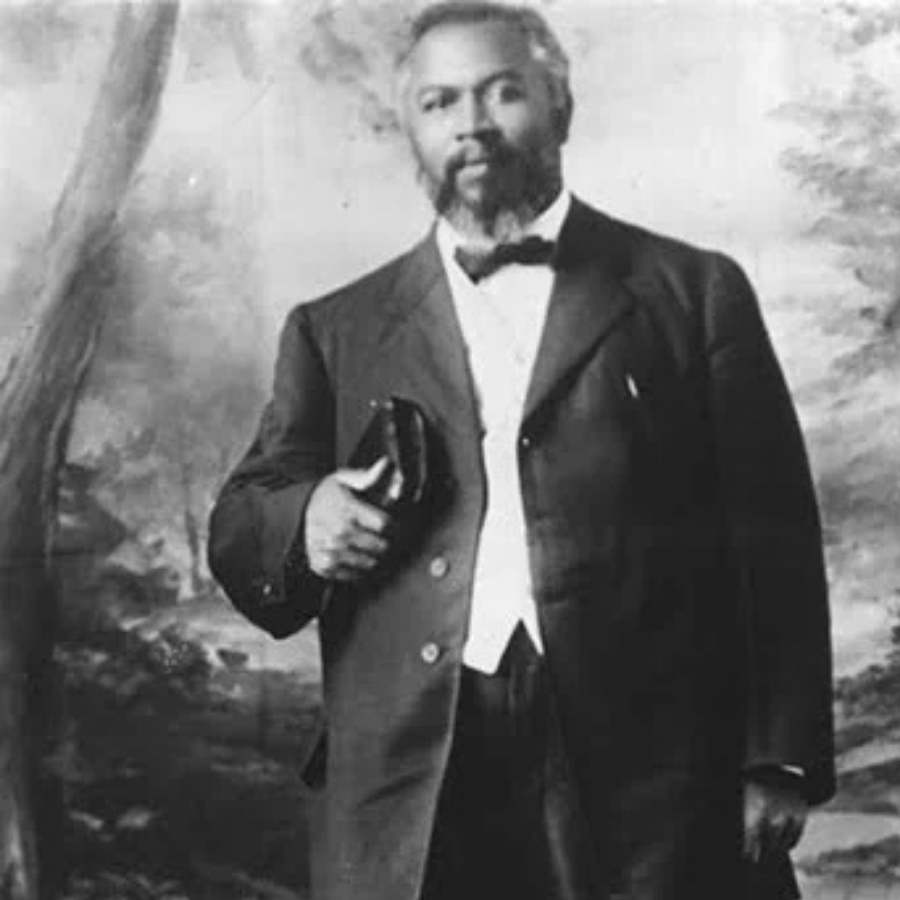
William J. Seymour, the son of formerly enslaved parents who led the Azusa Street Revival of 1906 in Los Angeles and ignited a global Pentecostal movement now estimated at 600 million adherents worldwide. (Wikimedia Commons)
The movement he ignited from that small mission spread across denominational lines and across the globe, reaching an estimated 600 million adherents worldwide. That is not the legacy of an unthinking tradition. It is the legacy of a man who carried something larger than the institutions that refused to seat him at the table.
Seymour was not an exception. The Black church has always produced this kind of figure: people who were denied the formal credentials of intellectual life and then built intellectual traditions that outlasted the institutions that excluded them. Frederick Douglass taught himself to read in defiance of law and then wielded the language of the King James Bible with a precision and force that bent the arc of American history. Howard Thurman, the theologian and mystic whose work shaped the spiritual architecture of the civil rights movement, was a thinker of such depth that Martin Luther King Jr. carried Thurman's 1949 book, "Jesus and the Disinherited," with him throughout the Montgomery bus boycott.
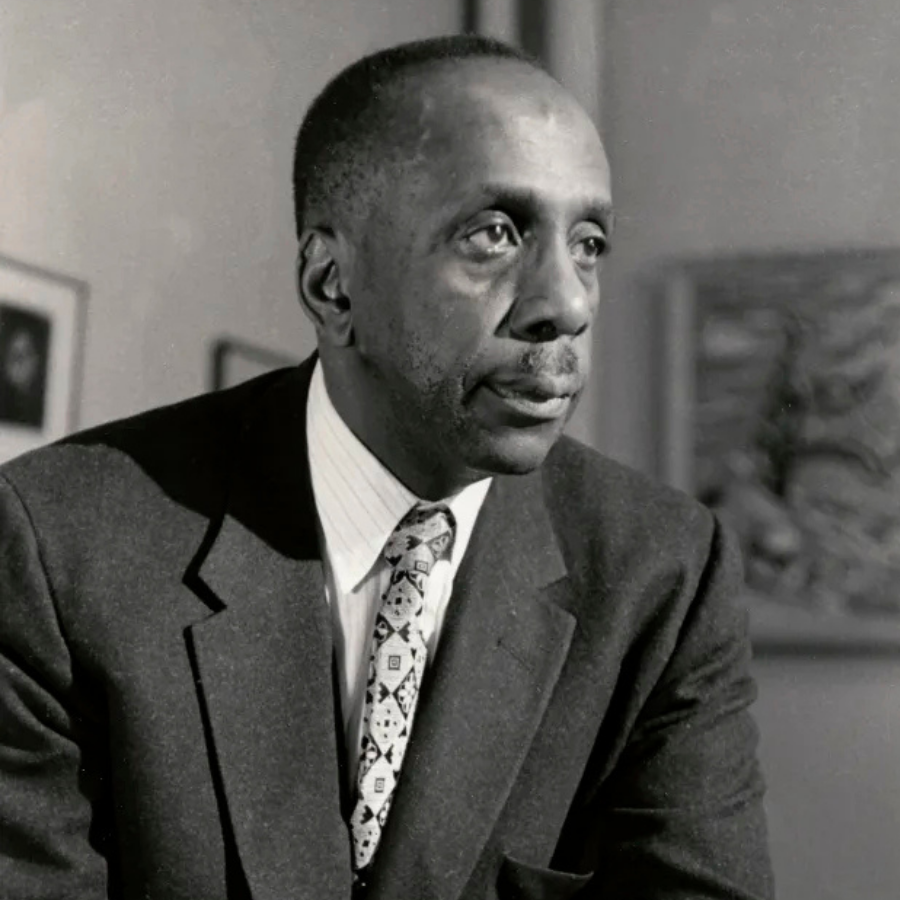
Howard Thurman, theologian, mystic, and author of "Jesus and the Disinherited" (1949), whose spiritual framework shaped the architecture of the civil rights movement and whose work Martin Luther King Jr. carried with him throughout the Montgomery bus boycott. (Emory University/Journey Films)
Fannie Lou Hamer, who organized the Mississippi Freedom Democratic Party and testified before the credentials committee of the 1964 Democratic National Convention. She possessed the kind of moral authority that made the powerful visibly uncomfortable and drew every ounce of that authority from a biblical imagination her adversaries chronically underestimated.
Thurman, Hamer, and Douglass inhabited their faith as the primary instrument of their intellectual lives. Scripture, for each of them, was a living text approached with rigor and contestation, read with close attention to language, history, and context. The tradition they belonged to asked them to hold the full weight of human suffering against the promises of God and to do so without flinching, without sentimentality, without the luxury of easy resolution.
That is not an intellectually modest undertaking.
The particular genius of the Black church, and the thing that has been most persistently misread by those observing it from a distance, is this: it has never required its people to choose between the life of the mind and the life of the spirit. The preacher who moved a congregation to its feet on Sunday morning had often spent Saturday evening in the original Greek. The woman in the third pew who had never set foot in a seminary knew the Book of Job with an intimacy that would challenge a doctoral candidate.
The tradition forged a kind of intellectual and spiritual simultaneity that mainstream American culture has never had adequate categories for, and so, rather than developing those categories, it has defaulted to dismissal.
Vance's admission illuminates the poverty of that default. Here is a man formed at one of the nation's most elite institutions, a Marine Corps veteran who rose to the highest levels of American political life, acknowledging in print that he spent years operating from a framework that any serious engagement with the Black church's history would have immediately disproved. His error was not one of intelligence. It was one of exposure, the kind of blind spot that forms when an entire intellectual tradition goes unexamined because the culture has already decided it is not worth the examination.
That failure runs deeper than Vance.
It runs through the culture's relationship to faith broadly, and to Black faith specifically, and it carries consequences that extend well beyond the personal. When a tradition this generative, this historically productive, this intellectually serious is consistently cast as the province of the credulous, the loss extends beyond an inaccurate account of history. What is lost is the wisdom the tradition actually carries: how to build dignity when the law denies it, how to preserve hope when circumstances do not justify it, and how to endure suffering without surrendering one's faith.
JD Vance needed Peter Thiel to begin cracking the template open.
The Black church has been cracking it open for centuries.
The record is there. It always has been. The question is whether the culture will finally do the work of reading it.
More on EEW Magazine Online:






Scripture holds two truths without strain. God reigns completely. Man chooses freely. A study through Samson, Joseph, Pharaoh, the Cross, and the Potter and the Clay.