
Faith on the Ballot: Why Conservative Christians Still Wrestle With Donald Trump
Conservative Christians can't fully celebrate Trump's record or fully walk away from it. As America turns 250, the tension remains unresolved.
Thousands gathered on the National Mall on May 17, 2026, to pray for the United States as it approached its 250th anniversary. The invitation had come not from a church, denomination, or ministry, but from the White House.
President Donald Trump had organized "Rededicate 250: A National Jubilee of Prayer, Praise and Thanksgiving," part of his formal proclamation of 2026 as a "Year of Celebration and Rededication."
The gathering included Scripture references, prayer models, and a weekly challenge asking one million Americans to dedicate one hour each week to intercede for the country.
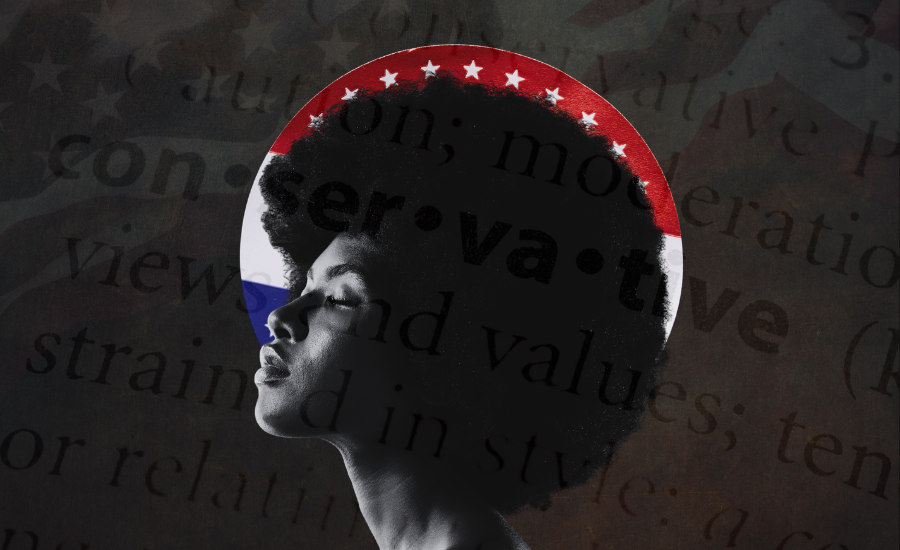
For many Black Christian women, political identity has never fit neatly into a single label. As America turns 250, the question isn't which party deserves their loyalty. It's what faithfulness requires when no party fully earns it. Photo illustration: EEW Magazine
From the White House website, in Trump's own words:
"As we prepare to celebrate two and a half centuries of freedom, I am inviting America's great religious communities to pray for our nation and for our people. From the beginning, this has always been a country sustained and strengthened by prayer. So important, if we bring religion back stronger, you're going to see everything get better and better and better. As we chart our course for the next 250 years, let us rededicate ourselves to one nation under God."
For many believers, the significance was not merely that a president had organized a national prayer gathering. It was that the federal government had publicly acknowledged prayer, Scripture, and dependence on God as appropriate features of national life.
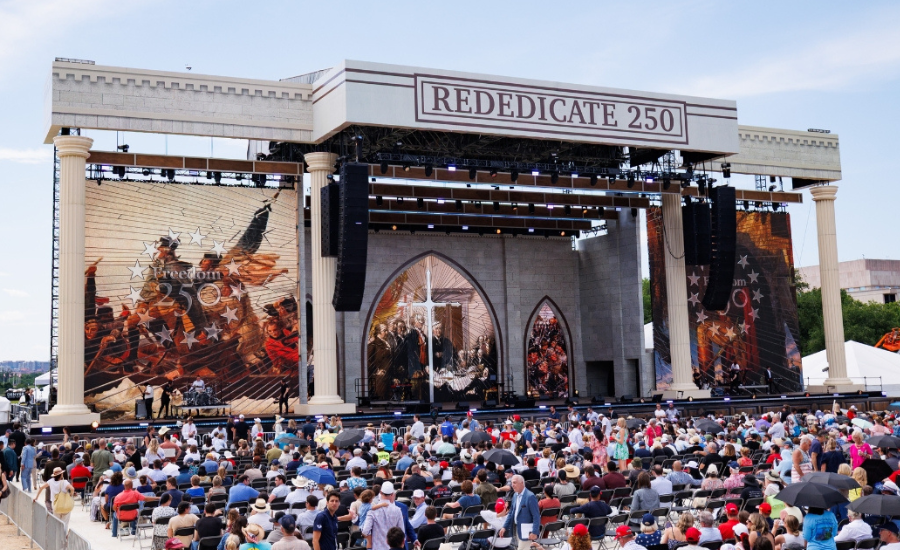
Thousands filled the National Mall on May 17, 2026, for Rededicate 250, a White House-organized prayer gathering marking the nation's approaching 250th anniversary. Credit: Jessie Jordan/Liberty University
For many conservative Christians, that moment felt like an answer to prayer. For others, it raised a question that has followed Trump's presidency from its earliest days.
What do you do with Donald Trump?
Not the symbol. Not the caricature. The actual record.
For believers who evaluate political leadership through a biblical lens, the full accounting is complicated in ways that do not resolve cleanly into either condemnation or celebration.
What He Did
In December 2017, Trump did what three previous presidents had promised and declined to do: he officially recognized Jerusalem as the capital of Israel and directed the relocation of the U.S. Embassy there. For Christians whose support for Israel is rooted in their reading of Scripture, including passages such as Genesis 12:3, that decision carried weight that extended well beyond diplomacy.
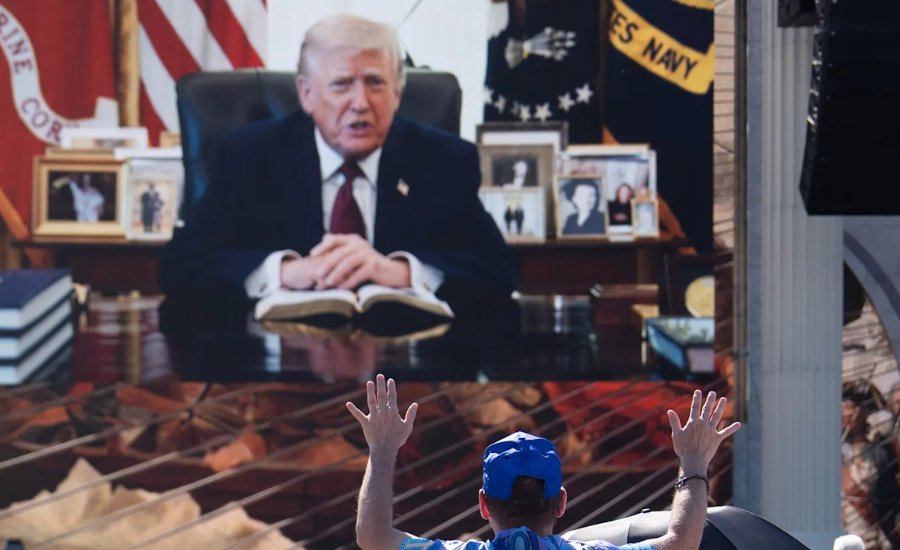
An attendee raises hands in worship as a pre-recorded video message from President Donald Trump plays on the main screen during Rededicate 250 on the National Mall. Trump appeared on screen with an open Bible on his desk. Credit: Julia Demaree Nikhinson/AP
In September 2020, his administration brokered the Abraham Accords, normalization agreements between Israel and the United Arab Emirates, Bahrain, Sudan, and Morocco. No Arab nation had formally normalized relations with Israel since Jordan in 1994.
He appointed three justices to the Supreme Court: Neil Gorsuch in 2017, Brett Kavanaugh in 2018, and Amy Coney Barrett in 2020.
In June 2022, a Court reshaped in part by those appointments issued its ruling in Dobbs v. Jackson Women's Health Organization, overturning Roe v. Wade and returning the question of abortion to individual states. For the pro-life movement, it was a legal shift advocates had pursued for half a century.
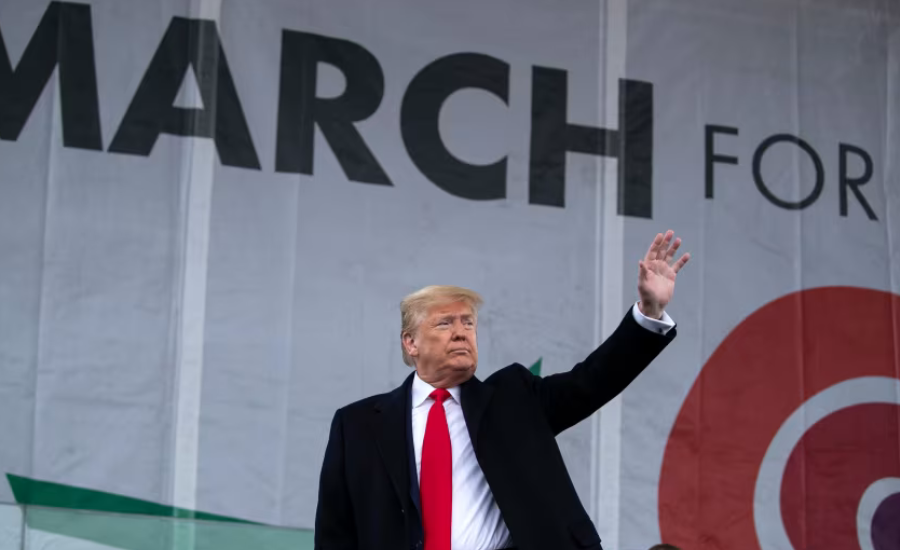
In January 2020, President Donald Trump became the first sitting president to address the March for Life in person since the annual rally began in 1974. His appearance signaled to pro-life voters that their convictions had a place at the highest level of American government. Credit: Evan Vucci/AP
On May 4, 2017, Trump signed an executive order directing federal agencies to vigorously enforce religious liberty protections under existing law. His administration consistently sided with religious organizations in federal courts, including cases involving faith-based adoption agencies, religious employers, and houses of worship.
Both belong to the historical record. Neither can honestly be ignored.
The Rest of the Record
In October 2016, the Washington Post published a recording from 2005 in which Trump made explicit, vulgar comments about women to television personality Billy Bush. Trump acknowledged the recording was authentic and called his words "locker room talk."
Trump has been married three times. His first two marriages ended in divorce.
In May 2023, a federal jury found Trump liable for sexual abuse against writer E. Jean Carroll and awarded her $5 million in damages. The presiding judge later wrote that the evidence established Trump had acted as Carroll described.
In May 2024, a Manhattan jury convicted Trump on 34 felony counts of falsifying business records connected to hush money payments made to adult film actress Stormy Daniels before the 2016 election. He became the first former United States president convicted of felony crimes.
In July 2015, at the Family Leadership Summit in Iowa, moderator Frank Luntz asked Trump whether he had ever sought God's forgiveness. Trump replied: "I am not sure I have. I just go on and try to do a better job from there. I don't bring God into that picture."
Those facts belong to the same historical record.
The Question That Does Not Go Away
For many conservative Christian women, Scripture does not yield a simple political theology. The Old Testament is filled with rulers God used despite their moral failures. It is also filled with the consequences that followed those failures.
The New Testament distinguishes between the role of governing authorities and the standard of personal holiness. Those have never been the same thing, and the tension between them is not new to the Christian tradition. What is new, or at least newly urgent, is the landscape conservative Christians navigate at America's 250th anniversary.
Many conservative Christians find themselves weighing competing convictions rather than choosing between obvious good and obvious evil.
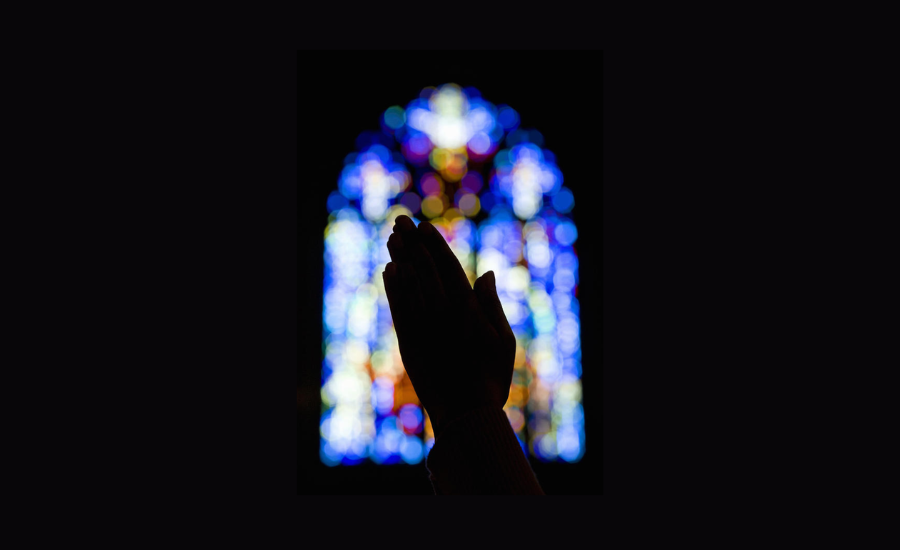
Behind every ballot cast by a person of faith is something the polls cannot measure: a conscience trying to answer to God before it answers to any party. Credit: Paul Barnes/Getty Images
The Democratic Party has moved away from the pro-life position many believers regard as a theological non-negotiable. Its positions on religious liberty exemptions and parental rights have placed it in growing tension with traditional Christian teaching.
The Republican Party has advanced many of those policy priorities through a figure who does not personally model what many of those same believers would recognize as Christian character.
There is no clean exit from that tension. Every vote is a moral calculation made by a conscience answerable to God, not to a party or a pundit.
Across America's 250 years, people of faith have been asked to do the hard work of citizenship without the luxury of perfect choices. The founding generation knew that. Every generation since has had to relearn it.
George Washington said it plainly in his Farewell Address:
"Of all the dispositions and habits which lead to political prosperity, religion and morality are indispensable supports."
He did not say the men who upheld those supports would be perfect.
So here is the question this moment leaves on the table, without resolution and without apology:
When the policies you prayed for arrive in hands you cannot fully trust, what does faithfulness require of you?
More on EEW Magazine Online:




The EEW Weekly Digest
Get EEW in Your Inbox
Our weekly digest brings the latest reporting on faith, culture, health, and the news that matters to Black Christian women straight to your inbox.
Subscribe FreeFree to join. Unsubscribe anytime.
Reader-Supported Journalism
Help Keep EEW Free and Growing
EEW Magazine Online is free for every reader, and we plan to keep it that way. Your support helps us expand our reporting on faith, culture, health, and the news that matters to Black Christian women. Become a monthly supporter today.
Support EEWGive once or monthly through PayPal. Gifts are tax-deductible to the extent allowed by law.

Scripture holds two truths without strain. God reigns completely. Man chooses freely. A study through Samson, Joseph, Pharaoh, the Cross, and the Potter and the Clay.