
Trump v. Barbara: Birthright Citizenship, Explained Through Thomas's Dissent
The Supreme Court ruled birthright citizenship stands. Justice Clarence Thomas dissented, and his argument runs nearly ninety pages deep into the history of the Fourteenth Amendment. We broke down what the ruling says and exactly where Thomas parts ways with the majority.
By EEW Magazine Online Staff
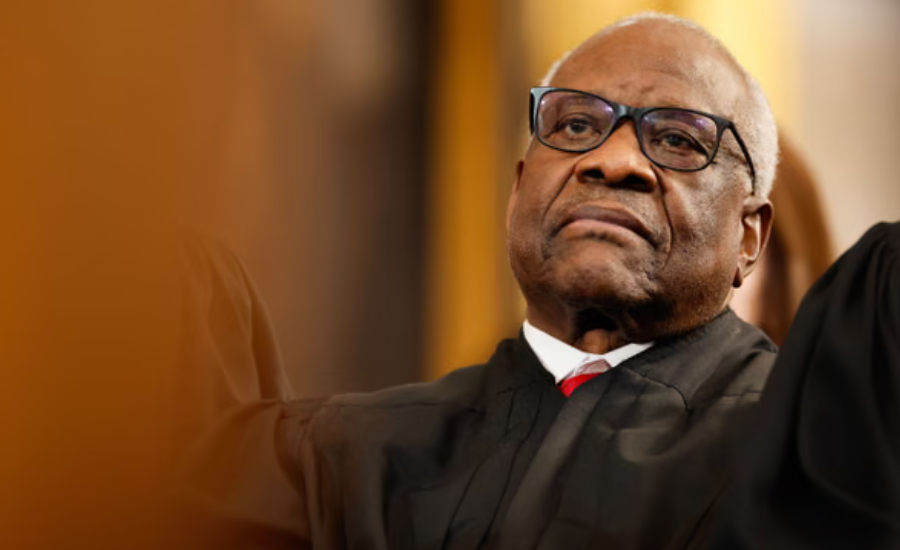
Justice Clarence Thomas dissented from the Supreme Court's 5-4 ruling in Trump v. Barbara, arguing citizenship under the Fourteenth Amendment turns on domicile, not birthplace alone. Photo: Rex/Shutterstock
The Supreme Court resolved, at least for now, one of the oldest open questions in American constitutional law.
On June 30, 2026, the Court ruled 5-4 in Trump v. Barbara that children born on American soil to parents who are unlawfully or temporarily present in the country are citizens at birth.
The ruling struck down Executive Order 14160, President Trump's January 2025 directive titled "Protecting the Meaning and Value of American Citizenship," which had sought to deny birthright citizenship to those children.
Justice Clarence Thomas wrote a dissent, joined by Justice Neil Gorsuch, that runs nearly ninety pages and reaches back to Dred Scott, the Civil Rights Act of 1866, and the floor debates that produced the Fourteenth Amendment to argue the Court misread the Constitution it claims to be honoring.
Understanding what he said, and why, requires understanding what the fight has always been about.
Click the button below to read Justice Thomas’s full dissent.
The Fourteenth Amendment's Citizenship Clause reads: "All persons born or naturalized in the United States, and subject to the jurisdiction thereof, are citizens of the United States and of the State wherein they reside."
Ratified in 1868, it was written to overturn Dred Scott v. Sandford, the 1857 decision holding that Black Americans, free or enslaved, could never be citizens.
For more than a century, the prevailing judicial understanding has been that the clause means what it appears to say: birth on American soil confers citizenship, with narrow exceptions for the children of foreign diplomats and, historically, of tribal nations that maintained their own sovereignty.
That understanding was cemented by the Supreme Court's 1898 decision in United States v. Wong Kim Ark, which held that a man born in San Francisco to Chinese immigrant parents was a citizen despite his parents' ineligibility for naturalization under the law of that era.
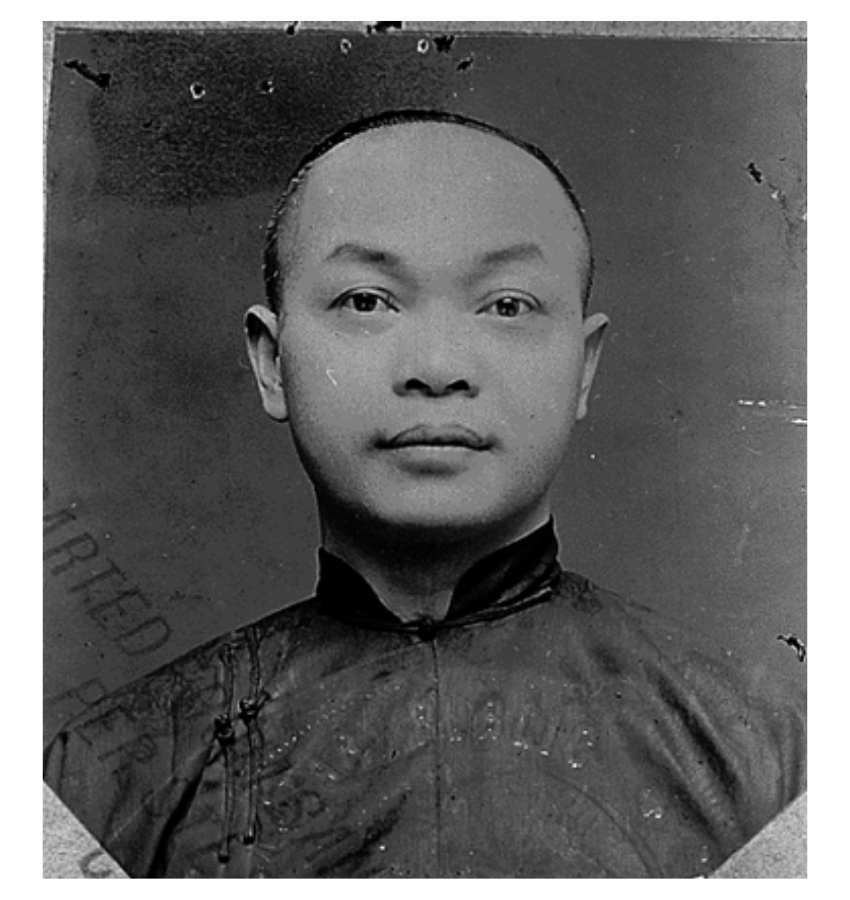
Wong Kim Ark, pictured in a 1904 U.S. immigration document. His 1898 Supreme Court case, United States v. Wong Kim Ark, affirmed that children born on U.S. soil to noncitizen parents are citizens under the 14th Amendment. Source: Wikimedia Commons.
The controversy the Trump administration reopened centers on four words: "subject to the jurisdiction thereof."
The executive order argued that children born to parents who are in the country illegally or on a temporary basis are not fully "subject to the jurisdiction" of the United States in the constitutional sense, because their parents owe primary allegiance elsewhere.
Multiple families sued, a district court blocked the order nationwide, and the case reached the Supreme Court on an expedited track before a full appeals process played out.
A ruling against birthright citizenship would have meant that children born on American soil, going forward, could be born stateless or dependent on the immigration status of their parents, unsettling a rule that has applied without serious legal challenge for well over a century.
What the ruling says
Chief Justice John Roberts wrote the opinion for the Court, joined by Justices Sotomayor, Kagan, Barrett, and Jackson.
The majority held that the Citizenship Clause must be read against its full historical backdrop, from English common law through the "widespread condemnation" of Dred Scott, and concluded that "jus soli," the right of citizenship by soil, was the rule the framers of the Fourteenth Amendment intended to restore and constitutionalize.
Under that reading, "subject to the jurisdiction thereof" excludes only a narrow class, chiefly children of foreign diplomats, and does not turn on the immigration status or intentions of a child's parents.
Justice Jackson filed a separate concurrence, joined in part by Justice Sotomayor, expanding on the historical record.
Justice Kavanaugh concurred in the judgment but dissented in part, signaling he did not fully join the majority's reasoning even though he agreed the order could not stand as written. Justice Alito filed his own dissent, and Justice Gorsuch, while joining Thomas, also filed a separate dissent of his own.
The result was a Court fractured well beyond a simple count of votes, with the justices divided not only on the outcome but on the historical method for reaching it.
The criteria behind Thomas's dissent
Thomas's disagreement runs deeper than the executive order itself. His argument is that the Court asked the wrong historical question. His dissent rests on a single organizing idea: citizenship under the Fourteenth Amendment turned on domicile, a child's permanent legal home, rather than the location of birth alone.
He traces this to the earliest American case law, quoting Justice Bushrod Washington's observation that "citizenship means domicil, home, permanent residence." From there, Thomas builds his case on several distinct pillars.
Historical practice.Thomas argues that for decades after ratification, all three branches of government denied citizenship claims by children born in the United States to parents domiciled abroad.
He cites an 1885 State Department letter declaring such a child "not, therefore, under the statute and the Constitution a citizen of the United States by birth," and points to the Court's own language in the 1873 Slaughter-House Cases describing the clause as excluding "children of ministers, consuls, and citizens or subjects of foreign States born within the United States."
Throughout the dissent, Thomas treats the Civil Rights Act of 1866 as the closest evidence available of what the Fourteenth Amendment's own drafters believed the Citizenship Clause meant.
Congress passed that statute first, using the phrase "not subject to any foreign power," then passed the amendment itself only months later using the closely related phrase "subject to the jurisdiction thereof."
Thomas's argument is that the amendment constitutionalized the statute's meaning rather than replacing it, which is why he keeps circling back to the 1866 floor debates for evidence of what the constitutional text was understood to do.
The text itself. Thomas reads "subject to the jurisdiction thereof" as a term of art meaning full and complete jurisdiction, the kind a government holds over its own domiciled residents, not the more limited authority it holds over a visitor passing through.
He leans heavily on the floor statements of the amendment's own authors, quoting Senator Lyman Trumbull's explanation that the phrase meant "not owing allegiance to anybody else," and Senator Jacob Howard's assurance that the clause would "not, of course, include persons born in the United States who are foreigners, aliens."
Dred Scott, read differently.This is the most striking turn in the dissent. Thomas argues the Fourteenth Amendment corrected Dred Scott not by making soil the test of citizenship, but by finally recognizing what should have been true all along: that Dred Scott himself was domiciled in Missouri and was owed citizenship on that basis.
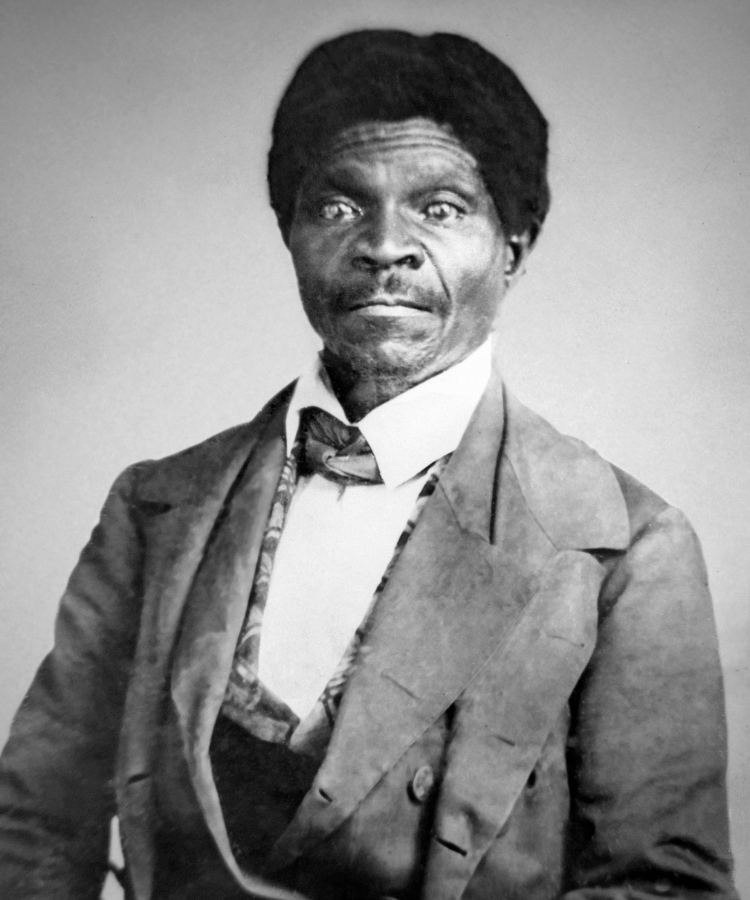
Dred Scott sued for his freedom on the grounds that he was domiciled in Missouri. Justice Thomas cites that history in his dissent, arguing the Fourteenth Amendment recognized citizenship through domicile rather than birthplace alone. Photo: Unknown Photographer, Public Domain
Thomas writes that Black Americans "were entitled to citizenship because they were Americans," invoking Frederick Douglass's declaration that freedmen sought citizenship "not as aliens nor as exiles," but as Americans.
On Thomas's account, the amendment was written for people who belonged here permanently, like the freedmen, not for anyone merely born within the nation's borders regardless of their family's tie to the country.
Rejecting the majority's sources. Thomas spends a substantial portion of the dissent dismantling what he calls the three pillars of the Court's opinion: Calvin's Case, a 1608 English ruling on feudal allegiance; Lynch v. Clarke, an 1844 New York case; and Wong Kim Ark itself.
He argues Calvin's Case describes feudal servitude to a monarch, not American citizenship, writing that "in England there was no such thing as a citizen."
His sharpest objection is reserved for Wong Kim Ark. That 1898 case, he insists, decided the citizenship of one narrow category of person: a child born to Chinese immigrant parents who were permanently domiciled in the United States and running a business here, even though federal law barred them from naturalizing.
Thomas's charge is that the majority converts that narrow holding, citizenship for children of permanently domiciled residents, into a sweeping rule covering anyone born on American soil regardless of their parents' ties to the country.
Threshold objections. Before reaching the merits, Thomas also faulted the Court on procedural grounds, arguing it approved relief for an open-ended nationwide class of "all current or future persons" affected by the order without the individualized standing analysis the Court normally requires.
The statutory argument. Thomas notes that Congress's own citizenship statute, first enacted in 1866 and recodified in the Nationality Act of 1940, used language tracking the Fourteenth Amendment. Since Congress did not clearly depart from the constitutional standard when it recodified that language, he argues the statute carries no independent citizenship guarantee beyond what the Constitution itself provides.
The broader critique. Thomas closes with a warning about how the Court wields the Fourteenth Amendment generally. He traces a line from U.S. v.Cruikshank through Plessy v. Ferguson to more recent decisions and argues the Court has a history of failing Black Americans on the very promise the amendment was written to secure.
Now, in his view, the Court is expanding that same promise to reach further than its authors intended. He writes plainly that he does not expect the ruling to "stand the test of time."
The majority, for its part, answered Thomas directly, accusing him of a "myopic" reading of the historical record and arguing that the domicile theory he revives was never the operative constitutional rule Congress enacted.
At its core, this was a fight over interpretive method.
Roberts and Thomas were reading the same eleven words, "subject to the jurisdiction thereof," and building two entirely different histories out of them. Both claimed fidelity to what the framers of 1868 actually meant. They simply told two different stories about who those framers were writing for.
For now, the Court's answer stands: birth here is enough.
Justice Thomas's answer is that the Fourteenth Amendment protected the child who belonged to the American community through complete political allegiance, historically evidenced by permanent domicile.
He does not expect that argument to end here, and the country may yet decide he was right.
More on EEW Magazine Online:





The EEW Weekly Digest
Get EEW in Your Inbox
Our weekly digest brings the latest reporting on faith, culture, health, and the news that matters to Black Christian women straight to your inbox.
Subscribe FreeFree to join. Unsubscribe anytime.
Reader-Supported Journalism
Help Keep EEW Free and Growing
EEW Magazine Online is free for every reader, and we plan to keep it that way. Your support helps us expand our reporting on faith, culture, health, and the news that matters to Black Christian women. Become a monthly supporter today.
Support EEWGive once or monthly through PayPal. Gifts are tax-deductible to the extent allowed by law.
Scripture holds two truths without strain. God reigns completely. Man chooses freely. A study through Samson, Joseph, Pharaoh, the Cross, and the Potter and the Clay.