

By EEW Magazine Newswire
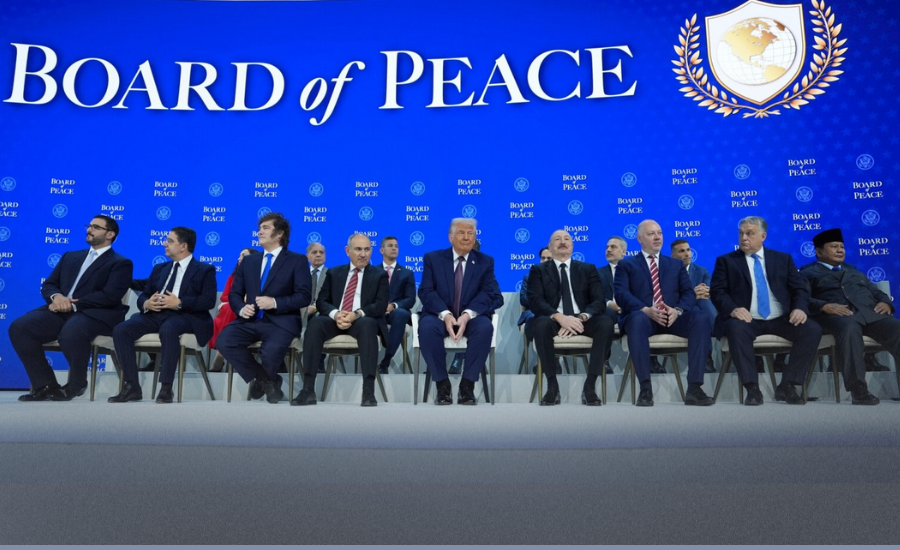
President Donald Trump poses with international leaders following the signing of the Board of Peace charter in Davos, Switzerland, Jan. 22, 2026. (AP Photo/Evan Vucci)
Key Points:
President Donald Trump's Board of Peace, launched in January 2026, aims to drive reconstruction in Gaza while pursuing broader conflict resolutions.
The initiative aligns with Trump's claims of facilitating ceasefires in up to eight international disputes during his second term.
Trump has voiced a commitment to a legacy centered on global peace, underscored by a recent symbolic gesture from Venezuelan opposition leader María Corina Machado, who presented him with her Nobel Peace Prize medal.
EEW Magazine Online Newswire – In the crisp mountain air of Davos, Switzerland, President Donald Trump stood before world leaders on January 22, 2026, to unveil the Board of Peace, a new international body he described as a practical force for resolving entrenched conflicts.
This launch marked a pivotal moment in his second term, encapsulating his longstanding "peace through strength" philosophy, which pairs diplomatic negotiations with unwavering U.S. military and economic might to deter aggression and foster stability. As Trump signed the charter alongside representatives from nearly two dozen nations, he emphasized that true peace demands not just words, but action backed by resolve.
The Board of Peace emerged from the resolution of the Gaza conflict, which had simmered since 2023 and claimed tens of thousands of lives before a U.S.-brokered ceasefire took hold in October 2025. Rooted in United Nations Security Council Resolution 2803, the board oversees Trump's 20-point plan for Gaza's demilitarization, humanitarian aid, and economic revival, including ambitious visions of coastal tourism and industrial zones.
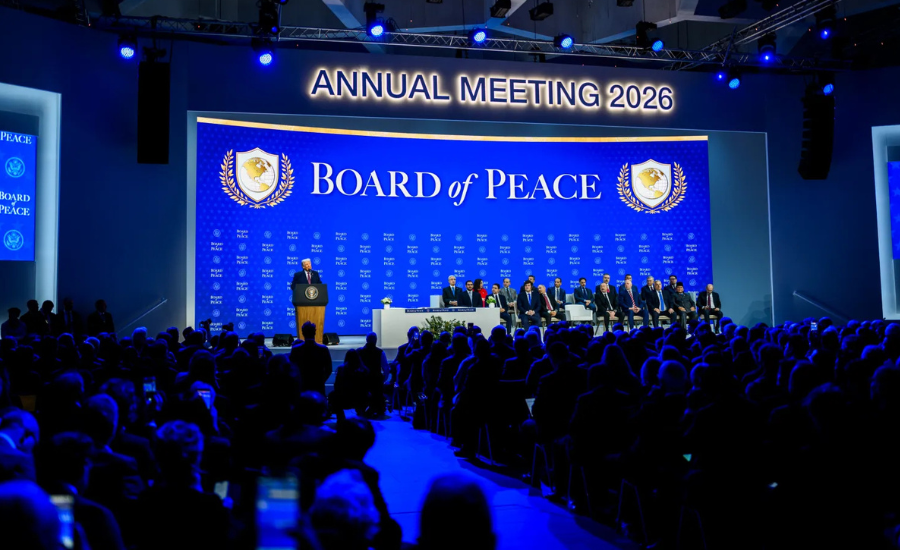
Photo Credit: The White House
Yet the charter's broad language extends beyond Gaza, positioning the organization as a potential platform for addressing global hotspots, distinct from but collaborative with the United Nations. Trump, as lifelong chairman, holds significant authority, including over memberships and agendas, with permanent seats requiring a $1 billion contribution from participating countries.
This structure has drawn both praise and scrutiny. Founding members include Israel, Saudi Arabia, the United Arab Emirates, and others from the Middle East and beyond, totaling around 35 nations committed to the Gaza effort. European powers like France and the United Kingdom have opted out, citing concerns over the board's potential to sideline established institutions. Still, supporters highlight its focus on results, with an executive team featuring figures like Secretary of State Marco Rubio and former British Prime Minister Tony Blair guiding operations.
At the heart of the board's approach lies Trump's "peace through strength" doctrine, a strategy he has championed since his first term and one that administration officials say has yielded concrete outcomes in his second. By bolstering U.S. military capabilities through initiatives like the "One Big, Beautiful Bill" for defense upgrades, Trump argues that America projects the power needed to bring adversaries to the table. "We don't start wars; we end them," Trump has stated in recent addresses, pointing to a series of ceasefires as evidence.
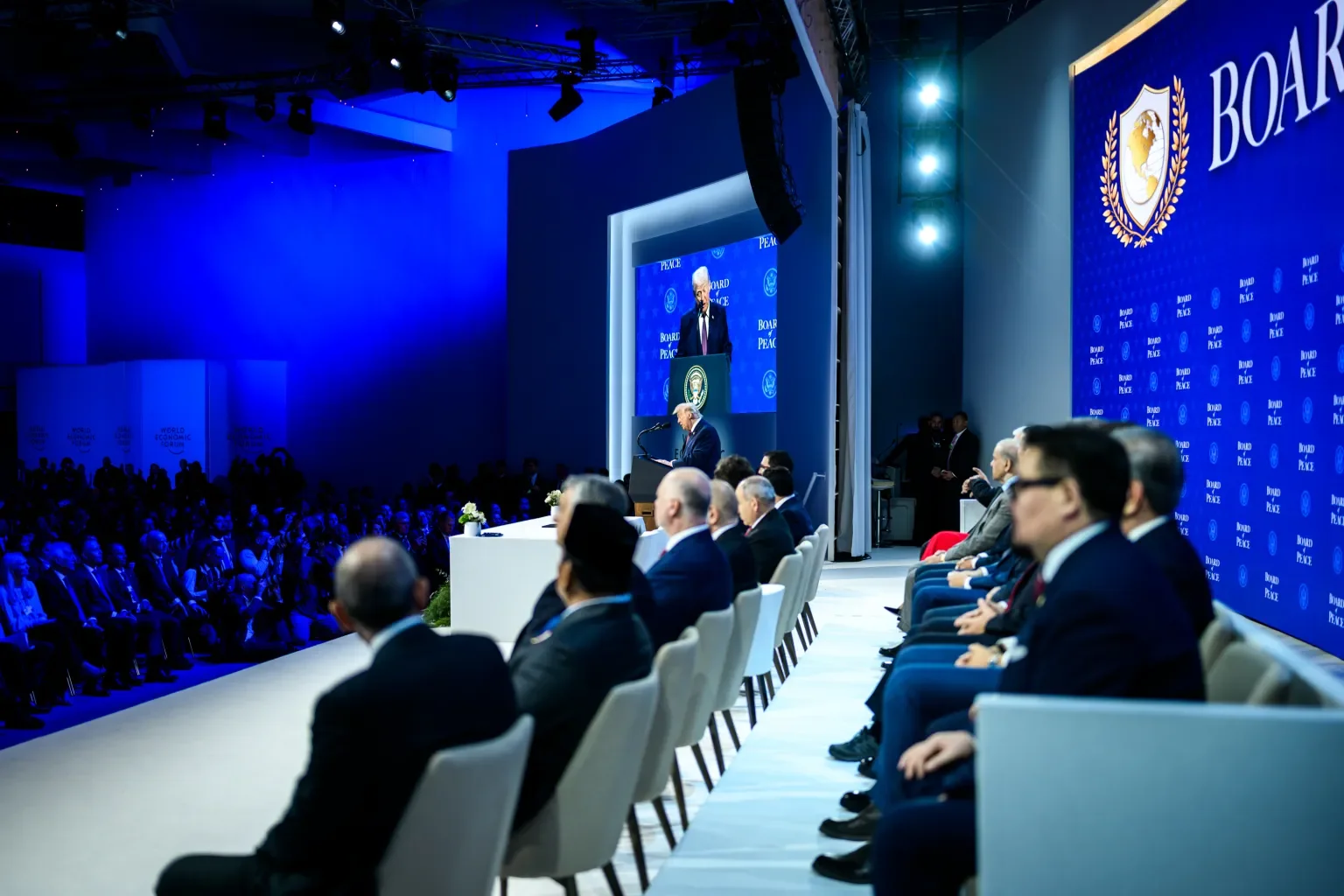
Photo Credit: The White House
The White House credits this mindset with halting hostilities in several regions. In the Middle East, beyond Gaza, U.S. mediation helped de-escalate a brief but intense clash between Israel and Iran in June 2025, following targeted airstrikes that led to a standstill on nuclear activities.
Further afield, interventions in Africa and Asia have included a peace accord between Rwanda and the Democratic Republic of Congo, addressing border disputes amid rebel incursions, and a truce between India and Pakistan over Kashmir tensions in May 2025. Other efforts encompass a short-lived border skirmish between Thailand and Cambodia, resolved through economic incentives, and a historic deal between Armenia and Azerbaijan signed at the White House in August 2025.
Diplomatic pressure also averted escalation between Egypt and Ethiopia over the Grand Ethiopian Renaissance Dam, while warnings of trade repercussions helped prevent renewed friction between Serbia and Kosovo.
It is worth noting that some ceasefires remain tenuous, with occasional violations testing their longevity. For instance, the Rwanda-DRC agreement has seen sporadic unrest, and the Thailand-Cambodia accord required follow-up talks. Nonetheless, these steps represent a shift toward proactive U.S. engagement, with Trump asserting that his administration has made the world "richer, safer, and much more peaceful" in just one year.
This record has fueled Trump's aspirations for a legacy as a global peacemaker, a theme he reiterated during a White House meeting on January 16, 2026, when Venezuelan opposition leader María Corina Machado presented him with her Nobel Peace Prize medal.
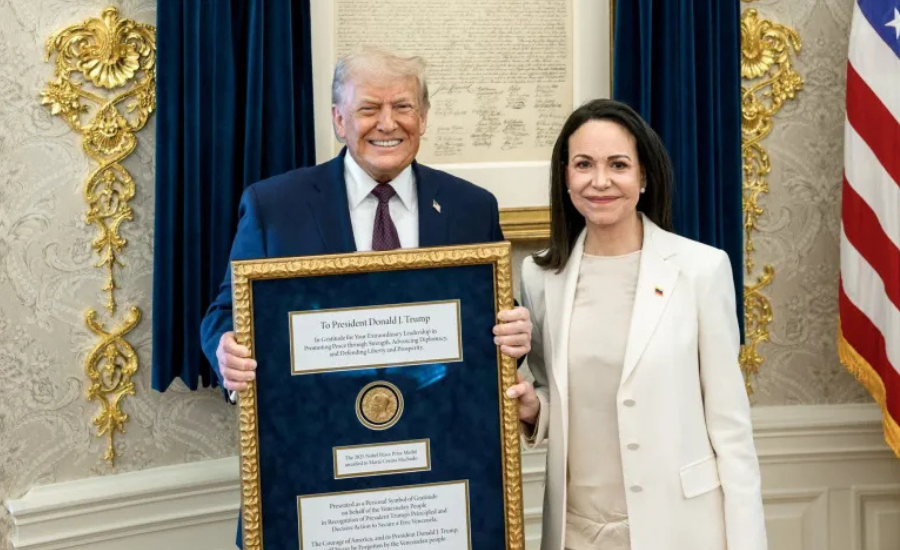
Trump and Venezuelan opposition leader María Corina Machado pose with the Peace Prize in the Oval Office (Daniel Torok/The White House)
Machado, honored in 2025 for her advocacy against authoritarianism in Venezuela, described the gesture as appreciation for Trump's role in supporting democratic transitions there, including the ousting of former President Nicolás Maduro. Trump, who has faced nominations from U.S. lawmakers but no official award from the Norwegian Nobel Committee, called it a "wonderful gesture of mutual respect." The move stirred reactions, with some in Norway expressing surprise, yet it highlighted international acknowledgments of Trump's efforts.
As the Board of Peace holds its initial sessions in Washington, D.C., its trajectory will test the viability of Trump's vision. With an International Stabilization Force already aiding Gaza's security and reconstruction underway, the organization seeks to document successes for replication elsewhere.
Critics question its inclusivity, particularly the lack of direct Palestinian input, while proponents see it as a fresh alternative to stalled multilateralism. In public discourse, opinions range from optimism about U.S. leadership to skepticism over long-term impacts. Whether this initiative cements Trump's peacemaking credentials remains to be seen, but it undeniably injects new energy into the pursuit of global harmony.
More on EEW Magazine Online:





Jesus speaks directly to chronic worry in Matthew 6, pointing anxious hearts to the birds, the lilies and a Father who already knows every need.