‘Sinners’ Makes Oscar History, Forcing a Cultural Reckoning for Black Christian Audiences
With a record-breaking 16 Oscar nominations, Sinners has captured Hollywood’s attention. For Black Christian viewers, its portrayal of faith, culture, and spiritual power raises deeper questions.
EEW Magazine Online Reel Buzz
Warner Bros.
When the Academy of Motion Picture Arts and Sciences announced this year’s Oscar nominations, one film dominated the conversation: Sinners.
With 16 nominations across 24 categories, Sinners set a new Academy Awards record, securing recognition in nearly every major creative and technical field. The achievement placed the film in rare company and confirmed its cultural weight far beyond the awards circuit.
For Black Christian audiences, however, the moment is not purely celebratory. It is complicated.

Warner Bros.
The film’s sweeping recognition has reignited long-standing conversations about faith, culture, and spiritual authority. At the center of the debate is how Black religious life is portrayed when Christianity exists alongside blues, jazz, ancestral memory, and folk spirituality shaped by the trauma of the Jim Crow South.
A Historic Oscar Moment
Sinners earned nominations in the following categories:
Best Picture
Directing
Actor in a Leading Role
Actress in a Supporting Role
Actor in a Supporting Role
Original Screenplay
Original Score
Original Song
Cinematography
Film Editing
Sound
Visual Effects
Production Design
Costume Design
Makeup and Hairstyling
Casting
The breadth of nominations reflects an extraordinary endorsement from the Academy, recognizing not only performances and storytelling but also the film’s technical and artistic ambition.
Industry observers note that it is rare for a single film to receive such comprehensive recognition, particularly one centered on Black life, Black history, and Black spirituality.
Why Sinners Resonates and Divides
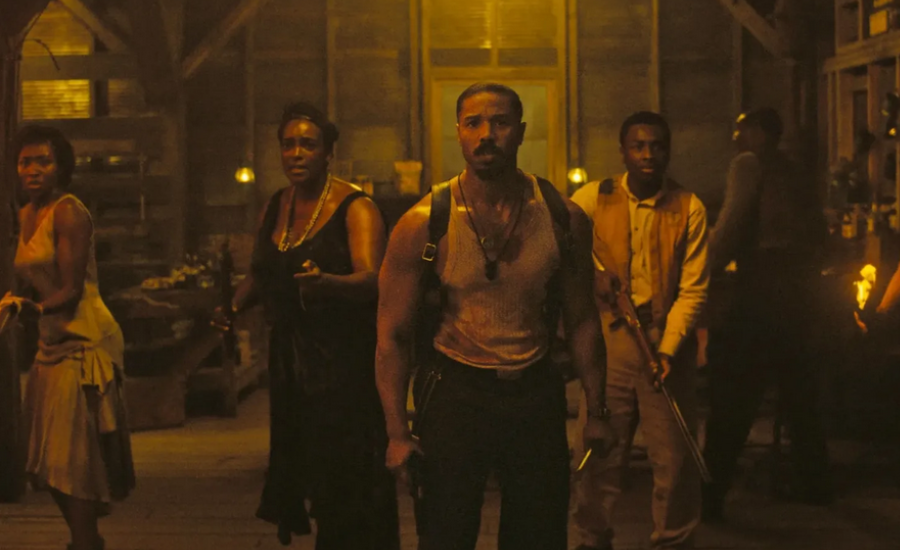
Set against the backdrop of the Jim Crow South, Sinners explores the interior lives of Black characters navigating survival, longing, love, and meaning under systemic oppression.
A pivotal narrative choice lies at the heart of the film’s spiritual framework. At a critical moment, characters invoke Christian prayer, including the Lord’s Prayer, in the face of supernatural threat. Yet within the logic of the story, those prayers do not prove decisive.

Warner Bros.
Instead, the film assigns greater spiritual efficacy to other forces. Sammie’s blues music and ancestral connection are portrayed as conduits that cross temporal and spiritual boundaries, drawing power from memory, heritage, and ritual. In one sequence, music becomes the means through which ancient forces are engaged and evil is confronted, culminating in a clash with the antagonist, Remmick.
What unsettles many faith-based viewers is not the presence of multiple spiritual traditions, but the way authority is ultimately distributed. Deliverance arrives not through Christ-centered prayer, but through ancestral memory and ritual expression. Christianity is present, but it is not portrayed as the decisive source of power.
Historically, Black spiritual expression has never been singular. The same communities that filled church pews on Sunday also gave rise to the blues on Saturday night, often as a means of processing grief, injustice, and survival when institutional religion felt distant or constrained.
Sinners does not reconcile that tension. It dramatizes it.
Faith, Art, and the Line Scripture Draws
There is no shame in honoring ancestry or engaging cultural memory. But for Christian viewers, Sinners presses against a boundary Scripture draws clearly.
The Bible warns against divination, sorcery, and consulting the dead, not as cultural taboos but as spiritual dangers. Christianity does not present the gospel as one symbolic system among many. It proclaims Christ as sufficient, victorious over evil, and authoritative above all spiritual powers.
This is where the film creates friction for believers.

Warner Bros.
Christianity is depicted as visible but ineffective. Protection and deliverance are found not through prayer, repentance, or the cross, but through rituals, charms, ancestral invocation, and folk practices. Evil is resisted through symbols rather than Scripture, through music rather than intercession.
For Christians who hold to the all-sufficiency of Christ, that framing is not neutral. It subtly reframes where power resides.
A Mirror, Not a Manifesto
To the film’s credit, Sinners does not instruct viewers what to believe. It reflects unresolved realities.
It mirrors a people whose faith has been shaped not only by Scripture, but by survival. By music sung when prayer felt unanswered. By ancestral memory carried when freedom was denied. By creativity forged in the shadow of violence and exclusion.
For some viewers, that mirror feels like liberation.
For others, it feels like drift.
Both responses are revealing.
What This Moment Requires
For EEW Magazine, this is neither a call to cancel Sinners nor to canonize it. It is a call to discern.
“Neither is there salvation in any other, for there is no other name under heaven given among men whereby we must be saved” (Acts 4:12).
That name is Jesus.
More on EEW Magazine Online: