

The rapper says the crash that launched his career also marked the beginning of years of untreated neurological and psychiatric illness.
By EEW Magazine Newswire
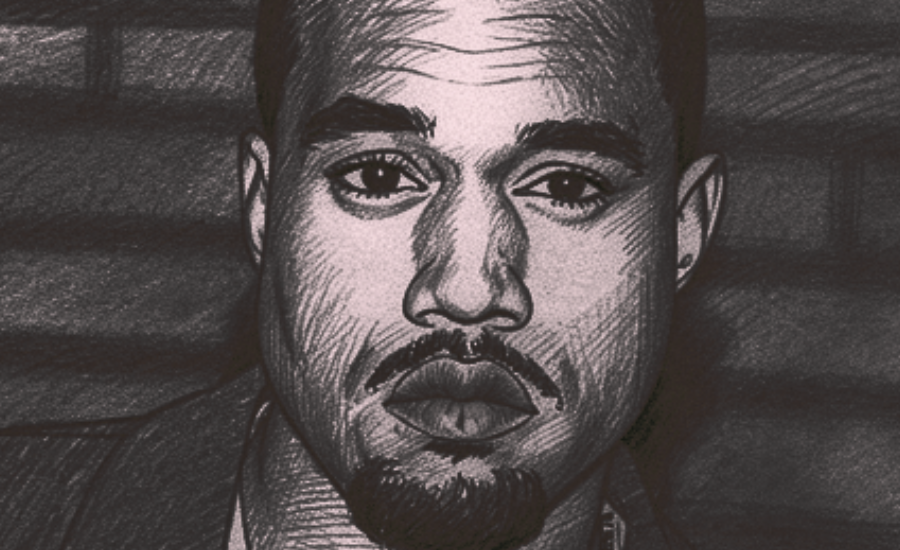
Kanye West issued a public apology to “those I hurt” in a Wall Street Journal advertisement, describing manic episodes and a traumatic brain injury he said went undiagnosed for more than two decades. (EEW Magazine)
MINNEAPOLIS — In October 2002, Kanye West survived a near-fatal car crash in Los Angeles that shattered his jaw and left his mouth wired shut, an accident that would later become central to his rise in music through the hit song “Through the Wire.”
More than two decades later, West says the crash also left him with an undiagnosed traumatic brain injury that, combined with untreated bipolar disorder, contributed to years of psychological decline, psychosis, and behavior that he said caused harm to others.
In a full-page advertisement published in The Wall Street Journal, West wrote that the Oct. 23, 2002, accident fractured his jaw and injured his right frontal lobe, but that the neurological damage went largely unexamined at the time.
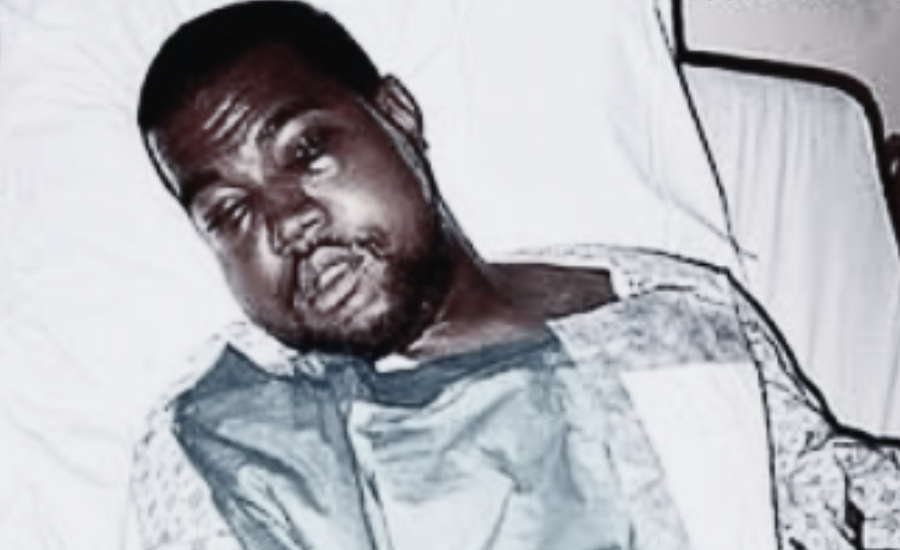
Kanye West is pictured in 2002 following a near-fatal car crash that shattered his jaw, an accident he later said caused a traumatic brain injury that went undiagnosed until 2024. (EEW Magazine)
“The deeper injury — the one inside my skull — went unnoticed,” West wrote, adding that comprehensive scans were not performed and that the brain injury was not properly diagnosed until 2024.
The crash and its aftermath are well documented. At the time, West was an emerging producer seeking recognition as a rapper. He recorded “Through the Wire” with his jaw wired shut while recovering from the accident, a song that became a defining moment in his early career and helped launch his debut album, The College Dropout.
In the open letter, titled “To Those I’ve Hurt,” West said the failure to fully evaluate the brain injury had lasting consequences, contributing to years of untreated illness. While he has previously spoken publicly about his bipolar disorder, the letter places new emphasis on the interaction between traumatic brain injury and mood instability.
“When you’re manic, you don’t think you’re sick,” West wrote. “You feel like you’re seeing the world more clearly than ever, when in fact you’re losing your grip on reality.”
Medical research supports the connection he describes. Bipolar disorder is known to impair insight during manic episodes, often preventing individuals from recognizing that they are unwell. Research has also shown that traumatic brain injury, particularly injuries involving the frontal lobe, can increase the risk of long-term psychiatric symptoms, including mood disorders, impulsivity, and impaired emotional regulation.
West cited research showing that bipolar disorder is associated with a significantly shortened life expectancy, writing that people with the condition live an average of 10 to 20 years fewer than the general population. A 2022 systematic review and meta-analysis published in The British Journal of Psychiatry found that individuals with bipolar disorder lose an average of about 13 years of life expectancy compared with the general population, driven by higher rates of suicide, cardiovascular disease, and untreated medical conditions.
The letter also addressed public backlash over West’s past statements and imagery, including antisemitic rhetoric that led to widespread condemnation and business fallout. West wrote that during his untreated illness, he gravitated toward “the most destructive symbolism” he could find, behavior he said does not reflect his beliefs.
“I am not a Nazi, nor am I antisemitic,” he wrote.
West apologized directly to communities he said were hurt by his actions, including the Black community, which he described as foundational to his life and career.
“I am so, so sorry to anyone I hurt,” he wrote.
He also described the aftermath of mental illness once symptoms subside as particularly painful.
“When you are not in an episode, you are completely yourself — and that’s when the wreckage of what happened hits hardest,” West wrote.
After what he described as hitting “rock bottom,” West said his wife encouraged him to seek help. In the letter, he detailed his current treatment.
“I am now in effective treatment — medication, therapy, exercise, and learning humility,” West wrote. “I am rebuilding my life and pouring my energy into positive, meaningful work: art, music, design, and creative projects that contribute something good to the world.”
Public health experts note that traumatic brain injuries are frequently underdiagnosed, particularly when initial trauma does not appear catastrophic. The U.S. Centers for Disease Control and Prevention reports that more than 214,000 people were hospitalized for traumatic brain injuries in the United States in 2020, with many additional injuries treated outside hospital settings or never formally evaluated.
Research published by the American Psychiatric Association has found that traumatic brain injury can increase the risk of later psychiatric illness, including bipolar-spectrum symptoms, especially when injuries affect areas of the brain responsible for impulse control and emotional regulation.
West concluded the letter by saying he is not seeking sympathy or praise, but patience as he continues treatment and recovery.
“I am asking for patience and understanding as I work to heal and do better,” he wrote.








Jesus speaks directly to chronic worry in Matthew 6, pointing anxious hearts to the birds, the lilies and a Father who already knows every need.