
‘Melania’ documentary, boosted by Nicki Minaj, posts decade-high nonfiction opening
By EEW Magazine Editorial Team
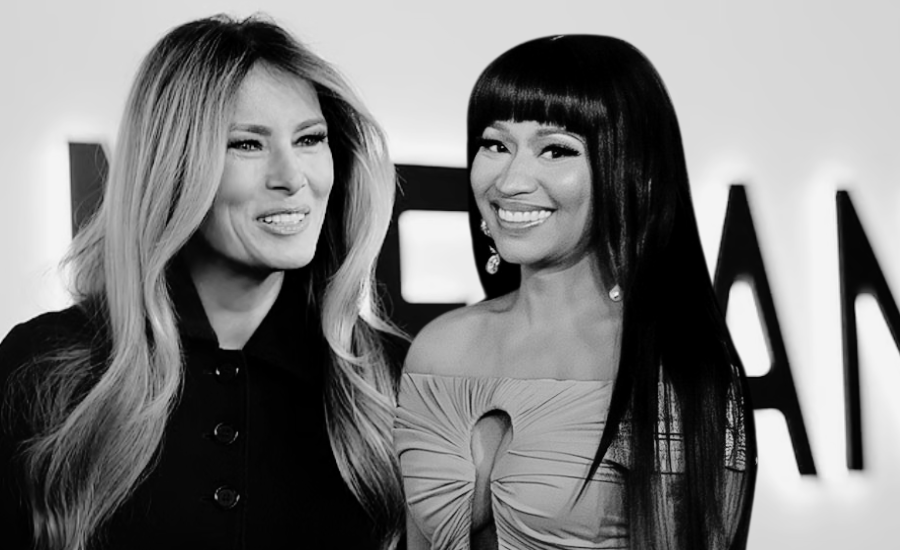
Melania Trump and Nicki Minaj, an unlikely cultural pairing, helped draw heightened attention to Melania, an Amazon MGM documentary. (EEW Magazine)
American pop culture has always had a habit of producing unlikely pairings. Few, however, have been as unexpected or as revealing as the convergence of Melania Trump and Nicki Minaj.
This year, Melania, a documentary centered on the current first lady premiered through Amazon MGM, posting the strongest opening for a nonfiction film in nearly a decade. The release confounded early expectations.
Critics were swift and unsparing. Moviegoers, however, told a different story. According to box office data cited by industry analysts, more than 70 percent of the opening weekend audience consisted of women over the age of 50, with particularly strong turnout in Southern and South-Central states.
The demographic profile puzzled observers accustomed to viewing political documentaries as niche fare. Trade publications flagged the anomaly, but few offered a convincing explanation for why the film connected so strongly with this audience.
One answer was visible before ticket sales were tallied.
Standing at a red carpet event and promotional appearance was Nicki Minaj, hip-hop’s most commercially successful female artist and, increasingly, one of the Trump administration’s most high-profile celebrity allies. What began as a surprising photo opportunity quickly became something more consequential. Minaj did not merely attend the premiere. She promoted the documentary directly to her fan base, amplifying it across social platforms and lending it cultural reach few political documentaries ever enjoy.
The effect was immediate. Minaj’s endorsement introduced the film to audiences who might not otherwise have paid attention to a biographical portrait of a first lady.
At the same time, negative critical reception appeared to harden, rather than deter, interest among viewers who perceived the backlash as part of a broader cultural dismissal of conservative or non-elite perspectives. Hostility from critics may have functioned less as a warning than as a rallying signal.
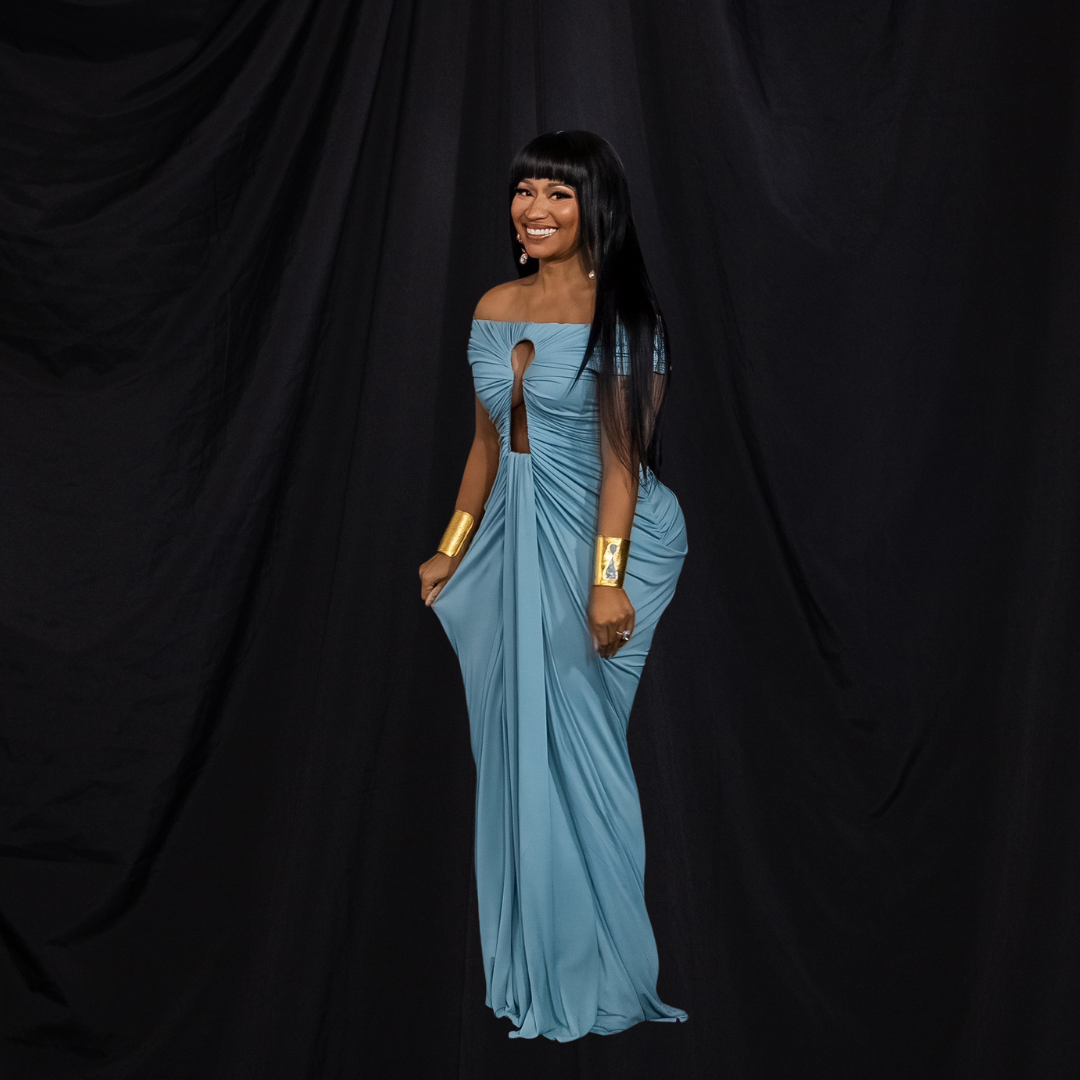
Nicki Minaj makes glamorous appearance at the premiere of the documentary film "Melania" at the Trump Kennedy Center for the Performing Arts in Washington, D.C., January 29, 2026.
Minaj’s political alignment has been evolving in full public view. Over the past year, she has openly described herself as one of President Donald Trump’s most enthusiastic supporters, embracing a role that has placed her at odds with much of the entertainment industry. That support has extended beyond rhetoric.
Most recently, Minaj has promoted the administration’s Trump Accounts initiative, a federal program that would provide every American child born between 2025 and 2028 with a $1,000 government-funded starter account. Structured as a custodial-style traditional IRA, the accounts are designed to grow over time through private contributions and investment returns.
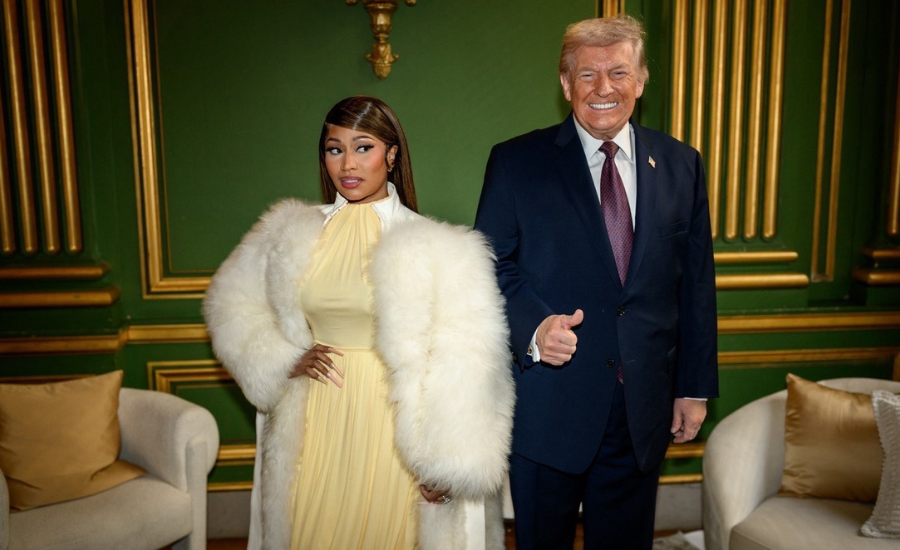
Nicki Minaj poses with President Donald Trump during a public appearance tied to the administration’s rollout of its “Trump Accounts” savings initiative.
In the past year, she has also made religious advocacy a central part of her public platform. She spoke at a panel hosted by the U.S. mission to the United Nations and later at Turning Point USA’s AmericaFest conference, drawing attention to the persecution of Christians in Nigeria. Minaj described kidnappings and killings that have taken place during church services, delivering her remarks with visible urgency. She criticized what she characterized as Western indifference to the crisis and urged greater unity and action.
“Hearing that people are being kidnapped while they’re in church, being killed and brutalized because of their faith, it should matter to all of us,” Minaj said at the event. She also credited President Trump for raising religious freedom concerns at the United Nations, comments that were widely circulated by faith-based outlets and shared extensively on social media.
Minaj has framed these interventions as part of a broader personal shift. In interviews and online posts, she has spoken candidly about returning to the Christian faith of her upbringing after years of spiritual distance, describing fame and industry pressure as forces that pulled her away from it. That recommitment, she has said, has reshaped how she views her platform and her responsibility to use it.
The consequences have not been cost-free. Following her political and faith-focused statements, Minaj experienced a measurable drop in social media followers and faced sustained criticism from former supporters. Rather than retreat, she responded by doubling down, posting prayer messages, Scripture references, and appeals for unity.
For Melania Trump, the documentary’s commercial performance suggests that her story continues to resonate with a sizable audience, even as it remains filtered through intense partisan skepticism. For Minaj, her alignment with the first lady, the Trump administration, and religious advocacy marks a new phase of public life—one that is unapologetically political, deeply personal, and deliberately resistant to cultural expectations.
What links these developments is not merely the novelty of an unlikely alliance, but a broader truth about the present moment. American culture is less ideologically tidy than standard narratives suggest. Celebrity, politics, and faith increasingly overlap in ways that unsettle familiar categories and challenge assumptions about who belongs where.
It would be easy to dismiss the Melania–Minaj convergence as another curiosity in the celebrity-politics cycle. But doing so would miss the deeper signal. In an era defined by fragmentation and distrust, this moment reflects a willingness among some public figures and audiences to defy prescribed roles, reject cultural gatekeeping, and engage across lines that once seemed immovable.
That does not make it a model or a manifesto. But it does make it a marker of a cultural landscape still in flux, where influence travels along unexpected paths and alliances form in places few were looking.
More on EEW Magazine Online:
Why do some confrontations end with the wronged person apologizing? Learn how DARVO works and how biblical discernment helps believers recognize manipulation and pursue truth.