

A disrupted worship service, a live-streaming journalist, and a federal investigation have reignited debate over free speech, sacred space, and moral restraint in media coverage.
Written By EEW Magazine Editorial Staff
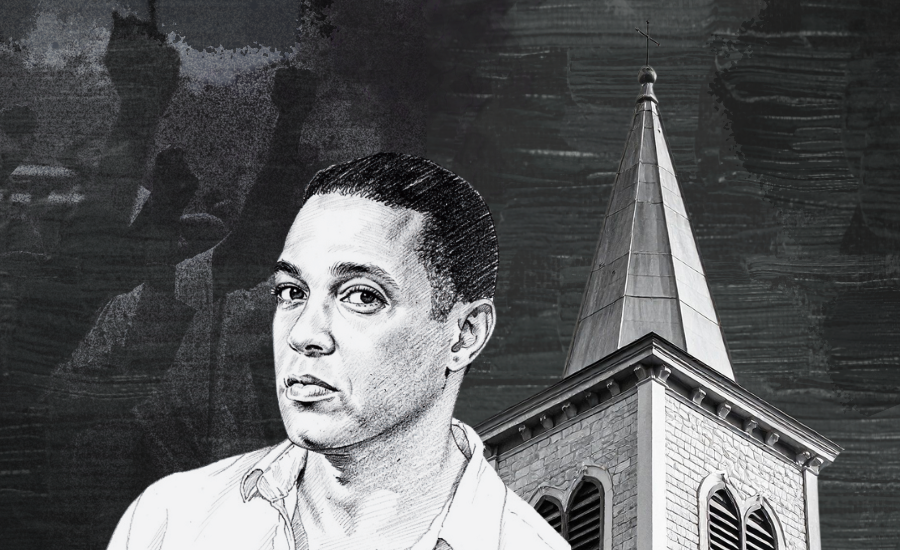
Don Lemon’s entrance into a Minnesota church last Sunday was not the first time he has drawn public outrage. It was simply the most visible, and for many Christians, the most revealing.
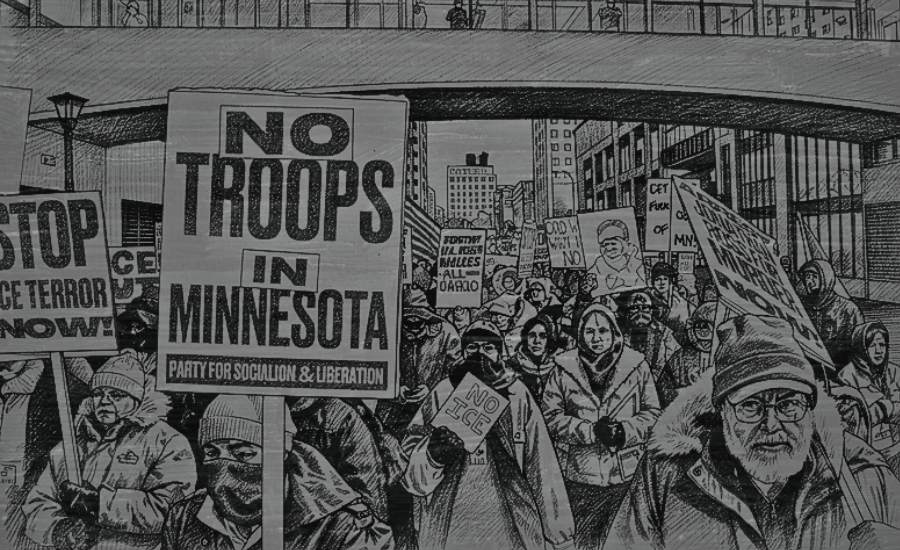
On Jan. 18, a Sunday worship service at Cities Church in St. Paul was disrupted when anti-immigration protesters entered the sanctuary during prayer, chanting slogans and halting the service. Video from inside the church shows congregants attempting to continue worship as the disturbance escalated. In one clip circulating online, a frightened child is seen crying in the arms of an adult as chants echo through the sanctuary.
In a statement posted on the church’s website, Cities Church pastor Jonathan Parnell condemned what he described as a “group of agitators” who “jarringly disrupted our worship gathering.”
“Invading a church service to disrupt the worship of Jesus — or any other act of worship — is protected by neither the Christian Scriptures nor the laws of this nation,” Parnell said.
Lemon, the former CNN anchor now operating independently through his own digital programming, livestreamed portions of the disruption from inside the church and attempted to question church leadership while the service was underway. The pastor asked Lemon and the demonstrators to leave unless they were present to worship.
Protesters said they targeted the church because they believed one of its pastors was affiliated with U.S. Immigration and Customs Enforcement, a claim that has not been independently verified. The allegation nevertheless fueled the confrontation and helped propel the moment into national view.
The episode has since drawn federal scrutiny. Assistant Attorney General for Civil Rights Harmeet Dhillon told conservative podcaster Benny Johnson that the Justice Department “will pursue charges.”
The U.S. Department of Justice confirmed it is reviewing whether the disruption violated statutes protecting religious exercise, including the Freedom of Access to Clinic Entrances Act. The FACE Act makes it a federal crime, punishable by substantial fines and potential prison time, to use or threaten force to “injure, intimidate, or interfere” with a person seeking reproductive health services or with someone lawfully exercising the First Amendment right of religious freedom at a place of worship.
At the time of publication, a federal magistrate judge in Minnesota declined to sign the Justice Department’s complaint, preventing the charges against Lemon from moving forward. The DOJ, however, announced the arrests of three activists: Nekima Levy Armstrong, Chauntyll Louisa Allen, and William Kelly.
Federal officials said the Enforcement Act of 1871, commonly known as the Ku Klux Klan Act, is under consideration. Enacted during Reconstruction to protect Black Americans and religious minorities from intimidation and coordinated interference with civil rights, the statute has been invoked by multiple administrations in modern civil rights cases.
Minnesota Attorney General Keith Ellison has disputed the application of the FACE Act in this setting. Appearing on Lemon’s YouTube show, Ellison argued that the law applies narrowly to reproductive health contexts, saying it exists “so that people, for a religious reason, cannot just use religion to break into women’s reproductive health centers.”
Those legal questions will move through investigative channels and, if necessary, the courts. But among many Christians, the most serious concerns raised by the incident are not merely legal. They are theological.
Christian doctrine does not stop at the question of what is permissible. It extends to the question of what is wise. The Apostle Paul’s admonition that “all things are lawful, but not all things are expedient” (1 Corinthians 10:23) speaks directly to moments like this. Rights do not absolve responsibility.
For worshippers inside Cities Church, the disruption was not a neutral civic exercise. It was an intrusion into a space they understand as sacred. A church is not merely a public venue. It is a place set apart for prayer, repentance, teaching, and communion with God. When political confrontation enters that space, and when a media figure broadcasts it from within, worshippers are no longer participants in a service. They become subjects of spectacle.

The Department of Justice is pursuing charges against participants in the protest.
There is also a growing fear, voiced quietly but consistently among believers, that visibility invites danger. In a climate where violence against houses of worship is real and rising, identifying a church, naming leaders, and framing congregants as ideological enemies does more than provoke criticism. It risks turning people into targets.
Those concerns sharpen because Lemon does not present himself as an outsider to Christianity. He identifies publicly as Christian, and his critics argue that his record reflects a troubling pattern.
Lemon’s critics point to a documented history in his public commentary on Christianity. In 2020, while anchoring at CNN, he dismissed belief in the literal authority of Scripture as “dangerous and naive,” and went further, stating on air, “Jesus Christ, if that’s who you believe in, admittedly was not perfect when He was here on this earth.” The remarks sparked immediate backlash from Christian leaders who argued that Lemon was not engaging theology so much as flattening it, reducing core doctrine to provocation.
That posture resurfaced after the Cities Church disruption. In subsequent commentary, Lemon characterized members of the congregation in sweeping moral terms, describing them collectively as “white supremacists,” rather than addressing specific actions or substantiated evidence.
For many believers, the charge was not only severe but internally contradictory. Lemon, who is married to a white man and has repeatedly called for racial empathy and restraint in public discourse, applied the most corrosive racial label available to an entire worshipping community without the nuance he demands for himself. To critics, that imbalance revealed a deeper problem: a willingness to weaponize race against others while remaining insulated from the implications of his own proximity to whiteness.
His interracial marriage aside, painting believers of a different race with such a broad and incendiary stroke stands in direct tension with Christian teaching.
In light of his characterizations and post-intrusion commentary, many Christians argue Lemon was no longer simply documenting a confrontation. He was prosecuting one, with social media as the courtroom and moral condemnation as the verdict.
This is where the controversy moves beyond free speech and into the realm of Christian witness. Scripture teaches that every person bears the image of God. When any group is reduced to a caricature, when a church is treated as an acceptable theater for confrontation, something essential erodes. Not only civic trust, but moral coherence.
Lemon has defended his actions as journalism and has said he has been unfairly cast as the face of the protest. But the distinction many believers draw is not about intent. It is about effect. Once reporting becomes indistinguishable from participation, and participation from provocation, the authority of truth is compromised.
The legal questions will be resolved in time. The spiritual question is immediate and unavoidable. Does this kind of conduct honor Christ, or does it use Christian-adjacent language to justify something else?
Christianity has always demanded more than legal correctness. It demands reverence, humility, and restraint. Conviction matters. Discernment matters. And when those are lost, provocation posing as documentation becomes a form of harm.
More on EEW Magazine Online:





Jesus taught His disciples to forgive without limits, and He also showed discernment about whom to trust. When harmful patterns keep returning, wisdom may call for boundaries, distance, or a permanent separation.