
The Hannah Dugan Case: When Resistance Becomes a Liability
An in-depth examination of judicial authority and political resistance, exploring what happens when empathy collides with institutional responsibility.
By Sarah Churchill // EEW Magazine Analysis
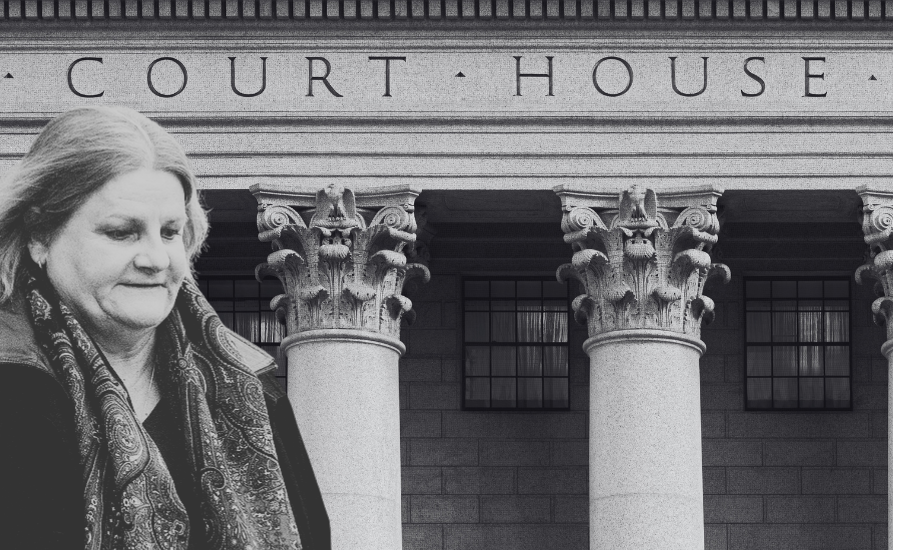
The Hannah Dugan case raises broader questions about the limits of judicial authority.
In a polarized political climate, resistance has become more than a posture. It is increasingly treated as a form of moral expression, a way of signaling conviction, solidarity, and political alignment. To oppose is no longer simply to disagree; it has become a means of positioning oneself within a broader cultural and ideological landscape.
But resistance, when untethered from institutional role, carries risk.
That risk came into sharp focus with the conviction of Judge Hannah Dugan, a Wisconsin judge found guilty of aiding an undocumented immigrant in evading federal immigration agents. The case quickly became a flashpoint in national debate. Yet its significance extends beyond immigration policy or partisan alignment. At its core, it raises a more enduring question about governance in a politicized age: what happens when moral defiance collides with institutional authority?
According to court records and trial testimony, in April 2025, federal immigration agents were present at the Milwaukee County Courthouse to arrest Eduardo Flores-Ruiz, an undocumented immigrant who had appeared before Dugan on an unrelated misdemeanor battery charge. Prosecutors said that after the hearing concluded, Dugan directed the agents away from the courtroom and facilitated Flores-Ruiz’s departure through a nonpublic exit typically reserved for court staff and jurors. Although Flores-Ruiz was apprehended shortly afterward following a brief foot chase, the jury concluded that the act of enabling his initial escape constituted obstruction of justice.
Supporters of Dugan framed the prosecution as excessive, arguing that aggressive immigration enforcement left judges with little room for humane discretion. In that telling, her actions reflected compassion rather than misconduct. Critics, however, focused on the narrower legal question: whether a judge may intervene to frustrate enforcement of the law, regardless of personal conviction.
It is this distinction that gives the case its broader relevance.
A federal jury convicted Dugan on Dec. 19, 2025, and the matter continued to unfold in the weeks that followed. On Saturday, Jan. 3, 2026, Dugan submitted her resignation to Wisconsin Gov. Tony Evers, citing the growing demands of her legal fight and the strain it placed on the judiciary. In her resignation letter, she wrote that over the past decade she had handled thousands of cases with a commitment to dignity, fairness, and courtroom order, but concluded that the proceedings against her had become “too big of a distraction.”
Dugan also framed her decision as an effort to safeguard judicial independence, writing that the case presented “immense and complex challenges” that threatened the courts themselves. Her resignation came as Republican lawmakers moved toward impeachment following her felony obstruction conviction, a process that would have further prolonged uncertainty over the bench.
The case drew national attention, with President Donald Trump citing it as he advanced his administration’s immigration enforcement agenda, while Democratic officials argued that the prosecution risked politicizing the judiciary by turning a sitting judge into a public example.
Yet focusing too narrowly on political reaction risks obscuring the institutional issue at stake.
Judges are not activists operating outside the system; they are stewards of it. Their authority rests on restraint and fidelity to process, not on moral alignment with particular outcomes. When resistance moves from rhetoric into the exercise of official power, it ceases to be symbolic and becomes operational.
This boundary has grown increasingly difficult to maintain in a culture that rewards defiance. Public opposition to federal authority has intensified across many jurisdictions, often blurring the line between protest and obstruction. In that environment, refusal can appear principled rather than problematic, especially when framed as a response to policies widely viewed as unjust.
But institutions are not designed to accommodate moral improvisation.

The judiciary, in particular, operates within a narrow mandate. Judges are empowered to interpret the law, not to nullify it through personal intervention. Disagreement with policy does not expand jurisdiction. When judges act on conviction rather than constraint, they weaken the framework that allows courts to function as neutral arbiters.
This is not an isolated phenomenon. In 2019, Massachusetts Judge Shelley Joseph was indicted after prosecutors alleged she allowed an undocumented defendant to exit her courtroom through a back door while an ICE agent waited outside to take him into custody. Although that case was later resolved without a conviction, it similarly raised questions about whether judicial discretion had crossed into active interference.
Together, the cases reflect a growing temptation among some officials to conflate moral protest with institutional authority.
There is also a practical consequence often overlooked. Acts of institutional resistance may generate short-term affirmation, but they can produce long-term damage. They invite retaliation, harden enforcement, and erode public confidence in the neutrality of the courts. In Dugan’s case, what was framed by supporters as compassion ultimately reinforced arguments that activist judges cannot be trusted to apply the law impartially.
That irony is difficult to dismiss.
Resistance has long played an essential role in democratic life. Protest, advocacy, and civil disobedience have driven reform precisely because they operate outside formal authority. But when officials confuse personal opposition with professional mandate, conscience becomes liability.
Dugan’s conviction is not a referendum on immigration policy. It is a warning about the cost of collapsing roles in a politicized age. The bench is not a barricade. Courts are not protest sites. And empathy, however sincere, does not expand the authority of office.
In institutional life, restraint is not weakness but preservation. When resistance migrates from the streets into the courtroom, the result is not moral clarity but institutional erosion. The law does not bend to intention, and when authority is exercised as protest, it is not the system that yields, but public trust.





The EEW Weekly Digest
Get EEW in Your Inbox
Our weekly digest brings the latest reporting on faith, culture, health, and the news that matters to Black Christian women straight to your inbox.
Subscribe FreeFree to join. Unsubscribe anytime.
Reader-Supported Journalism
Help Keep EEW Free and Growing
EEW Magazine Online is free for every reader, and we plan to keep it that way. Your support helps us expand our reporting on faith, culture, health, and the news that matters to Black Christian women. Become a monthly supporter today.
Support EEWGive once or monthly through PayPal. Gifts are tax-deductible to the extent allowed by law.
Waiting on God can be painful, but Scripture reveals purpose in the delay.